By Staff Reporter
KARACHI: Pakistan’s cotton production is forecast to fall 6% in the 2026-27 season, and oil demand across the Middle East-centred region that includes it is set to shrink 7.1% this year, according to the World Bank, which expects a war-driven energy shock to keep Brent crude near $100 a barrel through the end of 2026.
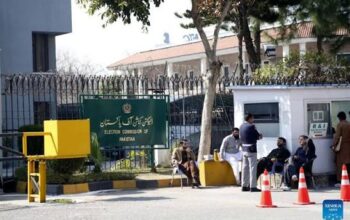
The projections in the lender’s October Commodity Markets Outlook land at an awkward moment for South Asia’s second-largest economy. The State Bank of Pakistan raised its benchmark rate by 50 basis points to 12% on Monday, with nine of 10 policymakers voting for the increase, its first rise since April.
The report names Pakistan in only two places: its cotton analysis and its definition of the “Middle East, North Africa, Afghanistan, and Pakistan” grouping used in regional tables. It gives no country-level forecast for oil, gas or food. Its global and regional numbers, though, track closely with what is hitting Pakistan’s import bill, inflation and external accounts.
Oil and gas
The World Bank expects Brent to average $91 a barrel this year, almost $100 in the fourth quarter, $79 in 2027 and $70 in 2028. Front-month futures touched about $110 in mid-October. In an adverse scenario in which Gulf hostilities flare again, and Russian exports stay constrained, Brent would average $105 next year, 33% above the baseline.
Global oil supply is projected to fall 5.5 million barrels a day, or 5.2%, in 2026. Consumption is set to drop 2.6 million barrels a day, or 2.5%, the third-largest annual decline on record. The Middle East, North Africa, Afghanistan and Pakistan region accounts for much of the 2026 contraction, and for the incomplete recovery in 2027, the report said, with supply in the region expected to contract sharply.
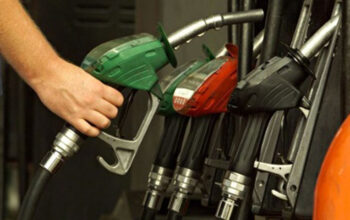
Pakistan is a net buyer of both fuels. Analysts say the country meets about 70% of its oil and gas needs through imports. Its oil import bill reached $16.86 billion in the year through June, $1.58 billion above the IMF’s estimate, and the Fund projects $16.31 billion for fiscal 2027. Pump prices have followed crude higher: petrol started 2026 at Rs253.17 a litre and diesel at Rs257.08, and by Oct. 10 petrol was Rs398.30 and diesel Rs396.24. Petrol eased to Rs377.71 on Oct. 23, with diesel at Rs391.75.
Gas is the bigger vulnerability. The Bank assumes Qatar’s damaged LNG trains stay offline through the forecast period, and said LNG transits through the Strait of Hormuz in September were only about a quarter of pre-conflict levels. It sees Japan LNG averaging $20 per million British thermal units this year, up 67%, and $18 in 2027.
Pakistan took almost all of its 2025 LNG imports, about 6.6 million tons, from Qatar, according to Wood Mackenzie, and had already cancelled 35 cargoes for 2026 delivery because of weak demand and higher domestic gas output. QatarEnergy declared force majeure on March 4, two days after an attack on its Ras Laffan facilities, and Pakistan had received 14 cargoes since March as of Aug. 11. Islamabad went to the spot market for an emergency cargo in July after a scheduled Qatari shipment was disrupted, and in September stepped up diplomacy with Washington, Tehran and Doha to secure safe passage for another.
Inflation and rates
The World Bank said the energy shock since March has revived inflation globally. In its baseline, energy-driven inflation turns negative around the second quarter of 2027. If energy prices keep rising instead, it said, second-round effects could force central banks that remember the post-pandemic price surge to tighten further. The Federal Reserve and European Central Bank have already begun raising rates, it noted, and a more hawkish turn could prompt capital to leave emerging markets and weigh on their currencies.
Pakistan is already running hot. Consumer prices rose 10.26% in September from a year earlier, down from 11.15% in August, and inflation for the July-September quarter averaged 10.20%, against 4.30% a year earlier. That compares with the central bank’s 5%-to-7% target range. Wholesale inflation was 13.3% in September. The World Bank’s regional median for food inflation, by comparison, reached 7.2% in the third quarter from 4.9% in the second, against a median headline rate of 3.3%.
Governor Jameel Ahmad said crude hovering around $100 a barrel had increased pressure on domestic prices. The bank held at 11.5% on Sept. 14, with seven of 10 members voting to hold. That level followed a 100-basis-point increase in April, the first since June 2023. The next scheduled decision is Dec. 14.
In a separate Pakistan assessment published Oct. 22, the World Bank said it expects the economy to grow 3.8% in fiscal 2027 and inflation to average 8.2%, up from 7.1% in fiscal 2026, with energy and commodity prices returning to pre-conflict levels only in the second half of the fiscal year. It cited a prolonged Middle East conflict, a strong El Niño and high public debt as risks.
Pakistan’s current account swung to a $356 million deficit in September from a $133 million surplus a year earlier, and the July-September shortfall reached about $870 million against $760 million. Imports rose to $7.38 billion from $5.99 billion. Remittances were $3.59 billion in the month. The World Bank’s Pakistan assessment expects remittances to finance most of the trade gap and keep the full-year deficit below 1% of output.
The IMF reached a staff-level agreement with Pakistan on Oct. 7 that would release about $1.21 billion under its Extended Fund Facility and Resilience and Sustainability Facility, pending Executive Board approval.
Cotton
The Outlook cites U.S. Department of Agriculture estimates showing global cotton output falling 3% in 2026-27, with cuts in China (6%), Pakistan (6%) and the U.S. (3%). Brazil and India are each expected to grow about 1%. Consumption is projected to rise 2%, pushing the global stocks-to-use ratio to 0.57 from 0.63.
The World Bank forecasts cotton at $1.95 a kilogram this year, up 14%, then $2.00 in 2027 and $2.02 in 2028. Those figures are above its April projections of $1.65 and $1.75. Prices rose 6% in the third quarter and are about 20% above a year earlier. The Bank cited deteriorating crop conditions in India and the U.S. and said El Niño adds uncertainty.
Pakistan’s own season has started stronger than the USDA estimate suggests. Arrivals at ginning factories rose 7.53% from a year earlier to more than 4.08 million bales by Oct. 15, with textile mills buying 86.7% of the total and unsold stocks 15.7% lower. Arrivals measure the pace of the harvest, not its final size. Domestic supply has also fallen short of demand, estimated at 14 million to 15 million bales a year, so imports are needed. That leaves mills exposed to a rising world price.
Fertiliser costs matter for the winter wheat crop. The Bank said urea averaged $399 a metric ton in the third quarter, down 42% from the previous quarter and well below an April peak of $857, as China resumed exports. Diammonium phosphate rose 4% in the quarter after a 20% jump in the second, with sulfur shortages and a Chinese export ban in place since October 2025 keeping supply tight. The Bank sees its fertiliser index up 14% this year and down 12% in 2027. The Pakistan assessment said El Niño and higher fertiliser prices during the winter Rabi season are expected to weigh on crop output.
The report puts global food commodity prices up 10% in 2026 and a further 7% in 2027, with benchmark U.S. hard red winter wheat rising 28% this year. The U.S. National Oceanic and Atmospheric Administration puts the chance at 83% that the current El Niño becomes the strongest since records began in 1950. The Outlook does not assess El Niño’s effect on Pakistan specifically, but notes the phenomenon typically brings drier conditions to South and Southeast Asia.
The World Bank’s baseline assumes no major escalation in the Middle East, a recovery in Russian oil output and manageable El Niño crop losses, and it projects overall commodity prices falling 7% in 2027 after a 23% rise this year, with energy down about 12%. It said risks are tilted toward higher prices. The biggest, it said, is renewed hostilities that again curb Gulf oil exports.
Copyright © 2021 Independent Pakistan | All rights reserved