By Staff Reporter
ISLAMABAD: Pakistan’s Foreign Office summoned Afghanistan’s chargé d’affaires on Monday and delivered a strong diplomatic protest over a suicide bombing that killed 15 police officers in the northwestern district of Bannu, accusing Afghan-based terrorists of masterminding the assault and reserving the right to retaliate.
The attack late on Saturday night targeted the Fateh Khel police post in Khyber Pakhtunkhwa province. A vehicle packed with explosives was rammed into the outpost, followed by a coordinated assault involving heavy gunfire from multiple directions and quadcopter drones, authorities said. Eighteen officers were on duty at the time. Fifteen were killed and three wounded, according to Bannu Regional Police Officer Sajjad Khan.
A newly formed splinter group of the Pakistani Taliban, Ittehad-ul-Mujahideen Pakistan, claimed responsibility for the bombing. Pakistani officials have described the group as a front for the banned Tehreek-i-Taliban Pakistan.
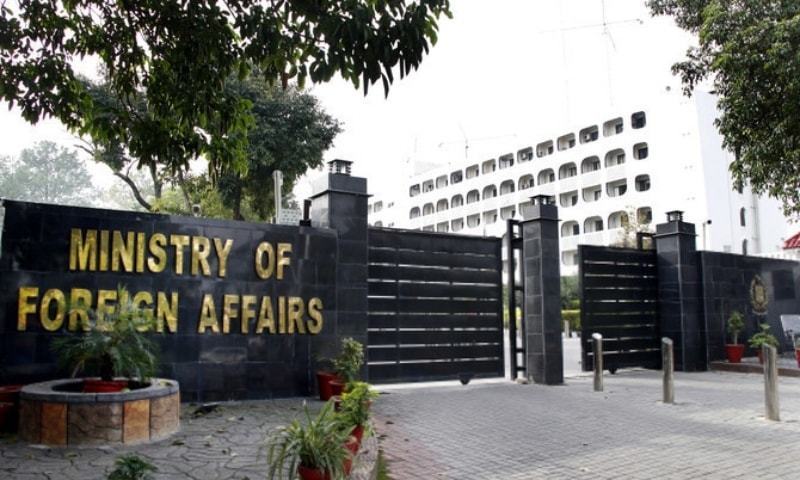
In a detailed statement, the Foreign Office said a “strong demarche” was handed to Afghan chargé d’affaires Sardar Ahmad Shakeeb after an investigation — drawing on evidence and technical intelligence — determined that the attack “was masterminded by terrorists residing in Afghanistan.” The ministry described the assault as a “cowardly vehicle-borne improvised explosive device (IED) attack” carried out by “terrorists of Fitna al Khawarij,” the government’s term for TTP militants. It also referenced the presence of other groups it calls Fitna al Hindustan, active in Balochistan, and ISKP/Daesh elements.“
The ministry conveyed that … Pakistan reserves the right to respond decisively against the perpetrators of this barbaric act,” the statement said. It reiterated Islamabad’s “grave concern over the continued use of Afghan soil for terrorist attacks against Pakistan” and warned that Pakistan “will not compromise on its national security or on the safety and protection of its citizens.”
The Foreign Office noted that the Afghan Taliban regime had been repeatedly urged to take “concrete and verifiable action” against the TTP, Baloch militant networks and Islamic State affiliates operating from its territory. It pointed to reports by the United Nations Monitoring Team and other international organizations documenting the permissive environment for these groups inside Afghanistan. “The fight against terrorism is a common cause, and the Afghan Taliban must honour their commitment not to allow their territory to be used for terrorism against other countries,” the statement said. Pakistan has engaged in multiple rounds of talks, mediated by friendly countries, yet the Taliban “have consistently failed to commit to, or deliver, meaningful and verifiable action,” it added.
The Bannu attack comes amid a sharp resurgence of militancy in Pakistan since the Afghan Taliban seized power in Kabul in August 2021. Islamabad has long accused the Taliban of sheltering TTP fighters, who are ideologically aligned with but operationally distinct from their Afghan counterparts. Afghan officials have denied providing safe havens. Tensions between the two neighbors have escalated into open border clashes in recent months. In February, Pakistan launched Operation Ghazab lil-Haq after what it described as unprovoked firing from the Afghan side. The operation involved cross-border strikes on alleged militant camps. Afghanistan retaliated with artillery barrages, killing civilians on both sides of the porous frontier.
A Qatari-mediated cease-fire reached in October was upended by the new fighting, though casualty figures reported by the two sides have differed sharply. Both governments agreed to a five-day pause in operations during Eid al-Fitr in March, citing mediation efforts by Saudi Arabia, Qatar and Turkey. A further round of Chinese-mediated talks in Urumqi, in China’s Xinjiang region, in April produced an understanding to avoid escalation and “explore a comprehensive solution.” Cross-border incidents have continued, albeit at reduced intensity.
Pakistan’s top military leadership has been blunt. In early March, Field Marshal Asim Munir, chief of the army staff and chairman of the Joint Chiefs of Staff Committee, said peace between the two countries could prevail only if the Taliban regime “renounced their support for terrorism and terrorist organisations.” Monday’s demarche fits a pattern of Pakistani diplomacy that combines public pressure with private engagement. Officials say they have exhausted diplomatic channels while insisting that national security cannot be subordinated to Afghan sensitivities. The Foreign Office statement emphasized that Islamabad has “constructively engaged” through multiple mediated rounds of talks, yet received no meaningful cooperation.
The Bannu bombing is the latest in a series of high-profile attacks on Pakistani security forces, many of which Islamabad attributes to TTP fighters who cross the border or receive support from rear bases inside Afghanistan. Pakistani authorities have stepped up operations inside their own territory while pressing Kabul to dismantle the sanctuaries they say enable the violence.
Copyright © 2021 Independent Pakistan | All rights reserved