By Staff Reporter
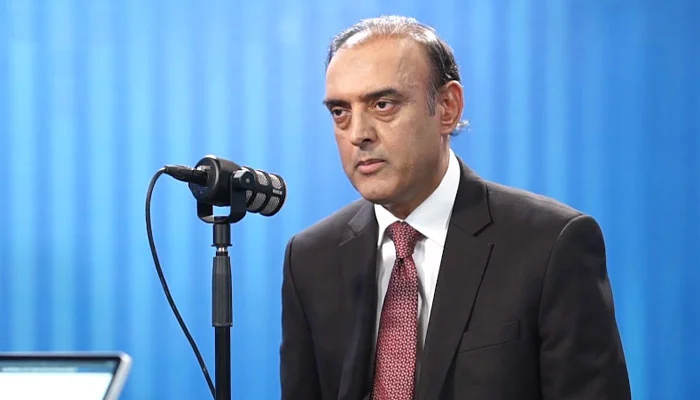
KARACHI: The central bank expects workers’ remittances to exceed a record $41 billion in the fiscal year ending June 2026, Governor Jameel Ahmad said on Friday, even as exports weaken and global uncertainty clouds the outlook.
The projection underscores the continued recovery of the South Asian nation’s external accounts three years after a balance-of-payments crisis that depleted foreign-exchange reserves, disrupted imports and raised the specter of sovereign default. Speaking at an event organized by the Karachi Chamber of Commerce and Industry, Ahmad highlighted higher remittances, rebuilt reserves and tighter enforcement against illegal currency channels as key factors in the improved position.
Foreign-exchange reserves have climbed to about $17 billion from nearly $3 billion three years ago, according to the State Bank of Pakistan. The country has been implementing an International Monetary Fund-supported reform program aimed at restoring macroeconomic stability.
Ahmad credited the central bank’s policy measures and a crackdown on informal money-transfer systems known as hundi and hawala with helping stabilize the economy and bolster reserves, according to a statement issued by the KCCI after the event. Remittances, which totaled $38 billion in the previous fiscal year, are now on track to surpass $41 billion in the current one, he said.
At the same time, the governor warned that exports remain under pressure from softer global commodity prices and subdued international demand. The central bank estimates shipments will total around $30 billion this fiscal year, down from $32 billion last year. The government is pursuing steps to reverse the decline, with positive results expected within the next two months, the KCCI statement said, citing Ahmad.
Despite the export shortfall, Pakistan’s external account is “in a much stronger and healthier position,” Ahmad told the audience. The central bank projects economic growth of between 3.75% and 4.75% for the fiscal year, a pickup from the 3.1% recorded last year. Finance Minister Muhammad Aurangzeb said last week that expansion would likely come in close to 4%.
Ahmad cautioned, however, that global uncertainty and oil-price volatility tied to the war in Iran could weigh on growth in the final quarter. Inflation may temporarily climb above 7% in the April-to-June period, he said, though the central bank remains committed to keeping price increases within its medium-term target range of 5% to 7%. Ahmad also said the designs for Pakistan’s new currency notes have been finalized and forwarded to the federal cabinet for approval. He added that work is progressing on a regulatory and licensing framework for virtual assets in the country.
Copyright © 2021 Independent Pakistan | All rights reserved