By Staff Reporter
ISLAMABAD: The United States and Iran exchanged military strikes early on Wednesday, drawing three American-allied Arab states into the crossfire and threatening to collapse the most significant diplomatic opening between Washington and Tehran in decades, as President Trump alternated between warning that Iran would “pay the price” and insisting that a comprehensive peace deal remained tantalizingly close.
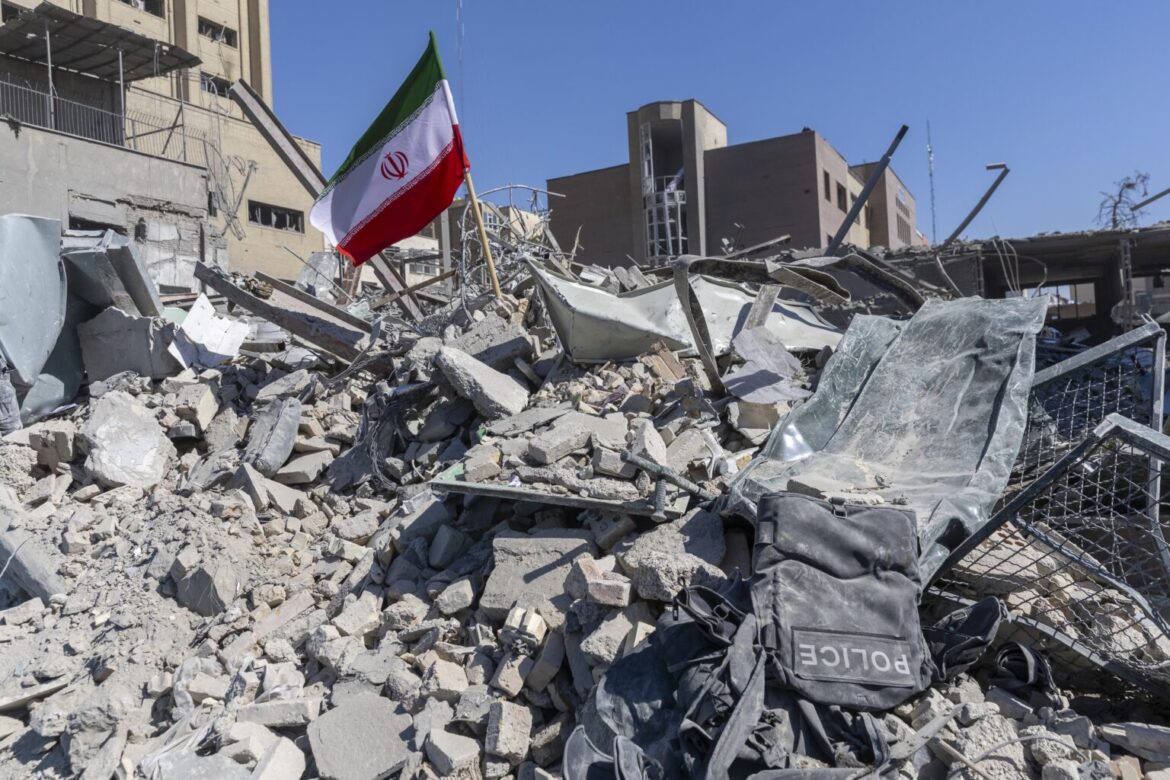
The escalation — the sharpest since a ceasefire took hold in early April — began with US airstrikes on Iranian air defense systems, radar installations and ground control stations near the Strait of Hormuz. The strikes were launched in retaliation for what the Pentagon blamed on Iran: the downing of a US Army Apache helicopter over the strait on Tuesday. Both crew members were rescued by an American sea drone, and Trump said they were uninjured. Iranian state media denied Tehran had claimed responsibility, and a US official told CBS News it remained unclear whether the collision with an Iranian drone had been intentional.
Iran responded swiftly. The Islamic Revolutionary Guard Corps said it struck 21 targets at American military facilities across the region, claiming hits in Kuwait, Bahrain and Jordan — all of which host thousands of US troops. Jordan said its forces shot down five incoming Iranian missiles, including projectiles aimed at the Muwaffaq Salti Air Base, which has hosted American F-35 fighter jets. No injuries were reported. Bahrain and Kuwait each said they had intercepted Iranian fire, without elaborating.
The US military said nearly all Iranian missiles and drones had been neutralized, with no American casualties or facility damage confirmed.
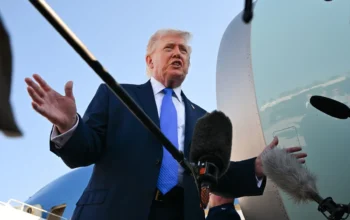
For Trump, the day unfolded as a study in contradictions. On Tuesday, he had told reporters the United States was in “the final throes of what will be a very, very good deal” with Iran, suggesting an agreement could come “in two or three days” and that the Strait of Hormuz could reopen almost immediately thereafter. By Wednesday morning, the tone was unrecognizable. “The Bully of the Middle East is DEAD!!!” he wrote on his Truth Social platform. “They’ve taken too long to negotiate a deal that would have been great for them, now they will have to pay the price!!!”
In a separate phone interview with Fox News, Trump suggested he was moving closer to ordering strikes on Iranian power plants and bridges. “I may keep going,” he was quoted as saying. “They had a chance to sign a deal and survive.” In another post, he lavished praise on the US naval blockade of Iranian shipping, calling it “the most successful” in the history of naval warfare and likening it to a “steel wall” that had strangled Iranian commerce and prevented Tehran from paying its military.
The president’s volleys left senior administration officials attempting to hold two things simultaneously. “Nothing changes where the deal stands right now,” a senior White House official told Politico. “There’s a military bucket and then there’s a negotiation bucket. Two things can happen at the same time.”
That framing, however, did little to calm Iran or its interlocutors.
Iran’s Foreign Ministry spokesman Esmail Baghaei said Wednesday that the American strikes had jeopardized the ongoing ceasefire negotiations, accusing the United States of undermining diplomacy through what he called contradictory messages and shifting demands. “Following overnight events, we need to reassess,” he said. “Any diplomatic process requires a minimum stable environment.” Foreign Minister Abbas Araghchi was more pointed, writing on X: “Leave our region if you want to be safe.”
Even so, mediators refused to stand down. A Qatari delegation arrived in Tehran on Wednesday for consultations on reviving the diplomatic track, according to an official with knowledge of the visit who requested anonymity given the sensitivity of the talks. Qatar has served as a principal conduit between the two sides since the war began.
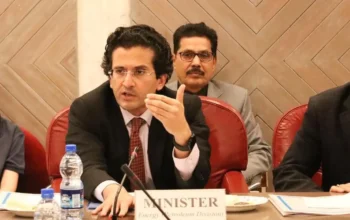
Pakistan, which has positioned itself as a back-channel broker, issued an urgent appeal for restraint before the United Nations Security Council. Ambassador Asim Iftikhar Ahmad told the council that the “Islamabad Talks” — direct, face-to-face engagement between American and Iranian officials — represented the highest-level contact between Washington and Tehran in more than four decades. He appealed for what he called “a little more chance” for diplomacy to work.
“As we work earnestly and painstakingly, together with our friends and partners, to find a peaceful diplomatic solution to the conflict, and especially when the final objective is just about to be achieved, we sincerely urge all sides to exercise restraint,” Ahmad said.
The gaps between the parties, however, remain formidable. Washington is pressing Iran to surrender its stockpile of highly enriched uranium — material enriched to 60 percent purity, a short technical step from the roughly 90 percent required for a weapons-grade device. Iran insists its nuclear program is peaceful, is refusing to relinquish its uranium stocks, and is demanding both the lifting of international sanctions and the unfreezing of billions of dollars in assets before any final agreement is concluded — conditions Trump has flatly rejected. Tehran also controls the Strait of Hormuz, the choke point through which roughly a fifth of the world’s oil and gas travels, and has made clear it views that leverage as non-negotiable.
Oil markets again registered the anxiety. US crude futures for July delivery rose nearly 2 percent to $89.72 a barrel, while the international benchmark for August delivery climbed to $92.74 — up more than 25 percent since the war began on February 28, when coordinated U.S. and Israeli strikes on Iran triggered a cascade that has since shaken global energy markets, driven up consumer prices worldwide and destabilized shipping lanes across the Persian Gulf and beyond.
Analysts at JPMorgan Chase estimated that as many as 2 million barrels of Iranian oil per day were quietly leaving the country on tankers that had switched off their transponders — a finding that cast doubt on Trump’s effusive characterizations of the blockade’s effectiveness.
The conflict has also drawn in other fronts in ways that complicate any resolution. Israeli Prime Minister Benjamin Netanyahu said Wednesday that Israel would “continue to act forcefully against Iran and its proxies.” Israel’s military carried out multiple strikes in southern Lebanon over the past day, targeting Hezbollah infrastructure. An airstrike on a village east of Tyre killed at least six people, Lebanon’s state-run National News Agency reported; two others died in an Israeli drone strike on a vehicle in Sidon.
Iranian officials have insisted throughout the negotiations that any durable ceasefire must encompass the Lebanese front — a demand Israel and the United States have sought to separate from the broader Iran deal. Netanyahu appears to have larger ambitions still: the collapse of Iran’s theocratic government, the dismantlement of its nuclear program, and the destruction of Hezbollah as a military force. Those goals will make any negotiated compromise significantly harder to achieve.
At sea, the conflict continued to spread. Guards aboard a cargo ship in the Gulf of Aden exchanged fire with gunmen in a small vessel and repelled the attack, according to the British military’s United Kingdom Maritime Trade Operations center. No group immediately claimed responsibility. India’s foreign ministry said three Indian crew members were missing after a separate attack Wednesday on a Palau-flagged commercial vessel off Oman; 21 Indian sailors were rescued.
Two crew members of a tanker were reported missing and a third injured following what the U.K. maritime security firm Ambrey described as a suspected American missile strike during enforcement of the Iranian shipping blockade.
An Israeli military official acknowledged Wednesday that an airbase in northern Israel had been struck Sunday by an Iranian missile during an earlier exchange of fire. A “non-critical area” of the Ramat David airbase was damaged and no one was injured, the official said, speaking anonymously in accordance with military guidelines.
A confidential International Atomic Energy Agency report issued June 5 and reviewed by Reuters showed little change in the watchdog’s assessment of Iran’s nuclear activities, despite three months of war waged in part under the declared objective of preventing Tehran from acquiring an atomic weapon. The IAEA has been unable to return to nuclear sites struck by Israel and the United States and Iran has yet to account for its enriched uranium stockpiles.
Hours before the American strikes, Iran’s parliament speaker, Mohammad Bagher Ghalibaf — also Tehran’s chief negotiator in peace talks with Washington — posted a warning on X that in retrospect reads as foreshadowing. “We prefer the language of diplomacy,” he wrote, “but we speak other languages far more fluently. Break your commitments, and we’ll switch to what we speak best.”
Copyright © 2021 Independent Pakistan | All rights reserved