By Staff Reporter
There is a particular kind of economic failure that is hardest to fix: not the dramatic kind, with a collapsing currency and queues at the central bank, but the quiet kind, where just enough has been done to remove the urgency for doing more. Pakistan has arrived, with some effort and genuine sacrifice, at exactly that dangerous place.
The federal budget presented this week in Islamabad is, in its own terms, a competent piece of crisis management. The rupee has not collapsed. The IMF programme is intact. The prime minister reported a warm conversation with the Fund’s managing director. Inflation, having receded from its 2023 extremes, has been creeping back up — but not catastrophically. Foreign exchange reserves have improved. By the measures that matter to financial markets and international creditors, Pakistan has stabilised.
And that, precisely, is the problem.
Stabilisation creates its own political economy. Once the immediate threat recedes, the coalition of interests required to push through structural reform — the sense of shared emergency that briefly makes the untouchable touchable — begins to dissolve. Agriculture, which accounts for roughly a quarter of Pakistan’s GDP, has never been meaningfully taxed. It still isn’t. Retail, real estate and entire professional classes remain largely outside the formal tax system. They remain outside it still. The power sector’s circular debt, the capacity payments to independent power producers, the subsidy architecture that benefits the connected rather than the poor — all of it endures, because stability has removed the gun from the table.
What has replaced genuine reform is something more ingenious and more troubling: a fiscal system that has learned to sustain itself through increasingly regressive extraction while maintaining the appearance of order.
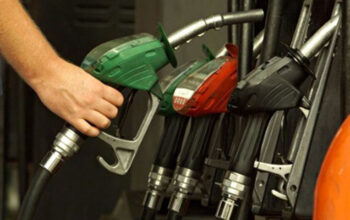
Consider the petroleum levy. In 2021-22, it raised roughly Rs127.5 billion. By the current fiscal year, the target is Rs1.468 trillion — an eleven-fold increase in four years. At current prices, the effective levy on petrol amounts to around 44 per cent of the retail price. This is not a tax on wealth, profit or land. It is a tax on movement, on commerce, on the daily cost of being poor in a country where public transport is scarce, and supply chains are long. It is also, by design, a tax that never has to be shared with the provinces, because it sits outside the divisible pool — a deliberate architectural choice that tells you everything about where the political incentives lie.
The levy’s inflationary effect is not incidental. It feeds directly into the cost of goods, transport and energy, which forces the State Bank to keep monetary policy tighter than growth requires, which raises the government’s own borrowing costs, which creates pressure for still more revenue, which leads back to the levy. Pakistan’s fiscal and monetary authorities are running what amounts to a self-defeating loop, and the budget does nothing to break it. If anything, a possible increase in the general sales tax rate from 18 to 19 percent — among the highest in the region — tightens the loop further.
The budget’s treatment of provincial finances is where this logic becomes constitutionally dangerous. The federal government, unable to expand its tax base, has instead attempted to claw back revenue from the provinces — demanding they surrender between Rs1.1 trillion and Rs1.2 trillion from their NFC Award transfers, over and above the Rs1.95 trillion cash surplus they are already required to generate under the National Fiscal Pact. When a formal constitutional amendment to achieve this was attempted and failed for want of a two-thirds majority, the government reached for an accounting device instead: transfer the provincial shares in full, then ask participating provinces to return the excess. The formula, technically, remains intact. The substance is overridden.
This is presented as pragmatic federalism. It is better understood as the Centre’s confession that it has exhausted its other options. Pakistan’s debt servicing costs have risen from roughly Rs3.06 trillion in 2021-22 to approximately Rs8.2 trillion this fiscal year. In April alone, central government debt rose by Rs1.4 trillion, bringing the total to a record Rs81.9 trillion. Against those numbers, a government that cannot tax agriculture or retail or real estate will eventually tax whatever it can reach — and the provinces, constitutionally guaranteed their share but politically unable to resist indefinitely, are the softest available target.
The irony is that the Centre’s grievance about the NFC settlement is not entirely without merit. The seventh Award does leave the federal government carrying obligations — defence, debt, pensions, macroeconomic management — that are structurally difficult to meet from a 42.5 percent share of the divisible pool. But the response to a flawed fiscal architecture is renegotiation, not circumvention. And the federal government’s moral authority to demand provincial sacrifice is undermined by its own record: it has spent years expanding non-shareable levies precisely to avoid sharing revenues with the provinces, while simultaneously arguing that its NFC share is too small. You cannot shrink the pool and then complain about your portion of it.
Meanwhile, the budget that emerges from this arithmetic punishes the wrong people. An 18 percent tax on stationery sits in direct tension with a constitutional obligation to provide free education. Solar panel exemptions expire, pushing consumers back onto a grid sustained by capacity payments that the state cannot afford and cannot renegotiate quickly enough. Electric vehicle import duties rise as exemptions lapse. These are not the choices of a government with a growth agenda. They are the choices of a government that has run out of easy options and is now working through the less easy ones.
GDP growth has remained below 4 percent for five consecutive years. The investment-to-GDP ratio is, by any regional comparison, chronically low. The average Pakistani now carries a debt burden of roughly Rs330,000 against per capita income of around Rs510,000 — a ratio that leaves no margin for the kind of consumption-led or investment-led growth that might eventually ease the underlying fiscal pressure. In the early 1990s, Pakistan’s per capita income was broadly comparable to India’s, Bangladesh’s and China’s. Today it stands at around $1,824, against $2,675 in India, $2,653 in Bangladesh and $14,000 in China. Vietnam, which had a per capita income of $99 then, is now at $5,026. These comparisons are not made to embarrass. They are made to illustrate what sustained under-investment in people, infrastructure, and productive capacity actually costs over time.
The case for optimism rests on a few genuine bright spots. IT exports have grown strongly, rising more than 21 percent in the first ten months of the fiscal year to reach $3.8 billion, with the full year projected at $4.5 billion to $4.6 billion. The rupee’s stability has at least allowed businesses to plan. The IMF programme, whatever its constraints, has imposed a degree of fiscal discipline that previous governments could not sustain. These are real. They matter.
But they are not sufficient, and the budget does not make them sufficient. Pakistan’s stabilisation has been achieved largely by compressing demand — through high interest rates, a weak exchange rate that kept imports expensive, and fiscal consolidation that has fallen disproportionately on development spending. Development budgets have now been cut by roughly a quarter. Punjab’s provincial development allocation was nearly halved at this week’s National Economic Council meeting. Across the federation, 800 ongoing projects carry Rs11 trillion in committed liabilities against a federal development budget of Rs1 trillion — a mismatch that, at current rates of allocation, would take close to a decade to clear.
A current account improvement built on weak demand and compressed imports is a fundamentally different thing from one built on exports, productivity and investment. The former is stable until it isn’t. The latter compounds. Pakistan has achieved the former. It is nowhere near the latter.
Jean-Jacques Rousseau’s answer to Thomas Hobbes — that a man may be safest in confinement, but safety alone is not freedom — was quoted in pre-budget commentary in Islamabad this week. It captures the moment well, though perhaps not as its authors intended. The cage Pakistan has constructed is, by recent standards, a comfortable one. The rupee is steady. The shelves are stocked. The IMF is satisfied. But comfort without dynamism is not a development strategy. It is a holding pattern — and holding patterns, by definition, are not where you want to remain.
The budget that Pakistan needed this week was not one that balanced the books through provincial transfers, regressive levies and deferred development. It was one that finally confronted the question of who, in this country, does not pay taxes and why — and began, however incrementally, to change the answer. That budget was not presented. What was presented instead was a document that stabilises the present by mortgaging the future, which is precisely what Pakistan’s last several budgets have done.
The crisis, when it returns — and the arithmetic makes its return a matter of when, not whether — will be harder to manage than this one. The friendly bilateral deposits that backstop the rupee will not be available indefinitely. The IMF’s patience is not unconditional. The provinces, squeezed repeatedly and constitutionally, will not co-operate without limit. And a population in which more than 25 million children are out of school, in which hunger is not a metaphor but a measurable condition in village markets from Balochistan to southern Punjab, will eventually demand an account of where the stability went and whose stability it was.
Pakistan has bought time. Time, unlike petroleum levy receipts, cannot be recycled into the divisible pool. It can only be spent — or wasted.
Copyright © 2021 Independent Pakistan | All rights reserved