By Staff Reporter
c
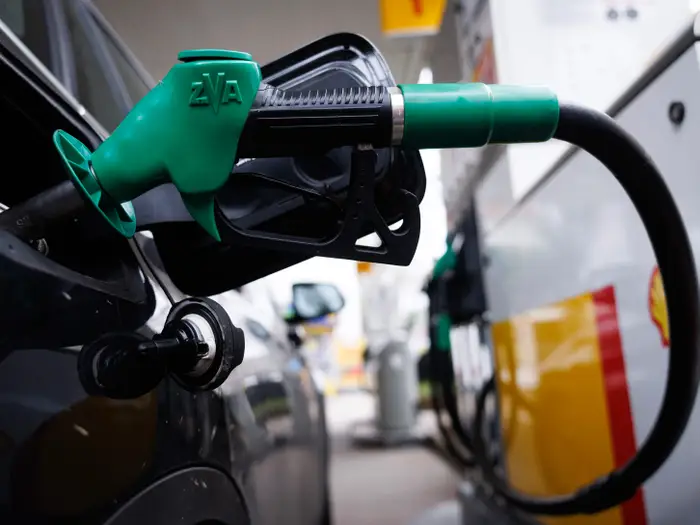
A notification issued by the Petroleum Division on Friday set the price of petrol at Rs373.78 per litre, down from Rs377.78, and high-speed diesel at Rs378.78 per litre, down from Rs380.78. The reductions mark the fifth consecutive weekly cut in petrol prices, bringing the cumulative decline since the series began to Rs41 per litre. Last week the authorities lowered petrol by Rs4 per litre while leaving the price of high-speed diesel unchanged.
The government continues to collect substantial revenue through taxes on petroleum products. On high-speed diesel the combined burden from customs duty, petroleum levy and climate support levy stands at about Rs100 per litre, in addition to the inland freight equalisation margin. The total tax take on petrol is approximately Rs125 per litre, covering petroleum levy, customs duty and climate levy. Petroleum levy on kerosene is set at about Rs21 per litre and on light diesel oil at roughly Rs16 per litre.
Petrol and high-speed diesel remain the dominant sources of government income from fuels. Combined monthly sales stand at 700,000 to 800,000 tonnes, compared with monthly demand for kerosene of only 10,000 tonnes.
The price of petrol has a direct bearing on household budgets because it is the main fuel for private transport, small vehicles, rickshaws and two-wheelers, which are widely used by middle- and lower-middle-income families. High-speed diesel, by contrast, powers the heavy transport sector, including trucks, buses, trains and large generators, and is a key input for agricultural machinery such as tractors, tube wells and threshers. Its price is viewed as particularly inflationary because of its role in moving goods and supporting farming.
The federal government has reviewed petroleum prices every Friday night since the outbreak of the US-Israeli conflict with Iran on February 28. The conflict, now paused, had triggered a global fuel crunch after the closure of the Strait of Hormuz, the chokepoint through which around one-fifth of the world’s oil and gas supplies normally pass.
Copyright © 2021 Independent Pakistan | All rights reserved