By Staff Reporter
KARACHI: Pakistan’s oil industry has absorbed losses of roughly 104 billion rupees ($367 million) after the government slashed domestic fuel prices in the wake of a US-Iran ceasefire that reopened the Strait of Hormuz and sent international crude markets sharply lower, according to an industry letter.
The losses, which companies say stem from being forced to sell inventories purchased at elevated conflict-era prices at steep discounts, have triggered an emergency meeting in Islamabad on Tuesday between Petroleum Minister Ali Pervaiz Malik and the chief executives of oil marketing companies and refineries.
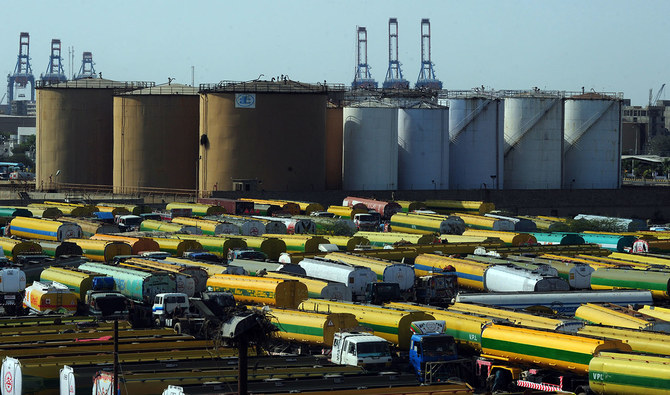
The Oil Companies Advisory Council (OCAC), which represents Pakistan’s downstream oil sector, wrote to Malik on Sunday, warning that the latest price cuts had exposed the industry to losses on around 505,000 metric tonnes of petrol and 655,000 metric tonnes of high-speed diesel — stocks bought at much higher prices when Hormuz shipping disruptions were stoking fears of a regional supply crisis.
“These losses represent real and immediate destruction of working capital, liquidity and shareholder value,” the council wrote, cautioning that the policy changes risked prompting investor withdrawals and threatening the viability of financially weaker companies.
A sharp and sudden reversal
On June 19, Islamabad cut petrol prices by 74 rupees per litre and high-speed diesel by 67 rupees per litre. The government simultaneously moved from fortnightly to weekly fuel price reviews, saying the change would allow consumers to benefit more quickly when international oil prices fall.
The cuts followed a rapid cooling in global crude markets after an interim US-Iran agreement ended months of conflict and led to the reopening of the Strait of Hormuz, through which roughly a fifth of the world’s petroleum trade passes. During the conflict, Pakistan petrol prices had climbed above 400 rupees per litre at one point, adding to pressure on households already squeezed by inflation.
Malik, in an interview last week, defended the government’s decision to pass on the benefits of lower international prices immediately. “We played no role in creating this crisis,” he said, adding that consumers deserved relief after months of elevated fuel costs and crediting government and military leadership for helping secure the diplomatic resolution that eased global markets.
‘A unilateral policy decision’
The OCAC letter accused the government of effectively rewriting the pricing formula in ways that transfer market risk from consumers to the industry. “The latest reduction in prices was achieved at the expense of the downstream petroleum industry by adopting yet another new pricing formula, which caused a huge exposure for the companies,” it read.
“Critically, they have arisen not from commercial inefficiencies, operational shortcomings, or market competition, but from a unilateral policy decision imposed upon an industry already operating under significant financial stress.”
An industry official, speaking on condition of anonymity, said Pakistan’s repeated revisions to its fuel pricing mechanism were eroding confidence in the country’s energy policy framework. “The formula appears to be altered whenever market conditions favour the government,” the official said.
Usama Qureshi, vice chairman of refinery operator Cnergyico PK Limited, said the cumulative effect of regulatory uncertainty had pushed downstream energy companies to a “breaking point.” “It is becoming increasingly difficult for the industry to survive under the current unpredictable regulatory regime,” Qureshi said, calling for an immediate transition toward full deregulation and a market-based pricing framework.
Strategic reserves maintained through the crisis
OCAC said its member companies had maintained more than 20 days of strategic fuel reserves throughout the supply disruptions caused by the Hormuz conflict and had committed to costly purchases and freight arrangements to keep Pakistan’s fuel supply uninterrupted — a period of service to the national interest, it implied, that was now going unrewarded.
The petroleum minister and a spokesperson for the Petroleum Division did not respond to requests for comment on the industry’s inventory loss claims.
The dispute underscores a policy dilemma common to commodity-importing governments during periods of sharp price swings: how to rapidly pass on the benefits of lower international prices to consumers without leaving fuel distributors holding inventories bought at far higher rates.
Transparency pledge
Malik said a high-powered government committee was examining broader reforms aimed at increasing transparency in domestic fuel pricing. As part of that effort, he said the government hoped within weeks to publish a digital calculator on the regulator’s website that would allow members of the public to track the international oil prices, shipping costs, taxes and other components that feed into the prices they pay at the pump.
Copyright © 2021 Independent Pakistan | All rights reserved