By Staff Reporter
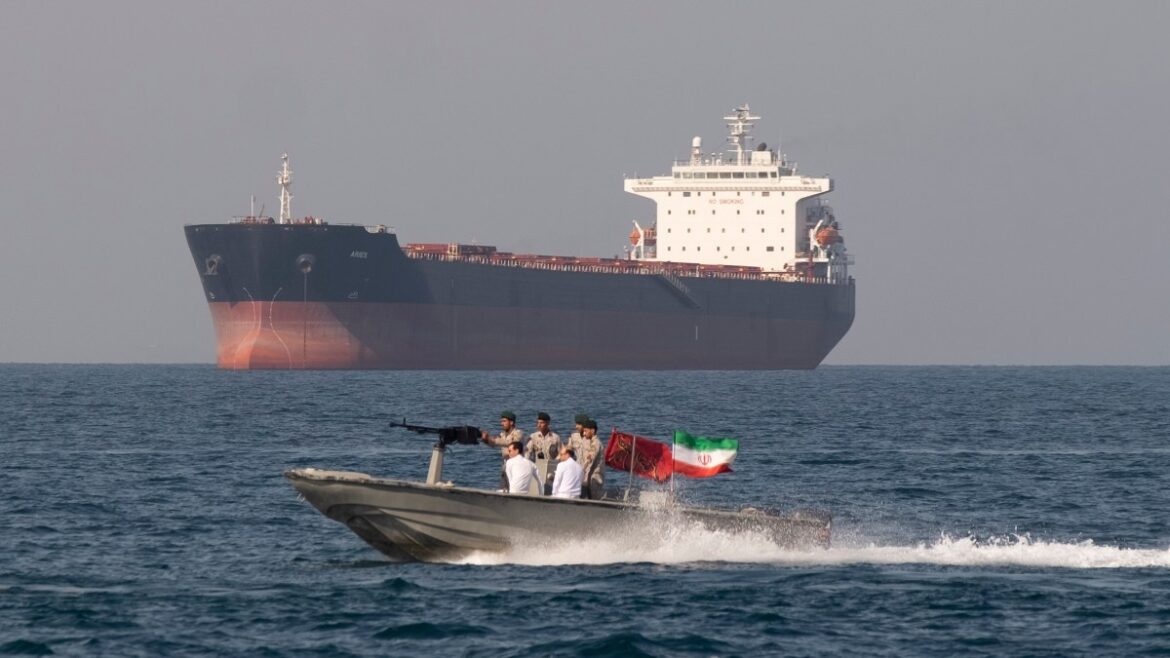
ISLAMABAD: The United States and Iran exchanged military strikes for the second time in days on Saturday after a cargo vessel was attacked in the Strait of Hormuz, casting doubt over a fragile ceasefire that diplomats spent months negotiating as Pakistan pressed its role as regional peacemaker.
Pakistan’s Deputy Prime Minister and Foreign Minister Ishaq Dar spoke by telephone with Iranian Foreign Minister Abbas Araghchi and reaffirmed Islamabad’s commitment to regional stability, the Pakistani foreign office said, as alarm mounted over whether the interim truce could survive the renewed hostilities.
The renewed violence came days after Iranian President Masoud Pezeshkian visited Islamabad, where he credited Pakistan with facilitating the landmark 14-point Iran-US framework agreement — known as the Islamabad Memorandum of Understanding — signed on June 18 to end months of war and reopen the strait to commercial shipping.
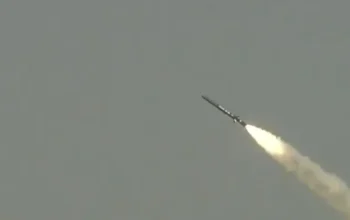
US Central Command said American forces struck Iranian missile and drone storage facilities and coastal radar installations in response to what it called “unwarranted aggression against commercial shipping by Iranian forces” that “clearly violated the ceasefire.” The operation, it said, was “a powerful response to yesterday’s attack on a commercial ship that was transiting the Strait of Hormuz.”
Iran’s Islamic Revolutionary Guard Corps struck back within hours, saying it had targeted US military positions in the Gulf region. “If the aggression is repeated, our response will be broader than this,” the Guards said in a statement carried by state television on Telegram.
The targeted vessel, the Singapore-flagged container ship ‘Ever Lovely’, was attacked while the International Maritime Organization was conducting an evacuation operation to free vessels stranded in the strait since the war began in late February. The UN maritime agency suspended the operation immediately, saying it would not resume until it had assurances that ships could transit safely. The operation had already freed 115 vessels and roughly 2,500 seafarers before it was halted.
President Donald Trump, who had earlier approved the ceasefire accord, did not mince words. “Obviously, this is a foolish violation of our ceasefire agreement,” he said, describing the attack on the ‘Ever Lovely’ as an Iranian drone strike. Vice President JD Vance went further, posting on X that “violence will be met with violence” if Tehran carried out further attacks.
Iran’s state television, citing a reporter in Sirik, said an explosion was heard late Friday at the Taherouyeh pier in the southern port city, caused by a projectile impact in the area.
Iran also launched a drone strike on Bahrain, the island kingdom’s government said Saturday — an attack that came shortly after Tehran announced its retaliatory strikes against US positions, deepening fears that the conflict was spinning out of control despite the interim deal.
PAKISTAN URGES FREE PASSAGE
Prime Minister Shehbaz Sharif, speaking at a commissioning parade at the Pakistan Naval Academy in Karachi, framed the Hormuz crisis in stark economic terms.
“The evolving regional situation has highlighted more than anything else the importance of maritime security for the global economy and international supply chains,” he said. “Today, the right of free passage and freedom of navigation are no longer luxuries but have become an absolute necessity for the entire world.”
Sharif praised Operation Muhafiz-ul-Bahr, a Pakistani naval operation that maintained the flow of energy supplies to the country’s ports during the months of conflict.
Pakistan, which helped broker the June 18 accord together with Qatar, Saudi Arabia and other regional states, has sought to position itself as an indispensable go-between. Pakistan’s army chief, Field Marshal Asim Munir, played a pivotal role in the negotiations, maintaining direct lines of communication with both Washington and Tehran, according to Pakistani officials.
Trump later acknowledged the unusual diplomatic channel, saying of the April truce that had preceded the formal accord: “I wouldn’t have really been in favor of it, but we did it as a favor to Pakistan, who are terrific people.”
In Saturday’s phone call, Araghchi thanked Islamabad for facilitating the “safe and smooth” repatriation of Iranian fishermen. Both ministers agreed to stay in close contact, the Pakistani foreign office said.
HORMUZ: A WATERWAY IN DISPUTE
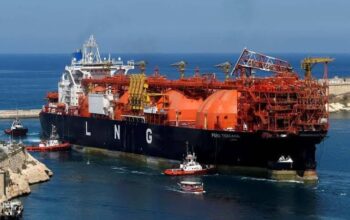
The Strait of Hormuz remains the central fault line of the conflict. About a fifth of the world’s oil and natural gas exports normally passes through the narrow chokepoint between Iran and Oman — making its status a matter of global economic consequence.
Iran has insisted that vessels must seek its permission before entering or leaving the Gulf through the strait, and has signalled it intends to levy transit fees — demands flatly rejected by Washington and Gulf Arab states, which regard the waterway as an international passage despite it falling within the territorial waters of Iran and Oman.
Around half of the 42 vessels that made the passage on Thursday did so via a southern route along Oman’s coast that Iran has not authorised, according to shipping data firm Kpler. The U.S. Navy’s Joint Maritime Information Center said Saturday it was expanding that Omani coastal route to accommodate both inbound and outbound traffic — a move that amounted to another direct challenge to Tehran’s claims of sovereignty over the passage.
Oil prices fell sharply on Saturday nonetheless, reflecting market expectations that traffic through Hormuz would continue to recover despite the flare-up.
BEHIND THE DEAL: A FRANTIC DIPLOMACY
The June 18 agreement emerged from months of precarious back-channel negotiations that came close to collapse multiple times, according to Pakistani officials, regional diplomats and others briefed on the talks who spoke to The Associated Press on condition of anonymity.
A particularly harrowing moment came on June 11, when a plane carrying Qatari mediators sat stranded on the tarmac in Tehran as the U.S. and Iran traded strikes that threatened to reignite all-out war. The mediators had been in intensive overnight talks attempting to halt what appeared to be a renewed spiral toward open conflict.
Earlier that day, Trump had threatened to hit Iran “VERY HARD TONIGHT” and take “total control” of its oil and gas industry. Qatar’s emir, Sheikh Tamim bin Hamad Al Thani, called Trump directly and urged him to hold off on further strikes because a deal was within reach. Trump cancelled the planned operation.
Pakistan had not historically been a major mediator in high-stakes diplomacy, but its position — sharing a border with Iran while maintaining close ties with Washington — made it uniquely suited to the role after previous facilitators Oman and Qatar came under pressure as Iran lashed out at Gulf states hosting U.S. forces.
The Pakistani negotiating team operated under extraordinary secrecy. Staff were warned that leaking information could lead to a life sentence, one Pakistani official said. A secure relay system carried messages between Iranian and American officials throughout the talks.
Qatar rejoined the effort in mid-May after strikes on Gulf territory halted, with Qatari officials traveling quietly to Tehran. Egypt’s intelligence chief, Hassan Rashad, opened a back channel to General Ahmad Vahidi, head of Iran’s Revolutionary Guard, who maintained contact with Supreme Leader Mojtaba Khamenei — who has been in deep hiding since the war began.
Iran initially demanded at least $500 billion in reparations for the devastation of the conflict. Mediators eventually brought that figure down to $300 billion in pledged investments, to be linked to a final deal, though the source of that funding remains unresolved. Tehran also agreed to include a commitment to dilute its stockpile of highly enriched uranium — estimated pre-war at 440 kilograms enriched to 60 percent — in exchange for U.S. promises to waive sanctions on oil exports and gradually unfreeze billions of dollars in frozen Iranian assets.
Fighting in Lebanon threatened to derail the process repeatedly. Tehran-backed Hezbollah launched missiles at Israel in response to the initial February strikes on Iran; Israel responded with an aerial bombardment and ground invasion of Lebanon. Iran insisted any deal must include a Lebanon ceasefire, inserting the condition into the draft text. Israel struck Beirut on June 14 — crossing what Iran had described as a red line — just as negotiators appeared to be closing in on a final text. Qatari mediators persuaded Tehran that retaliating would only help the deal’s opponents, and the accord was signed three days later.
LEBANON AND NUCLEAR TALKS
On a separate but related front, the United States, Israel and Lebanon signed a trilateral framework agreement in Washington on Friday aimed at establishing a pathway to peace between the two long-time adversaries.
Secretary of State Marco Rubio, flanked by Israeli and Lebanese envoys at the signing ceremony, described the accord as the start of a process. “It’s the beginning of the beginning. There’s a lot of work ahead,” he said.
Israeli Prime Minister Benjamin Netanyahu cast the agreement as a rebuff to Tehran. “Iran has been trying to force us to withdraw from southern Lebanon through pressure but, in effect, Israel, Lebanon, and the United States are telling them: this is none of your business,” he said. Netanyahu said Israeli forces would remain in their southern Lebanese security zone until Hezbollah is disarmed, with the Lebanese army initially returning only to two designated pilot areas. Displaced civilians, he said, would not be permitted to return for now.
Lebanese President Joseph Aoun called the unpublished document a “first step” toward restoring civilian return “under the sovereignty of the Lebanese state.” But Hezbollah supporters demonstrated in Beirut on Friday night, and the group’s parliamentary bloc warned the deal was designed to undermine the broader US-Iran settlement. Hezbollah MP Hassan Fadlallah said the Lebanese government would be unable to implement the framework “unless they go, with American support, to civil war.”
On the nuclear question, International Atomic Energy Agency chief Rafael Grossi warned that any permanent US-Iran settlement would require robust verification mechanisms. “The government of Iran has declared quite clearly that this is not their intention,” he said of nuclear weapons development. “But of course, intentions are not enough. We have to have a very strong verification system in place … as soon as is practicable.”
Iran and the United States have given conflicting accounts of when and whether IAEA inspectors will regain access to Iranian nuclear facilities. Talks on a final agreement resumed in Switzerland, though they were delayed two days by continued violence in Lebanon. Iran, according to a diplomat briefed on the talks, viewed the Lebanon ceasefire as the first test of American good faith. “If you can’t abide by point number one, then why should we discuss two, three, four?” the diplomat said Iran’s position amounted to.
Despite the tensions, the same diplomat described the atmosphere in Bern as “quite positive,” with U.S. and Iranian officials sharing coffee during breaks.
The 60-day clock set by the Islamabad Memorandum of Understanding to reach a final nuclear agreement expires in mid-August.
Copyright © 2021 Independent Pakistan | All rights reserved