By Staff Reporter
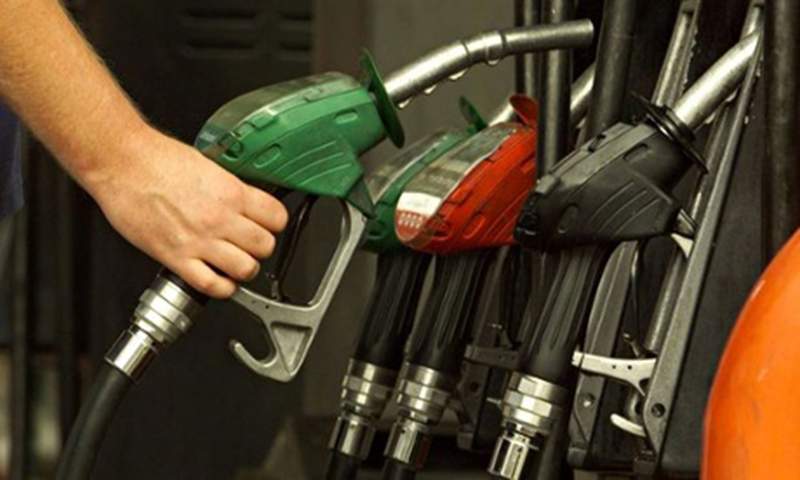
ISLAMABAD: The petroleum minister on Saturday defended the government’s decision to keep petrol and diesel prices frozen at near-record levels, promising consumers that relief was likely in the coming days while dismissing accusations that Islamabad was shielding the oil industry at the public’s expense.
Federal Minister Ali Pervaiz Malik made the remarks a day after the government maintained petrol at Rs299.50 per litre and high-speed diesel (HSD) at Rs311.47 per litre “until further orders” under a Petroleum Division notification — declining to cut prices despite a slide in international crude benchmarks over the preceding week.
“The government is neither favouring any sector nor placing an unnecessary burden on another,” Malik wrote on social media platform X, where he posted international Platts benchmark data showing petrol falling from $98.35 per barrel on June 22 to $90.36 on June 25 before edging back to $91.68 on June 26. HSD, which peaked at $109.09 per barrel on June 22, eased to $100.92 by June 26.
“The government remains committed to passing on any benefit to consumers while remaining within the ambit of its international obligations,” he added.
Speaking to a local broadcaster, Malik said good news for consumers was likely soon, and that a high-level committee formed on Prime Minister Shehbaz Sharif’s directives would oversee petroleum price determinations to ensure transparency. He said fuel supplies had remained stable despite global volatility stemming from the US-Iran conflict and the earlier closure of the Strait of Hormuz.
The government noted that under the same Friday notification, the Oil and Gas Regulatory Authority reduced the price of kerosene by Rs6.85 per litre to Rs227.05. Petroleum Division sources said the petroleum levy on HSD was raised by Rs6.57 per litre to Rs79.54, while the levy on petrol edged up by 39 paisas to Rs66.64 per litre.
Pakistan has been adjusting fuel prices weekly since the US-Iran war sent energy markets into turmoil and the Strait of Hormuz blockade disrupted global oil flows. Prices reached their peak on April 3, when the government raised petrol by Rs137.24 per litre and diesel by Rs184.49, taking them to Rs458.40 and Rs520.35 per litre, respectively — levels that triggered a political firestorm. Within 24 hours, Prime Minister Shehbaz cut the petrol price to Rs378 per litre by slashing the petroleum levy by Rs80.
Since that peak, the government has reduced petrol by a cumulative Rs155 per litre and diesel by Rs200 per litre, Malik said. Last week alone, it cut petrol by Rs74 per litre and HSD by Rs67 per litre following Pakistan-brokered US-Iran peace talks and the reopening of the Strait of Hormuz, which eased supply concerns and pulled crude prices lower.
But the decision to hold prices this week drew sharp rebukes from the opposition.
Former Sindh governor Mohammad Zubair said international oil prices had returned to pre-war levels yet Pakistani consumers were still paying close to Rs300 per litre. “Why not pass the benefit to people?” he asked.
Pakistan Tehreek-e-Insaf legislator Haleem Adil Sheikh accused the government of protecting vested interests in the petroleum industry. He alleged that an earlier price hike of Rs137 per litre had been imposed on fuel purchased at significantly lower rates, generating windfall profits for oil marketing companies and petrol pump owners. “The people pay, while the corrupt protect vested interests,” he said.
Jamiat Ulema-i-Islam spokesperson Aslam Ghauri called the decision to hold prices unchanged for another week “tyrannical,” saying international markets had fallen below pre-war levels and that the government had consistently shielded petroleum companies during periods of volatility. “The Iranian people haven’t suffered as much damage due to the war as the Pakistani people have endured,” he said.
Petrol is the primary fuel for private cars, rickshaws and two-wheelers, making its price a direct pressure point for Pakistan’s middle and lower-middle classes. HSD is used extensively in heavy transport, buses, trains and agricultural machinery, meaning any change in its price carries broader inflationary consequences across the economy.
Malik said the government would continue to pursue what he described as fair, transparent and responsible fuel pricing in line with international market conditions and the prime minister’s directives.
Copyright © 2021 Independent Pakistan | All rights reserved