By Staff Reporter
The announcement came late on a Sunday evening when the Persian Gulf had already endured its worst 48 hours since the June ceasefire: US aircraft striking Iranian military targets, Iranian missiles and drones raining down on American facilities in Kuwait and Bahrain, a Qatari national killed by shrapnel aboard a stricken vessel, and a US president warning from his social media account that the Islamic Republic of Iran “will no longer exist” if Washington was forced to resume the war.
Against that backdrop, word that the two sides had agreed to stand down and meet in Doha on Tuesday registered, in certain quarters, as a cause for relief. Understandable, perhaps. But relief is not the same thing as resolution.
What the Doha talks will attempt to manage is not merely another ceasefire violation in a region accustomed to fragile truces. It is something considerably more fraught: a fundamental, unresolved contest over who governs the Strait of Hormuz — a 21-mile chokepoint through which, in peacetime, roughly one-fifth of the world’s oil and liquefied natural gas passes every day. The June 17 memorandum of understanding, for all its 14 carefully negotiated points, never actually settled that question. Tuesday’s meeting will make clear just how wide the gap remains.
THE ARCHITECTURE OF AN UNFINISHED DEAL
The Islamabad MoU, brokered through Pakistan with support from Qatar, Saudi Arabia and other regional states and signed June 18, was designed to do three things simultaneously: halt a conflict that began with US and Israeli strikes against Iran on February 28; reopen the Strait to commercial traffic; and create a 60-day negotiating clock toward a final agreement on Tehran’s nuclear programme. On paper, it represented the most significant diplomatic intervention in the Middle East in years.
In practice, it papered over the central dispute rather than resolving it.
Under the memorandum, Iran agreed to allow safe passage of commercial vessels through the strait, free of charge, for 60 days. The United States committed to lifting its blockade of Iranian ports. Both sides, and their respective allies, undertook not to initiate military operations against each other. What the agreement conspicuously failed to do was resolve a visceral disagreement over the mechanics of passage itself.
Iran insists that vessels transiting the Strait must use a corridor running along its coastline, under Tehran’s direct supervision. Washington and its Gulf partners have backed an alternative southern lane along Oman’s shoreline, developed in conjunction with the International Maritime Organisation. The IMO and Oman announced the alternative corridor last week without consulting Tehran — a decision that enraged the Revolutionary Guards, who warned vessels against using it and promised tougher enforcement against those that did.
Iran’s Foreign Minister Abbas Araghchi, speaking in Baghdad on Sunday, was unambiguous. Any attempt to establish alternative arrangements “will only lead to more complicated situations and delays in the reopening of the Strait of Hormuz, and will increase the tensions,” he said, adding that Iran would retain total oversight and management of the waterway for the next 30 days. What Araghchi did not mention, but what everyone in the region knows, is that Tehran ultimately aims to charge transit fees for use of the Strait — a goal that Washington, Riyadh, Kuwait City and virtually every other major oil consumer on earth has flatly rejected.
THE LOGIC OF CONTROLLED PRESSURE
To understand why both sides slid so quickly back into hostilities despite their own memorandum, it helps to understand what each was trying to accomplish by doing so.
Iran is not behaving irrationally. Analysts have noted that Tehran benefits considerably from a drawn-out negotiation accompanied by managed pressure in the Strait. The capacity to threaten traffic through a waterway critical to the global economy is, for a sanctions-battered regime seeking to rebuild its leverage, an asset of extraordinary value. “A drawn-out negotiation accompanied by controlled pressure in the Strait can work to its advantage,” HA Hellyer of the Royal United Services Institute observed this weekend — a reading that the past four days have done nothing to contradict.
By launching strikes on US military facilities in Kuwait and Bahrain, Iran was not simply retaliating. It was signalling, to the Gulf states, to Washington’s regional partners and to any future negotiating table, that its tolerance for what it regards as encroachments on its maritime sovereignty has hard limits. Mohammad Mokhber, adviser to Iran’s new supreme leader, was explicit on this point: as long as Iran managed the strait, he wrote, the United States’ “hegemonic dreams in the region will not be realised.”
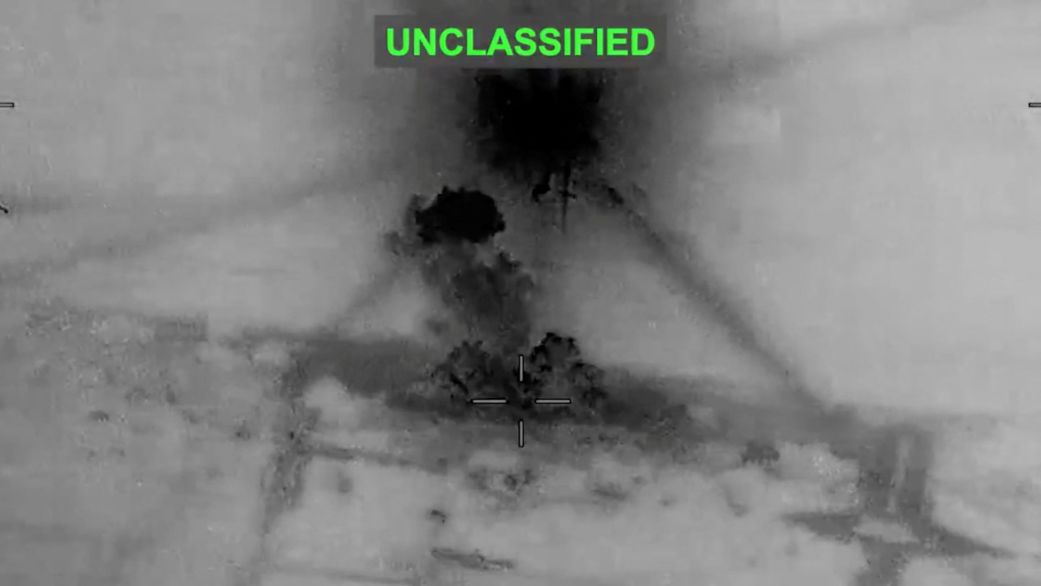
The US, for its part, cannot afford to accept that framing. A Washington that acquiesces to Iranian control over the Strait would be conceding that it was effectively defeated in a war it started — granting Tehran a permanent lever over the global economy and, by extension, over American credibility across the entire Middle East. Secretary of State Marco Rubio’s trip to the Gulf last week was in part an attempt to resolve precisely this ambiguity, staking out the US position that navigation through the Strait must be “free, unconditional and unrestricted” and without Iranian tolls or interference. Iran’s subsequent strike on a Panama-flagged tanker, and the US military response, was the predictable — and arguably calculated — result.
The deeper danger is that this cycle of provocation and reprisal risks acquiring its own momentum. Each exchange raises the temperature, hardens positions and generates new grievances that make the next exchange slightly more likely. Kuwait’s air defences intercepted two Iranian ballistic missiles on Sunday. Bahrain reported that an Iranian strike damaged a residential building in Muharraq province. Bahrain has called for an urgent session of the UN Security Council. These are not abstractions. They are the ingredients of escalation.
WHAT THE DOHA TALKS MUST CONFRONT
The pause announced on Sunday is not meaningless. Both sides have demonstrated, repeatedly, that they retain enough strategic rationality to pull back before the situation becomes irreversible. There are powerful incentives on both sides for precisely this kind of managed de-escalation.
For Iran, the memorandum has delivered tangible benefits. The United States has moved to waive some sanctions, and Tehran has begun shipping millions of barrels of oil again, drawing on economic relief that a battered domestic economy urgently needs. The regime’s calculus has always been survival first, expansion when possible. A diplomatic process that delivers sanctions relief while preserving leverage is, on its own terms, a good deal.
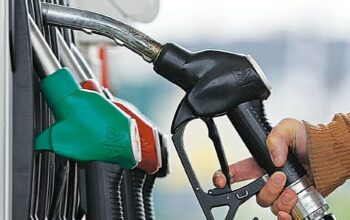
For Washington, the stakes are both geopolitical and nakedly domestic. Gasoline prices — down to $3.87 a gallon on Sunday after a peak of $4.56 in late May, still nearly 30 percent above pre-war levels — are a daily reminder of the conflict’s cost to American consumers. The Straits’ gradual reopening, marked by the CMA CGM container ship Galapagos passing through Sunday morning in what its operator called “an important milestone,” has begun easing those prices back toward normal. No administration approaching midterm elections wants to reverse that trajectory.
But the things the Doha meeting must actually resolve go far beyond a corridor dispute. Major differences remain between Washington and Tehran over the future security architecture of the Strait, the interpretation of key clauses in the memorandum and — looming over everything — the question of Iran’s nuclear programme. The 60-day negotiating clock is ticking.
Jake Sullivan, who served as national security adviser in the Biden administration and played a key early role in the Obama-era nuclear talks, offered a sober prediction on Sunday. Iran, he argued, would “lean forward to exercise control over the Strait, to remind the world that they control that waterway, then lean back when the Trump administration objects vigorously enough” — retaining the windfall from the MoU while continuing to test its limits. On the nuclear file, Sullivan predicted Iran would “dribble out very small concessions bit by bit, then pull them back, then put them forward, then pull them back to keep the United States at the table.”
Whether or not one accepts that reading, it is worth recalling that Iran’s negotiating record provides ample reason for scepticism. The 2015 JCPOA, presented at the time as a landmark of multilateral diplomacy, was followed by continued Iranian support for proxy networks across the region and, ultimately, by the very nuclear advances that brought the current crisis to a head. Iran negotiates under pressure, signs what is necessary to relieve that pressure and resumes its course once the immediate threat has eased. This is not a partisan observation. It is a pattern.
THE WIDER FIRE
The Strait of Hormuz is not the only fire burning.
In Lebanon, Israel struck Hezbollah positions in the Nabatieh area on Sunday, a day after Hezbollah’s leader rejected the latest US-brokered ceasefire deal with Beirut. Iran has made the cessation of Israeli operations in Lebanon an explicit condition for the durability of the broader US-Iran agreement, with Araghchi arguing that Israel’s withdrawal is mandated by the interim deal and that Washington bears responsibility for enforcing it. The Washington agreement with Lebanon, however, appears to provide no mechanism for compelling Israeli withdrawal — a gap that Tehran will not allow to go unmentioned.
Iran’s Revolutionary Guards, meanwhile, have warned that US bases in the region “will experience hell in the coming days” if American strikes continue — rhetoric that may be calibrated for domestic consumption in a country burying the dead of a devastating war, but that complicates the diplomatic atmosphere in Doha considerably.
Pakistan, which brokered the Islamabad MoU and has staked considerable diplomatic capital on its preservation, was working the phones furiously over the weekend. Deputy Prime Minister Ishaq Dar spoke with the foreign ministers of Saudi Arabia, Bahrain, Iran and Britain, as well as the EU’s foreign policy chief, Kaja Kallas, who expressed “serious concerns” about the ceasefire violations while praising Pakistan’s role in facilitating the agreement. The Bahraini and Saudi foreign ministers signalled their intention to visit Islamabad. These are gestures of gratitude, but also quiet pressure: the Gulf states are watching the MoU’s survival with acute anxiety, and Islamabad knows it.
THE REAL TEST
The key question is not whether Tuesday’s meeting happens. Barring a catastrophic escalation in the next 48 hours, it probably will. The question is whether the two sides can move from a mutual agreement not to kill each other for a few days to a durable settlement of the Hormuz question — and whether that, in turn, can generate enough trust and momentum to tackle the nuclear file before the 60-day clock expires.
The honest answer is that no one in Doha, Islamabad, Riyadh or Washington actually knows. What can be said is this: the conditions for durable peace do not yet exist. Iran has not abandoned its ambition to monetise and control the Strait. The US has not accepted any arrangement that concedes that control. The gap between those positions is not one that diplomacy can bridge in a single Tuesday meeting, or perhaps in a single year.
Copyright © 2021 Independent Pakistan | All rights reserved