By Staff Reporter
ISLAMABAD: Pakistan plans to finance the rehabilitation of a near-derelict 996-kilometre railway line through Balochistan with a $390 million bridge loan from the Canadian-Pakistani mining venture developing the country’s giant Reko Diq copper and gold deposit, documents reviewed by Dawn newspaper show, with the arrangement drawing pointed scrutiny from the country’s top planning body over repayment risks and an unusually large security bill.
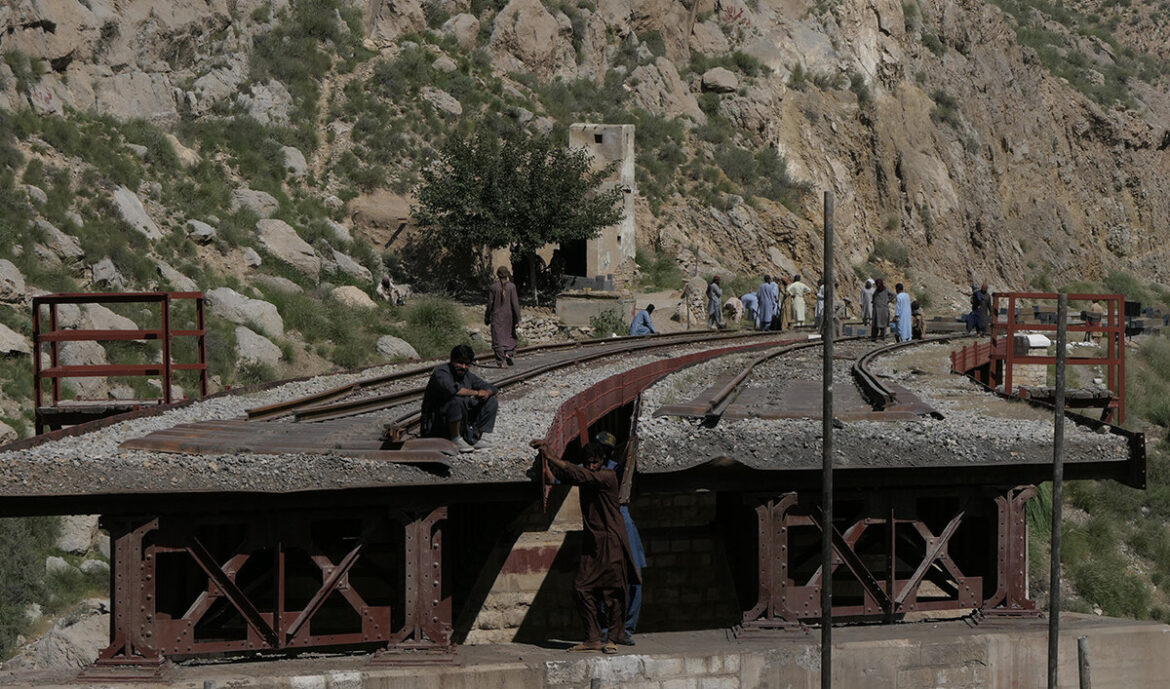
The Main Line-3 (ML-3) project — covering the Rohri-Sibi-Quetta-Koh-i-Taftan corridor — carries a total estimated cost of Rs278.62 billion (roughly $892 million) and is considered essential to moving Reko Diq’s mineral output to Karachi for export. The line currently operates at speeds of just 10 to 15 kilometres per hour, passenger services on the Quetta-Taftan stretch have all but ceased, and only one or two freight trains run the route each month.
The bridge financing will be provided by Reko Diq Mining Company (RDMC), a joint venture in which Canada’s Barrick Gold Corporation holds a 50 percent stake. The remaining half is split equally between the Balochistan provincial government and three federal state-owned enterprises — Oil and Gas Development Company (OGDCL), Pakistan Petroleum Limited (PPL) and Government Holdings Private Limited (GHPL). The loan is to be repaid in a single bullet payment by June 2028.
Prime Minister Shehbaz Sharif has already approved the $390 million financing arrangement, and the Economic Coordination Committee (ECC) of the cabinet has signed off on associated rail development and financing agreements. Despite that momentum, the Planning Commission has flagged concerns serious enough that the Central Development Working Party (CDWP) — chaired by Planning Minister Ahsan Iqbal — directed the Ministry of Railways to address them before the project can go before the Executive Committee of the National Economic Council (Ecnec) for formal approval.
FISCAL EXPOSURE
At the heart of the commission’s concerns is the compressed repayment timeline. Requiring the federal government to retire a $390 million obligation in a lump sum within two years, the commission said, “could create significant fiscal pressure and repayment risks.” It also flagged foreign exchange exposure inherent in a dollar-denominated liability, given Pakistan’s recent history of currency volatility and balance of payments stress.
The commission further noted a mismatch between the project’s ambition and its budgetary provision. Only Rs250 million has been allocated for ML-3 in the federal government’s Public Sector Development Programme for the fiscal year 2026-27 — a figure representing a fraction of the Rs25.87 billion earmarked for the project’s first year of implementation, which itself amounts to only about 9 percent of the total project cost.
“If funding cannot be arranged in time, the project will be delayed, resulting in substantial cost escalation, as witnessed in previous railway projects,” the Planning Commission noted.
SECURITY COSTS QUESTIONED
Among the line items drawing the most scrutiny is a security allocation of Rs46.38 billion — nearly 17 percent of the project’s total cost, or approximately $162 million. The commission questioned whether such expenditure should be classified as a development cost at all.
“Provision of security is not a development activity; however, it has been included in the project cost,” the commission observed, asking whether the Balochistan provincial government had been consulted about deploying local police along the route.
The commission also sought clarification on how security along the entire corridor would be maintained after construction is complete, citing recent terrorist attacks and security incidents along sections of the ML-3 route — a pointed reference to a pattern of militant activity that has long plagued infrastructure and personnel in Balochistan.
STRATEGIC AND COMMERCIAL RATIONALE
Pakistan Railways argues the line’s rehabilitation is non-negotiable given the transportation demands Reko Diq will generate. Officials say the existing road network cannot handle the volume of machinery, supplies and mineral output the mine will require, while the decrepit rail infrastructure offers no credible alternative in its current state.
Trains on the Quetta-Taftan section, where services still operate, currently take close to 48 hours to complete a journey that takes roughly 15 hours by road. Once rehabilitated, operating speeds are expected to reach 100 kilometres per hour. Line capacity between Quetta and Taftan would rise from two train pairs currently to 26 trains, while monthly freight movements are projected to grow from one or two services to eight train sets — with additional links into Iran.
Officials also pointed to the route’s broader strategic value. ML-3 connects Pakistan to Iran and Turkey, providing access to European and Central Asian markets. A link between Nokundi and Gwadar Port would offer a shorter export corridor for mineral shipments.
PHASED IMPLEMENTATION
The project has been divided into two phases. Phase I, running from 2026 to 2030 and estimated at $585 million, covers critical infrastructure works including track renewal, rehabilitation of embankments and bridges, replacement of turnouts and construction of 11 new stations between Spezand and Taftan. Phase II, budgeted at $145 million and scheduled for completion by 2033, will address remaining priority works.
Implementation is already under way. A joint venture led by Zeeruk International has been appointed as project consultant, and RDMC has agreed to assist Pakistan Railways in procuring critical machinery, equipment and other long-lead items.
The full project cost is ultimately to be borne by the federal PSDP, with RDMC’s bridge facility and federal interim funding bridging the gap until that financing is in place.
The Planning Commission’s concerns now require formal resolution before Ecnec can sign off on the project — an approval that Pakistan Railways and Reko Diq’s backers will need before construction can proceed at scale.
Copyright © 2021 Independent Pakistan | All rights reserved