By Staff Reporter
ISLAMABAD: Pakistan’s energy regulator raised the price of regasified liquefied natural gas by roughly 15% for June, as the country’s two state-linked gas utilities were forced into costlier spot-market purchases after the war between the US and Iran disrupted contracted supplies from Qatar, Dawn newspaper reported on Monday.
The Oil and Gas Regulatory Authority’s notification pushes the RLNG price for June to levels 56% higher than in March and 73% above February, extending a run-up that has been building since fighting broke out in the Gulf. The increase compounds pressure on Pakistan’s power sector, where the fuel cost of RLNG-based generation jumped to 31 rupees per unit in May from 13.72 rupees in April.
The two distribution utilities, Sui Southern Gas Co. in Karachi and Sui Northern Gas Pipelines in Lahore, supply the bulk of Pakistan’s piped gas. SSGCL serves Sindh and Balochistan and reported distribution-stage system losses of 12.55%, up from about 10.6% two months earlier. SNGPL, which supplies Punjab and Khyber Pakhtunkhwa, reported losses of almost 9%, up from 7.47% in October.
At the transmission stage, SNGPL’s RLNG sale price rose 14.85% to $17.94 per million British thermal units in June from $15.62 in May — more than 70% above the $10.45 the company was charging in February. Its distribution-stage price climbed 14.94% to $19.5228 per mmBtu from $16.9847.
SSGCL’s transmission price increased 16% to $16.368 per mmBtu from $14.093, versus $9.47 in December. Its distribution-stage price rose 16.17% to $18.64 per mmBtu from $16.042, up from $10.77 in December.
Ogra’s notification pointed to two compounding factors: unfavorable spot-market purchases and structural markups embedded in the supply chain. The distribution prices of $18.64 for SSGCL and $19.5228 for SNGPL run about $3.30 and $4.20, respectively, above the average delivered ex-ship price. Importers Pakistan State Oil and Pakistan LNG Ltd., along with port authorities, add margins of 3.77% of the delivered price for retainage and handling, on top of the distribution losses at each utility.
The June price basket drew on four cargoes each in June, May and April. Three were imported under PSO’s long-term contracts with QatarEnergy at an average of about $13.144 per mmBtu in June, up from $9.2 in May. State-run PLL brought in one cargo each month at $19.134 in June and $18.4 in May.
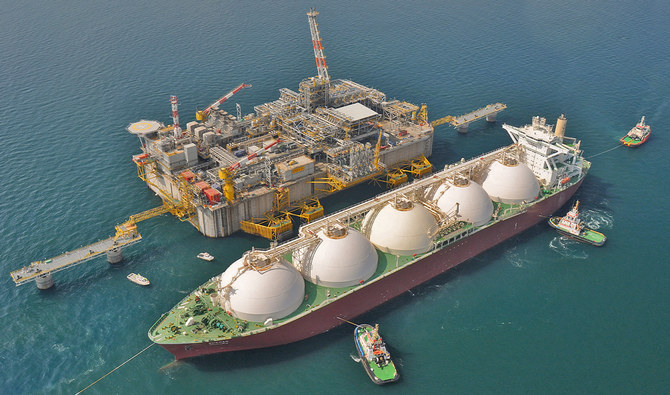
PSO holds a contract for as many as 11 cargoes a month, though the company routinely diverts part of that volume to the spot market because of the country’s constrained finances and correspondingly lower domestic gas demand. Even the reduced volume of seven to eight cargoes a month that Pakistan typically still received could not be maintained, Ogra said, after Qatar’s shipments were disrupted by the closure of the Strait of Hormuz and a suspension of operations at its gas field.
That shortfall prompted the government to reactivate PLL, which had sat dormant for roughly two and a half years, to buy cargoes on the spot market as power shortages resurfaced. The company has since been importing about one cargo a month on 48-to-72-hour notice. Ogra said two-thirds of PLL’s most recent 3.2 million-mmBtu cargo — 2.4 million mmBtu — will go to K-Electric, with the remaining 0.8 million mmBtu allocated to SNGPL.
Copyright © 2021 Independent Pakistan | All rights reserved