By Staff Reporter
MIRPUR: A general strike shut businesses across Azad Kashmir on Sunday and protesters clashed with police in several towns, as demonstrations organised by a banned political group entered their second month and a month-long internet blackout showed no sign of ending.
Around a dozen people, including several police officers, were injured in the town of Dadyal in Mirpur district, according to residents and local sources. Unverified reports pointed to additional casualties elsewhere in the district.
The unrest was called by the Joint Awami Action Committee (JAAC), an alliance the regional government outlawed last month, ahead of legislative elections scheduled for July 27 in the Himalayan territory, which is claimed in full by both Pakistan and India.
Trouble first flared in Dadyal’s Amb village, where witnesses said at least three people were hurt. Violence resumed later that evening, when a critically injured protester was rushed to Divisional Headquarters Hospital in Mirpur city.
Hospital officials said four injured people were brought in during the day, two of them in critical condition.
Mirpur’s divisional commissioner, Tahir Mumtaz, along with the region’s deputy inspector general of police, Kamran Ali, and Mirpur’s senior superintendent of police, Khurram Iqbal, did not respond to requests for comment.
Not all protests turned violent. A women’s demonstration in Khaliqabad, on Mirpur city’s outskirts, ended without incident, residents said, and similar rallies in Islamgarh and Chakswari also passed off peacefully.
In Bhimber district’s Samahni valley, men and women held simultaneous protests at three sites without confrontation with police, who did not intervene, according to local journalists. The journalists said protesters heckled an election candidate in one location, though he avoided direct confrontation, while demonstrators in Choki assaulted at least one reporter and broke his phone.
A separate rally in Moyel village, in Barnala subdivision, drew large numbers of women and children and remained peaceful throughout.
MUZAFFARABAD LARGELY SHUT DOWN
In Muzaffarabad, the regional capital, markets stayed closed, including businesses that typically operate on Sundays. Streets were largely empty as public transport stayed off the roads and fuel shortages curbed private vehicle traffic.
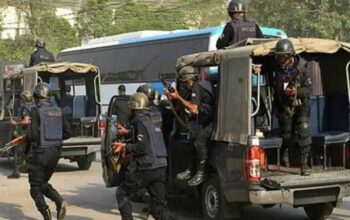
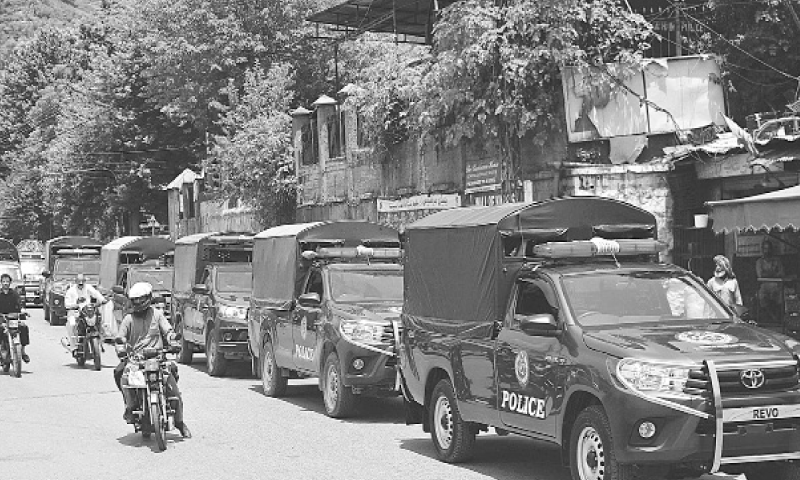
Police conducted flag marches through the city but fired tear gas at Airport Chowk to disperse a crowd that included roughly a dozen women who had traveled from Ghan Chattar village. Police said four men and three women were detained in the operation.
Video filmed by journalists at the scene showed motorcycles and furniture strewn in a roadside ravine, along with vehicles with shattered windows and slashed tires. Residents later held a sit-in accusing police of using excessive force.
Police also detained several young men in the Tariqabad and Lower Chattar neighborhoods after accusing them of throwing stones from nearby hillsides and blocking roads.
A police spokesperson said in a statement that residents had largely ignored the JAAC’s strike call and that daily life and law and order had remained normal in the district. The statement made no reference to the confrontation at Airport Chowk.
Demonstrations also took place across Poonch division, including in Mutyalmera, Paniola, Shujaabad, Hajira and Abbaspur, with the largest gathering held at Eidgah ground.
Speaking there after sunset, JAAC core committee member Imtiaz Aslam set what he called a “final deadline” of July 8 for the government to meet the group’s demands.
“Otherwise, we will announce our next course of action on July 9, on the completion of one month of the JAAC sit-in,” Aslam told the crowd.
DISPUTE OVER RESERVED SEATS
At the center of the standoff is the JAAC’s demand to eliminate 12 seats in the region’s legislative assembly reserved for refugees from Indian-administered Kashmir who resettled in Pakistan after the 1947 partition of British India. Those seats are contested separately from the assembly’s 33 general seats, with refugees registered across a dozen constituencies in Pakistan casting votes for their representatives.
The seats have been a persistent source of friction, tied to long-running disputes over voter registration lists, constituency boundaries and constitutional amendments governing the region.
The JAAC called for the current wave of protests to press for the seats’ abolition ahead of this month’s election.
Authorities declared the JAAC a proscribed organization on June 5, placing it under the First Schedule of the region’s anti-terrorism legislation. The following day, security forces launched a crackdown on the group, arresting dozens of its leaders and later placing 147 activists under the law’s Fourth Schedule.
Copyright © 2021 Independent Pakistan | All rights reserved