By Staff Reporter
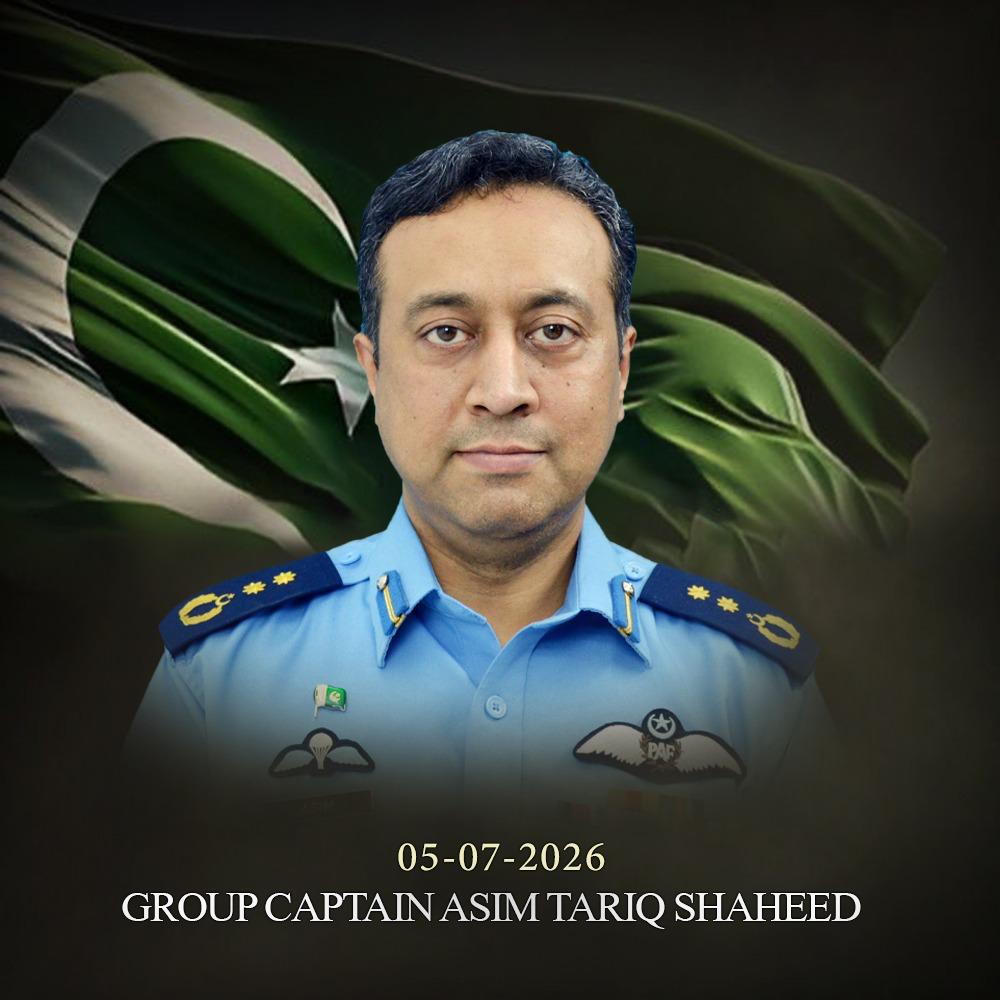
ISLAMABAD: Group Captain Asim Tariq had just left his house near Shaheen Chowk on Sunday, driving through the capital, when something on the road ahead made him turn around.
A man was pulling a woman toward a motorcycle. She was resisting.
Tariq, a career Pakistan Air Force officer, brought his vehicle around, pulled up alongside the motorcycle, and got out. He introduced himself. He told the man to leave the woman alone.
Minutes later, he was dead, shot at close range on one of the capital’s busiest and most secure thoroughfares in an encounter that has since drawn national grief, pointed questions about street safety, and a swift police response that officials say led to an arrest within nine hours.
The shooting took place around 11:21 a.m. near Ninth Avenue, in the shadow of the Pakistan Air Force headquarters, according to Islamabad police. By Sunday night, investigators had identified and captured a suspect: Saad Abbasi, a resident of the capital’s Khanna neighborhood — police officials put his age at 20 — who, authorities say, worked alongside the woman he had been pulling toward his motorcycle just hours earlier.
The two accounts — the woman’s, relayed through investigators, and the timeline police assembled from surveillance footage and phone records — describe a chain of events that began as an ordinary commute and ended in gunfire.
A ride to work, then a detour
According to police, the woman, identified only as Nimrah, had started work at a cash-and-carry outlet in Islamabad’s G-6 sector less than two weeks earlier. She sold cosmetics; Abbasi, a colleague at the same store, represented a line of frozen food products. Sunday marked the third time he had offered her a ride.
She had no reason to expect anything different, Islamabad Inspector General Syed Ali Nasir Rizvi told reporters at a Sunday evening press conference. “She did not know anything,” Rizvi said. “She hadn’t even spent 10 days working there.”
But rather than heading toward the store, Rizvi said, Abbasi steered toward a park, or some other destination the woman had not agreed to. She objected, insisting she needed to get to her stall for a scheduled inspection. The disagreement escalated enough that Abbasi stopped the motorcycle on Ninth Avenue, where the argument continued in full view of passing traffic.
That was the scene Tariq happened upon.
“He did what anyone else would have done”
Rizvi described the moment in some detail: Tariq, driving through the area, spotted the confrontation, made a U-turn, and parked beside the motorcycle. He got out, identified himself to Abbasi, and warned him to keep his distance from the woman.
For a moment, it appeared to work. Abbasi moved the motorcycle forward, as if to leave. Then, police say, he turned back and stopped his bike beside Tariq’s car.
He was carrying a pistol. He fired once, striking the officer. Tariq died at the scene. The woman, who had already circled to the passenger side of Tariq’s vehicle for safety, watched the shooting unfold before Abbasi fled on foot and by motorcycle, according to police.
“He did what anyone else would have after witnessing such an incident with a woman,” Rizvi said of Tariq, calling him “a true patriot and citizen of Pakistan.”
Tariq is survived by his wife, a daughter, and a son, according to a Pakistan Air Force spokesperson. His body was taken to a Pakistan Air Force hospital following the shooting. Tributes poured in through the day on social media and in official statements, with many Pakistanis describing him as an exceptional citizen who paid the ultimate price for an instinct to help a stranger.
A nine-hour manhunt
The investigation that followed moved with unusual speed, according to Rizvi, though it did not start with many advantages. The woman did not know where Abbasi lived. His name alone would not be enough.
Police said they organised 11 separate investigative teams, assigning each a distinct piece of the search: digital surveillance, cellular data analysis, private security footage, and the city’s networked Safe City camera system, among others. Investigators said they reviewed footage from 275 Safe City cameras across Islamabad and Rawalpindi, along with numerous private cameras, and cross-referenced 137 call detail records tied to the case.
Abbasi, for his part, seemed to understand what was coming, according to police. Rizvi described him as “so shrewd” that he changed his shirt shortly after the shooting, powered off his phone, and attempted to leave the city aboard a public bus.
It was not enough. Investigators traced him to Abbottabad, his hometown, and eventually to the Khanna area of Islamabad, where he was taken into custody. Police said 13 raids were carried out within the capital alone, with additional teams dispatched to Lahore and Dera Ismail Khan as investigators worked multiple leads simultaneously. More than 100 officers were involved in the operation, according to police.
In the course of the investigation, Rizvi said, police uncovered an earlier, strikingly similar episode: Abbasi, he said, had previously taken another woman to Mianwali under disputed circumstances. That case never reached a police station. “Instead of coming to the police station, their families settled the matter mutually,” Rizvi said.
Abbasi has a matriculation-level education and had been working as a salesman, according to police sources. He was taken into custody in the Khanna police station area and later moved to an undisclosed location for continued questioning. The investigation remains ongoing.
A city, and a government, responds
Word of the shooting reached Pakistan’s Interior Minister, Mohsin Naqvi, within hours. Naqvi extended condolences to Tariq’s family and requested a formal report from Islamabad’s police chief, directing that the suspect be arrested without delay and that no effort be spared in securing justice for the officer’s family.
Rizvi said Sunday night that Naqvi had been personally supervising the operation as it unfolded, and that the case would proceed through the full course of Pakistan’s legal system.
For many in Islamabad, the shooting has taken on a resonance beyond the immediate tragedy: a reminder of what can happen to someone who stops to help a stranger in trouble. The legal process against Abbasi is only beginning. But the outline of Sunday’s events — assembled from surveillance footage, phone records and a woman’s account of a ride that went wrong — is no longer in dispute: an officer saw someone in danger, and stepped in.
Copyright © 2021 Independent Pakistan | All rights reserved