By Staff Reporter
LAHORE: The car was supposed to be headed for the airport. That, at least, is what the man driving it had told the two women in the back seat, according to Lahore police: that a ransom had been paid, that they were free, that their ordeal was over.
Instead, as the vehicle approached Bhatta Chowk on the outskirts of the city, the women grew suspicious. The driver, they realised, did not appear to be taking the route to the airport at all.
Then came the crash.
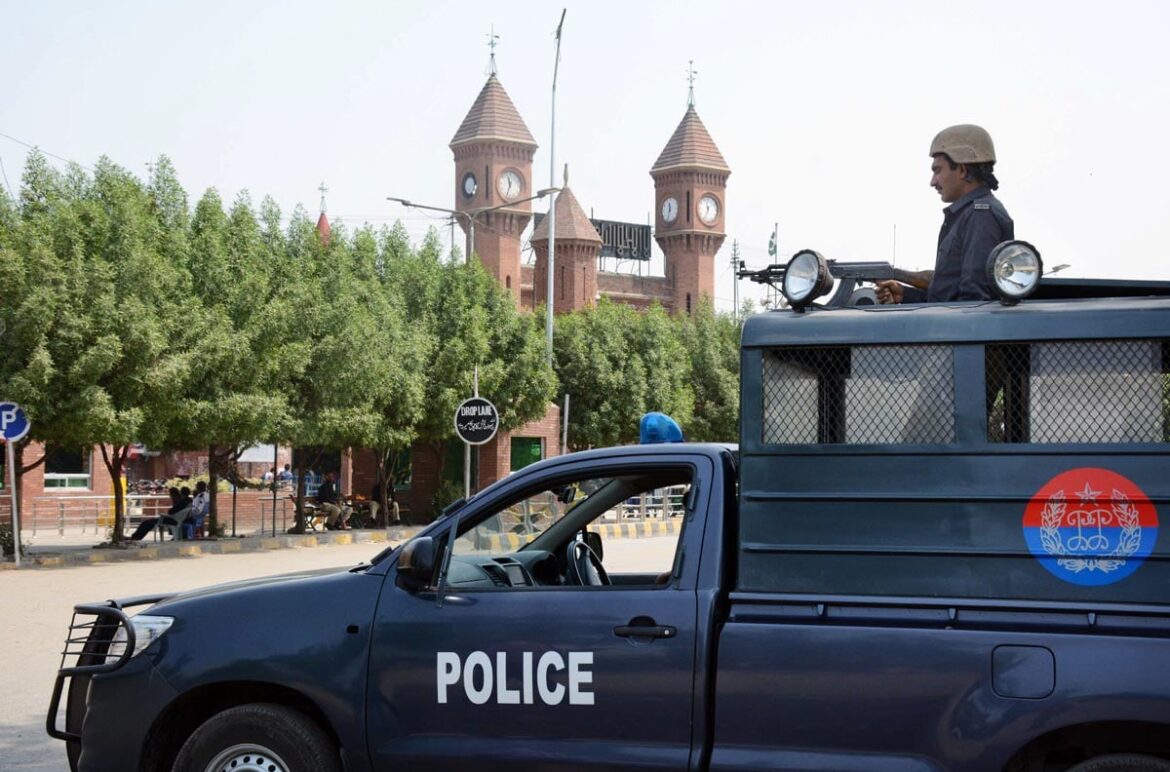
The vehicle collided with another car on Airport Road. In the confusion, the two women — a Spanish national and a Dutch national — threw open the doors and ran, sprinting into a nearby shop as the driver fled on foot, according to Lahore Deputy Inspector General of Police (Operations) Faisal Kamran, who laid out the department’s account of the case at a press conference on Sunday.
It was the abrupt, almost accidental ending to an ordeal that Kamran said began June 29, when the two women arrived in Lahore and were, according to police, abducted and sexually assaulted shortly afterward. What has followed in the days since — a five-suspect police case, a magistrate roused from his residence to take statements before a flight home, and a name tying one suspect to Pakistan’s deputy prime minister — has made the case a fixture of national television, and a test, Kamran acknowledged, of how far Pakistani law enforcement is willing to go when a politically connected family is in the picture.
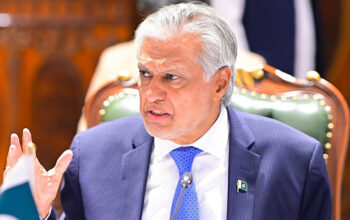
“We received strict orders from the government to treat him no differently than any other criminal,” Kamran told reporters, referring to the suspect identified by police as Muhammad Raza Dar, whom officials have described as related to Deputy Prime Minister and Foreign Minister Ishaq Dar. Kamran did not specify the precise nature of the family relationship, saying only that investigators had traced it through a property record and neighbours’ accounts.
TRACING A NAME TO A HOUSE IN SHAHDARA
Kamran said the break in locating the suspects came not from a tip but from legwork: raids conducted in Sargodha and at several addresses around Lahore, cross-referenced against phone records and footage from Safe City, the surveillance network the Punjab government has built out across the provincial capital.
At one of the raided houses, he said, investigators found that the family said to be connected to Muhammad Raza Dar had rented the property some time earlier and had since moved on. It was neighbours, he said, who first raised the possibility of a connection to the deputy prime minister’s family.
“As soon as this was flagged, we had to confirm the information, and we confirmed it from the family,” Kamran said. “We got the number of the suspect from them and began tracing his location.” He added that he believed the family had urged the suspect to surrender once it became clear police were closing in, though he did not describe any direct contact between officers and Dar’s relatives beyond obtaining the phone number.
Once the family connection was established, Kamran said, he briefed both senior police command and the government. Punjab Chief Minister Maryam Nawaz, he said, issued instructions that the case be handled with “100 percent merit” — a phrase Kamran and other officials have repeated at multiple points since, including in an earlier briefing in which Kamran quoted the chief minister as saying the case “must be handled on merit and whoever committed the crime will be punished.”
Investigators, Kamran said, have not ruled out that a broader “criminal gang,” rather than a lone suspect, was behind the abduction.
Police carried out raids across Sargodha, a house in Lahore’s Shahdara neighborhood, and the Defence Housing Authority, drawing enough attention, Kamran said, that “people were starting to pick up on it.” It was around this time, according to the police account, that the suspect drove the two women toward the airport — the trip that ended instead in the crash near Bhatta Chowk.
A FATHER’S WHATSAPP CALL, AND A RESCUE POLICE SAY PREDATES THE CRASH
While the crash created the opening for the women to escape on foot, Kamran was emphatic that his department’s work had not begun there. He said one of the women had been in contact throughout the ordeal with her father — identified only as Carlos — over WhatsApp voice messages, and that the father had separately been in touch with the assistant superintendent of police for the Defence area.
“The father added the two women to a conference call with ASP Defence, and they told the official that they had managed to escape,” Kamran said.
Police, he said, have logs showing a call to the emergency helpline, 15, at 12:40 p.m., which he said set off the sequence of actions that led investigators to trace the suspect’s location and establish contact with relatives in Spain. Kamran pushed back forcefully on public suggestions that his department had played no role in recovering the women.
“We have the record of a 15 call at 12:40, after which subsequent action was taken, contact was established with the individual from Spain, and locations were traced,” he said, adding that background investigative work — not the crash alone — had ensured the women’s recovery.
As for the suspect, Kamran said police used Safe City data and his phone’s location to track him after the crash and told him, by phone, to surrender. Officers from the Cantonment subdivision made the arrest.
“SP Cantt went to arrest him and brought him to the police station,” Kamran said.
Four suspects, including Muhammad Raza Dar, were arrested by July 2 and have since been remanded into physical custody for five days. A fifth suspect connected to the case has also been booked, according to police, bringing the total to five.
A MAGISTRATE’S RESIDENCE, ENTERED WITHOUT WARNING
Perhaps the most fraught moment in Kamran’s account had nothing to do with the suspects at all.
With the two women scheduled to fly out of Pakistan on July 2, police still had not obtained formal statements from them under Section 164 of the Code of Criminal Procedure — a legal step Kamran said his department considered essential before the women left the country. Unable to reach the duty magistrate by phone, he said, a station house officer went to the magistrate’s official residence, rang the doorbell repeatedly, and, receiving no answer, found the gate unlocked and entered.
The magistrate, it turned out, was inside — he had recently relocated to a different residence, Kamran said, a detail that added to the confusion over why he could not initially be reached. What resulted was a scene that a visibly uncomfortable Kamran acknowledged amounted to an officer forcing his way into a sitting magistrate’s home.
“His concerns are valid, of course, and we have taken action against the SHO as well,” Kamran told reporters, after apologizing to the judiciary for the episode. He nonetheless defended the underlying decision to obtain the statements before the women departed. “If that had not happened, our media and international forums would have raised questions over our legal system,” he said.
The explanation did not satisfy the room. Reporters pressed Kamran further on the episode, and the exchange grew heated enough that the DIG ended the briefing and walked out before all questions had been addressed.
The women’s statements were ultimately recorded, and after embassy-coordinated medical examinations — for which Kamran said police had sought the women’s consent — the two were cleared to leave the country. Lahore police, Kamran said, covered the cost of rebooking their flights after the delay, and the women departed Pakistan on July 3. Before leaving, he said, both women thanked the Lahore police for their handling of the case and asked for a Pakistani flag to take home with them.
A SECOND CASE, FILED OVER THE CRASH ITSELF
Separately, Lahore police have registered an additional first information report tied narrowly to the traffic collision that preceded the women’s escape — a case distinct from the kidnapping and assault investigation, and one that arose only after the driver of the second car came forward.
That driver, identified in the FIR as Usman, told police he had been traveling from a private housing society toward Bhatta Chowk when the suspect’s vehicle struck his car on Airport Road and fled the scene. Usman said he called the emergency helpline several times before officers arrived, and police say his call is the same one reflected in the 12:40 p.m. log Kamran cited. The FIR estimates damage to Usman’s vehicle at roughly 300,000 rupees.
Investigators say it was in the aftermath of that same crash that the two women climbed out of the suspect’s car and ran to the shop where they awaited police.
The original case, filed at Lahore’s Defence Police Station, names Muhammad Raza Dar — described in that FIR as the grandson of a senior political figure — along with four others on charges including kidnapping, extortion, and sexual assault. That investigation remains open, according to police.
A MINISTER’S ALLY CALLS IT OVERBLOWN
Not everyone in government has treated the case with the gravity Kamran’s briefing suggested. Rana Sanaullah, a senior leader in the ruling Pakistan Muslim League-Nawaz and adviser to the prime minister on political affairs, told Geo News’s program “Naya Pakistan” that critics were manufacturing a controversy where none existed.
“A fuss is being made on this matter unnecessarily,” Sanaullah said, arguing that opponents were trying to “stretch the matter somehow” until its effects reached Deputy Prime Minister Dar himself.
“Even if he is a relative of his, no matter how close you are, you are not responsible for his words and actions,” Sanaullah said. “Every person is responsible for his own words and actions.”
Sanaullah went further, characterizing the case not as an abduction but as a soured business arrangement. “There is no doubt that Raza Dar sahib had a business matter with the women, and there was also an issue of some dealings,” he said, suggesting that Dar may have been trying to “get back some money” and that the situation had subsequently been “mishandled.” He offered no evidence for the characterization and did not elaborate on what business dealings he was referring to.
Sanaullah maintained that police had not delayed in responding once the case came to light, and predicted that the suspects would ultimately be punished, noting that the women had not offered — and are not required under law to offer — any compromise or pardon that might spare the suspects prosecution.
The investigation continues.
Copyright © 2021 Independent Pakistan | All rights reserved