By Staff Reporter
KARACHI: Copenhagen has once again been named the world’s most livable city, but for residents of Karachi, Pakistan’s sprawling port metropolis, the latest edition of a closely watched global index brought little to celebrate: The city remained lodged near the very bottom of the rankings, one of only four cities on Earth judged less livable than nearly all others surveyed.
The Global Liveability Index 2026, published this week by the Economist Intelligence Unit, the research arm of The Economist Group, placed Karachi 170th out of 173 cities worldwide — a position the city has now held for two consecutive years. Only Algiers, Dhaka, Tripoli, and Damascus, the survey’s lowest-ranked city, scored worse.
The index, now in its third decade, is considered one of the world’s most authoritative gauges of urban quality of life, evaluating cities on more than 30 indicators grouped into five broad categories: stability, healthcare, culture and environment, education, and infrastructure. Each city receives a composite score out of 100, drawn from a mix of analyst assessments and outside data sources, including the World Bank and Transparency International.
Karachi’s overall score ticked up slightly this year, from 42.7 to 43 — matching Algiers — but the marginal gain did little to move the needle on its standing. The city posted particularly weak marks in stability, where it scored just 20 out of 100, and in culture and environment, at 36. Its healthcare score came in at 54, and infrastructure at 52. Education was the lone bright spot, at 75.
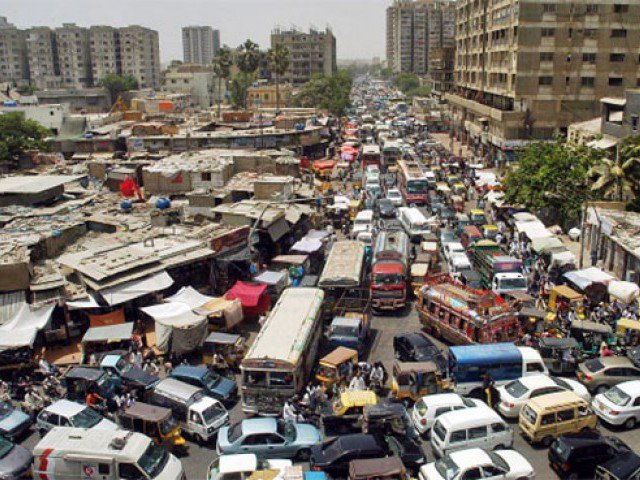
The EIU has repeatedly pointed to congested roads, crime, and strained public services as chronic drags on liveability scores in the world’s largest cities, and Karachi, home to more than 20 million people, has long struggled on those fronts. The city continues to grapple with unreliable water and electricity supplies, inadequate sanitation, chronic flooding during monsoon season, and public safety concerns that have kept it a fixture near the bottom of the rankings for years.
Dhaka, Bangladesh’s capital, finished just above Karachi at 171st, essentially unchanged from a year earlier. Tripoli, in Libya, placed 172nd. Damascus, still reeling from years of civil conflict, was ranked the world’s least livable city for a second straight year, with a score of just 31.6.
Two other cities scarred by recent warfare rounded out the bottom of the list: Tehran, at 164th, and Kyiv, at 166th, both scoring slightly higher than Karachi despite the toll of ongoing conflict.
Gulf Cities Feel the Fallout of War
If South Asian cities showed little movement this year, the Middle East told a starkly different story. The war between Iran and a coalition led by Israel and the United States, which began in February and escalated into strikes on neighbouring states and a blockade of the Strait of Hormuz, sent liveability scores across the region into decline. The EIU found that the region’s 18 surveyed cities fell by an average of more than three places in this year’s rankings.
Muscat, the capital of Oman, absorbed the steepest fall of any city in the index, tumbling 14 spots to 123rd after a series of Iranian drone strikes rattled the country. Kuwait City was not far behind, dropping 12 places to 105th. The EIU’s analysts described themselves as surprised by the extent of the damage in both cities, saying they had anticipated some deterioration in Gulf scores but not one this severe.
Tehran, meanwhile, fell into the bottom ten of the global rankings for the first time.
Copenhagen Holds the Top Spot
At the other end of the spectrum, Copenhagen extended its reign atop the rankings for a second consecutive year, earning a near-perfect score of 98 out of 100. The Danish capital posted perfect marks of 100 in stability, education, and infrastructure, along with a 96 in healthcare and a 95 in culture and environment — a level of consistency that EIU analysts said, rather than any single standout category, explains its hold on the top spot.
Vienna held on to second place, followed by Melbourne in third. Rounding out the top ten were Sydney, Zurich, Geneva, Osaka, Adelaide, Vancouver, and Tokyo. Vancouver was the only North American city to crack the top ten, while Tokyo stood out as the sole megacity — a metropolis with a population exceeding 10 million — to make the list.
Despite the turbulence in the Middle East, the global average liveability score held steady at 76.1 out of 100, unchanged from the previous two years. EIU analysts attributed the stagnation to a kind of statistical balancing act: declining stability scores in the Middle East were offset by healthcare gains across Asia, particularly in China, where years of public investment in medical infrastructure have begun to show results. Nine Asian cities now rank among the global top 20, alongside seven from Europe.
Looking ahead, EIU analysts cautioned that the economic aftershocks of the Iran war — including rising energy costs, strained household budgets, and the potential for public unrest — could continue to weigh on cities’ rankings well into 2027.
Copyright © 2021 Independent Pakistan | All rights reserved