By Staff Reporter
ISLAMABAD: The government is preparing to reintroduce fuel conservation and austerity measures as soon as this week, as a fresh escalation in Middle East hostilities threatens to drive up oil prices and strain the country’s foreign exchange reserves, Dawn newspaper reported on Monday.
The potential return of restrictions comes just weeks after authorities lifted similar measures in June, when a ceasefire understanding between the US and Iran helped calm global oil markets. Prices have since climbed again amid renewed regional conflict, prompting officials in Islamabad to revisit the emergency toolkit deployed earlier this year.
A senior government official told Dawn that Prime Minister Shehbaz Sharif has already discussed conservation measures with his team over the past week, and the federal cabinet may take up the matter formally in the coming days. The timing will hinge on how the regional situation evolves and on input from the Ministry of Finance and the State Bank of Pakistan, the official said.
Reserves Under Pressure
The renewed urgency stems in large part from the state of Pakistan’s foreign currency holdings. Reserves fell to approximately $22.67 billion as of July 10, down from $23.99 billion at the start of the month, according to the official — a level that leaves the country with slightly more than three months of import cover.
Officials have already decided in principle not to allow further depletion of reserves, the person said, which effectively puts back on the table the full suite of measures introduced in March, when the closure of the Strait of Hormuz first roiled energy markets.
Those measures, in place from early March until they were lifted in late June, included a four-day working week, a 50% reduction in government staff attendance, a 50% cut to official vehicle use, a shift to online meetings, restrictions on non-essential spending, a ban on foreign travel by officials, highway speed limits, and pay cuts for top earners in the public sector. Market and business hours were also curtailed before being partially eased for some sectors. With schools largely on seasonal break, authorities are expected to encourage a greater reliance on online instruction rather than reimpose blanket restrictions on educational institutions.
Daily Pricing, Not Deregulation
Separately, the government has moved to revise petrol and high-speed diesel prices on working days rather than weekly, a shift that has been characterized publicly as a step toward market-based, daily pricing. But the mechanics tell a more limited story.
Under the new arrangement, the Petroleum Division will announce rates each evening from Monday through Friday, mirroring its previous practice, but will no longer issue changes on a strict weekly cycle. Because no announcements are made on weekends, prices set on a Friday will hold through Saturday, Sunday and the following Monday — meaning consumers still face a three-day stretch without any adjustment.
The official said the frequency of revisions could eventually narrow to four days a week once conservation measures take effect, subject to cabinet approval.
Little has changed in the underlying pricing formula itself, according to the official, who noted that last week’s announcement of the shift had triggered considerable internal debate before authorities settled on adjusting only the frequency of revisions rather than the mechanism. The Oil and Gas Regulatory Authority, or Ogra, will continue to calculate price changes and submit its working paper to the Petroleum Division, which then issues the formal notification, the official said. Ogra has in fact been calculating prices daily as a matter of routine even during the earlier era of fortnightly or weekly adjustments, the official added.
The daily rates published by S&P Global Platts will still anchor the local calculation, but on a rolling rather than fixed weekly basis. Under the new system, the Platts rate from the first day of the prior week — say, a Monday — will roll off the pricing sheet and be replaced by the following Tuesday’s quote.
The transition has already produced one anomaly: the first price change under the new system, announced last Friday and effective for the July 17-20 period, drew on import prices spanning nine days, from July 9 to July 17, rather than the standard five-day window used in previous weekly adjustments.
Ogra will also begin publishing these pricing details on its website — a modest return to a practice the regulator abandoned roughly 15 years ago, when it stopped disclosing even granular price build-up factors and its archive of historical changes. That earlier retreat from transparency followed the government’s move to reassert political control over fuel pricing, elevating final decisions to the level of the prime minister, the official said.
Government Retains Control
Despite the rhetoric around deregulation, the government has not ceded any of its core pricing powers, the official said. Authorities continue to determine fuel requirements, set the petroleum levy, climate levy, customs duty and deemed duty, approve margins for oil marketing companies and dealers, partially regulate cargo movement, and adjust the freight equalization margin.
“We have not given up any of these roles or devolved these powers to the oil industry,” the official said, adding that global crude prices, import premiums and insurance costs remain outside Pakistan’s control regardless of any domestic pricing changes.
Government-imposed taxes and margins currently add roughly 110 rupees per liter to the price of petrol and 96 rupees per liter to diesel, and any changes to those fixed charges will remain a government decision, the official said.
True deregulation — under which the government and its regulators would limit themselves to setting product specifications and mandatory stock levels, leaving oil companies free to source products and compete on price and service — remains a future possibility rather than an imminent step, according to the official.
Such a shift would carry risks of its own, potentially creating difficulties for local refineries, petroleum dealers and consumers, particularly in rural areas. It could also complicate ongoing investigations into some marketing companies accused of importing fuel quantities of their choosing and storing them in warehouses outside the jurisdiction of Pakistan Customs — a practice currently treated as illegal. Under a deregulated regime, that conduct could instead become standard business practice.
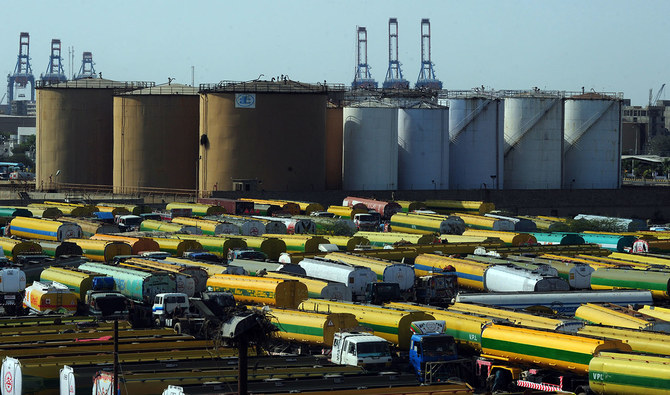
The petroleum minister is already in talks with investors from friendly countries about establishing oil storage warehouses along Pakistan’s ports and coastal areas, the official said — groundwork that could support a future shift toward a more liberalized market, even as the government insists no such transition is underway yet.
Copyright © 2021 Independent Pakistan | All rights reserved