By Staff Reporter
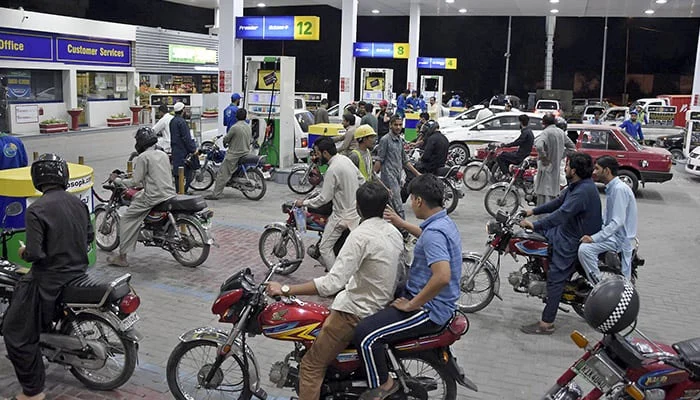
ISLAMABAD: Pakistan’s petrol pump owners called off a threatened nationwide strike on Wednesday after Petroleum Minister Ali Pervaiz Malik agreed to review their grievances within two weeks, averting a shutdown that would have shuttered thousands of fuel stations across the country.
The All Pakistan Petroleum Pump Owners Association had planned to halt operations from 6 a.m. Thursday, escalating a dispute over the government’s shift to daily fuel-price revisions — a policy triggered by renewed hostilities between the United States and Iran that have roiled global crude markets.
Malik told reporters at a joint press conference with dealer representatives that the government would submit a summary to the federal cabinet addressing dealer margins, based on recommendations from the Oil and Gas Regulatory Authority. He said a meeting involving pump owners, the regulator and the energy ministry would follow to work through the sector’s complaints.
“He has assured us that they will sort out these problems within two weeks,” Nadeem Khan, the association’s information secretary, told reporters. “So, based on these assurances from him, we are postponing our shutdown call so our people can evade these difficulties and we hope that within two weeks our problems will be resolved.”
The association had announced the strike Tuesday after an hour-long meeting with government officials that failed to produce an agreement, with vice chairman Nauman Ali Butt calling the daily pricing shift “unacceptable to petrol pump dealers and unworkable.” A day later, following what Khan called a “detailed session” with Malik, the group reversed course.
Raja Waseem, vice chairman of the Pakistan Petroleum Dealers Association, said his group was also standing down based on the minister’s assurances.
Daily Pricing Under Fire
At the center of the dispute is Pakistan’s move away from the fortnightly and weekly fuel-price adjustments that had governed the market, toward a daily mechanism approved by Prime Minister Shehbaz Sharif and the federal cabinet. Under the new framework, the Oil and Gas Regulatory Authority sets ex-depot prices for petrol and high-speed diesel each day, based on a seven-day rolling average of international benchmarks. Prices set on Fridays carry through the weekend unchanged.
The regulator can now notify daily prices without prior sign-off from the prime minister’s office, though any change to the petroleum levy still requires approval from the Finance Division and cannot exceed cabinet-set limits. Malik said Ogra would begin publishing daily prices — along with an Urdu-language breakdown — on its website to improve transparency.
The government has framed the shift as a way to pass through global price swings more quickly and curb the kind of market manipulation and windfall profits that can accumulate under slower-moving pricing regimes. Pakistan, which sources most of its crude from the Middle East and depends on tanker traffic through the Strait of Hormuz, first moved to weekly revisions in March as the Iran-US conflict pushed up international prices and stoked concern over supply disruptions.
The pump owners’ association wants the daily mechanism scrapped altogether and is pushing to raise its margin to 8% of the pump price, from a fixed rate of 8 rupees per liter that has not moved in three years. The group is also seeking a waiver on the 0.8% fee it says is deducted from credit-card transactions at the pump.
Khan said Malik had described the daily pricing shift as a two-week trial that would be reassessed based on its “merits and demerits.” “If it does not cause much difficulty for people, then we will continue it,” Khan said, relaying the minister’s comments. “Otherwise, if there are a lot of difficulties, it will be reconsidered… and we will bring it back to our old routine of fixing prices every month or on a fortnightly basis again.” Khan said the commitment was also put in writing.
Subsidies and Regional Tensions
Malik said the government has deployed roughly 100 billion rupees since Feb. 28 to cushion consumers from rising fuel costs, including a targeted subsidy scheme for lower-income households, as prices climbed in the wake of the Iran-US war.
“The clouds of war are again building in the region and fuel prices are rising,” Malik said, adding that he had briefed the dealers’ association on the situation and that the group had backed the government’s response.
The minister said Pakistan’s civilian and military leadership — including Sharif, Field Marshal Syed Asim Munir, the interior minister and the foreign minister — were in contact with Iranian and US officials as part of efforts to support a ceasefire and stabilise the region.
Malik said any gains generated under the current pricing formula would be passed to consumers “promptly and transparently,” and that the government intended to keep working within its fiscal constraints and existing agreements to address the sector’s concerns.
Khan, for his part, said the dealers were not seeking special treatment. “The association had made no illegitimate demands, but was demanding a legitimate right that had been halted since 2022,” he said, adding that he hoped Malik would follow through.
Copyright © 2021 Independent Pakistan | All rights reserved