By Staff Reporter
ISLAMABAD: Pakistan warned on Wednesday that it stood ready to use force to defend its ships and maritime interests, as Yemen’s Houthi movement pressed ahead with threats of a naval blockade against Saudi Arabia that has already prompted tankers to change course in the Red Sea.
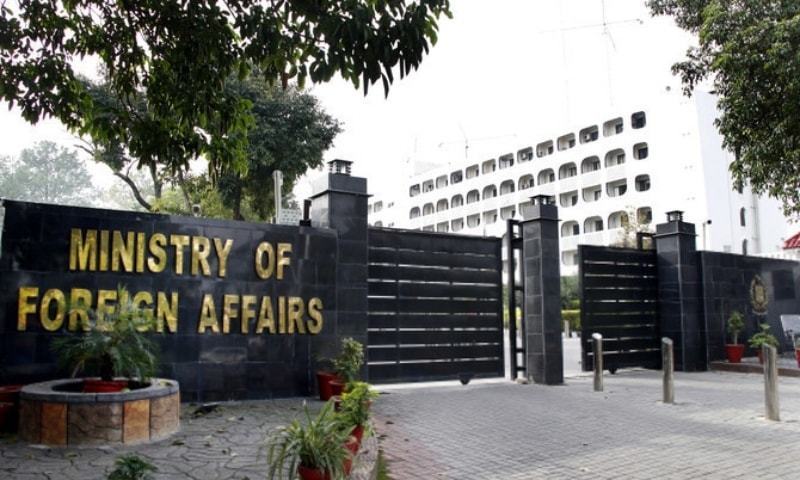
In a statement, Islamabad’s Foreign Office said it “unequivocally” condemned the continued threats made by the Iran-aligned rebel group against the kingdom and against commercial shipping more broadly, warning that the situation carried real risks for the wider region and for the flow of global trade.
“Threats against commercial shipping and trading with the Kingdom of Saudi Arabia are unacceptable and violate established principles of international law,” the Foreign Office said, adding that Pakistan was “particularly concerned by reports of threats directed against vessels engaged in lawful commercial trade” with the kingdom.
The ministry went further, setting out explicitly what Pakistan would regard as a red line. “Any hostile act against Pakistani-flagged vessels or Pakistani maritime interests will be regarded as a grave threat to Pakistan’s national security and sovereign interests,” it said, adding that the country reserved the right to “take all necessary measures, including lawful use of force,” in self-defence, in keeping with the UN Charter and international law.
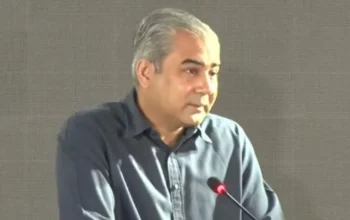
The statement, issued in Islamabad and also shared in Arabic on the Foreign Office’s social media account, was delivered by ministry spokesperson Tahir Andrabi. It reflects growing unease in Islamabad about the risk of being drawn into a conflict far from Pakistan’s shores but with direct consequences for an economy still heavily reliant on Gulf oil.
A blockade that has already begun to bite
The warning follows an announcement by Houthi military spokesman Yahya Saree on Monday that the group was imposing an immediate “maritime embargo” on Saudi Arabia, in what he described as retaliation for a strike on Sanaa airport that the Houthis blame on Riyadh, though responsibility was claimed by the internationally recognised Yemeni government in the south.
Whatever its precise trigger, the declared blockade marks a serious escalation in a confrontation that had, until recently, been held in check by a fragile 2022 truce between the Houthis and Saudi Arabia — a truce that has technically expired but largely endured until the two sides exchanged fire for the first time in years last week.
It is still unclear exactly how the Houthis intend to enforce a blockade of this kind. But the mere threat has been enough to unsettle shipping in one of the world’s most sensitive maritime corridors. According to ship-tracking data cited by Reuters, four tankers altered course in the Red Sea on Wednesday, two of them signalling a new destination of the Suez Canal rather than continuing south towards the Bab al-Mandeb strait; the other two set course instead for open water. A fifth vessel, a car carrier bound for the Saudi port of Jeddah, also appeared to turn away in the Gulf of Aden. The data was compiled by LSEG and MarineTraffic and analysed by the British maritime risk consultancy Vanguard.
That followed a similar pattern on Tuesday, when three tankers carrying Saudi crude bound for China and India made U-turns rather than risk passage along Yemen’s coastline, opting for the longer route via the Suez Canal instead.
The Bab al-Mandeb strait, the narrow chokepoint at the southern end of the Red Sea through which all traffic to and from the Suez Canal must pass, has long been a Houthi pressure point. The group disrupted shipping through the same waterway extensively during the Gaza war, and now appears willing to use the same leverage directly against Saudi Arabia.
Saudi oil exports already under strain
The timing could hardly be worse for Riyadh. With Iran’s ongoing conflict with the United States having effectively closed off the Strait of Hormuz to safe passage, Saudi Arabia has come to depend heavily on its Red Sea outlet at Yanbu to keep crude moving to international markets. Any serious disruption to that route would leave the kingdom with drastically reduced options for exporting oil.
Figures released on Tuesday by the Joint Organisations Data Initiative showed Saudi crude exports had already fallen for a third consecutive month in May, hitting a record low of around 3.434 million barrels per day — down sharply from 3.986 million bpd in April — as the US-Iran conflict continued to disrupt shipping across the Gulf.
Washington has signalled it would not stand by if the Houthis follow through. President Donald Trump, speaking from the Oval Office on Tuesday during a meeting with Lebanese president Joseph Aoun, said the US would “take care of things” should a blockade materialise. “So far, it hasn’t happened, might happen, but we take care of things,” he said. “You know, we’ve done that with the Houthis before, and we haven’t heard from them in a while since we did what we did originally.” Secretary of State Marco Rubio, meanwhile, laid blame for the escalation at Iran’s door, pointing to attacks on three vessels in the days beforehand despite Tehran’s professed interest in renewed talks.
A long-standing alliance under pressure
Pakistan’s response cannot be separated from the depth of its relationship with Riyadh. The two countries have maintained close defence and security ties for decades, cooperation that has long been a central pillar of Pakistani foreign policy. That relationship was formalised further last September, when Islamabad and Riyadh signed a Strategic Mutual Defence Agreement committing each side to treat an attack on the other as an attack on itself.
The pact is not merely symbolic. Pakistan invoked it through diplomatic channels in early March, intervening to help deter what officials feared could have been heavier Iranian strikes against Saudi territory. And after the Houthis fired missiles at Saudi Arabia on 13 July, Prime Minister Shehbaz Sharif issued a strong condemnation of what he called “blatant attacks” on the kingdom. Pakistan also backed Riyadh’s position at an emergency UN Security Council briefing on Yemen, calling on all sides to resolve their differences through dialogue rather than force.
Wednesday’s statement struck a similar balance between firmness and restraint. Alongside its warning on the use of force, the Foreign Office said Pakistan was “deeply concerned over attempts to drag” Saudi Arabia into the broader Middle East conflict, and reiterated what it called its “unwavering support for the security, sovereignty, territorial integrity and prosperity of the brotherly Kingdom of Saudi Arabia.”
It closed on a note aimed as much at Tehran and the Houthis as at anyone else: “While remaining steadfast in its commitment to dialogue, diplomacy and regional de-escalation, Pakistan calls upon all parties to respect international law and ensure the safety and security of international maritime shipping.”
Copyright © 2021 Independent Pakistan | All rights reserved