By Staff Reporter
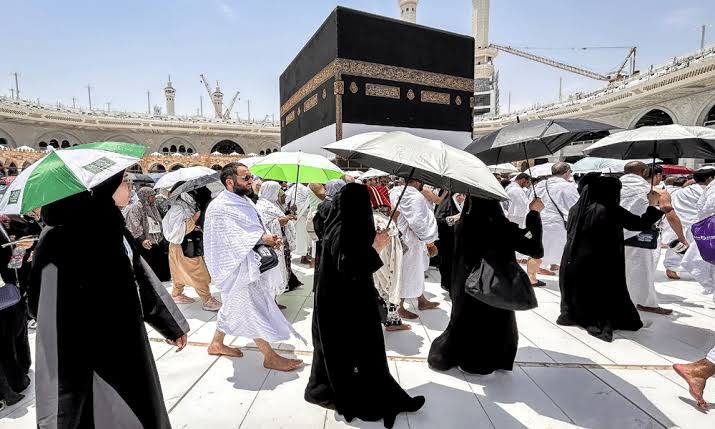
ISLAMABAD: Pilgrims from Pakistan will for the first time be able to select which year they wish to perform Haj, under a new four-year policy that ministers have billed as the start of a fundamental overhaul of the country’s pilgrimage arrangements.
Sardar Muhammad Yousuf, the federal minister for religious affairs, unveiled the framework at a press conference in Islamabad on Wednesday, describing it as far more than a routine policy update. “This is not only a policy but the beginning of fundamental and lasting reforms in Haj arrangements,” he told reporters, setting out plans for a new registration and waiting list system covering the years 2027 to 2030.
At the heart of the reforms is a mechanism allowing intending pilgrims to secure their preferred Haj year by depositing roughly 10 per cent of the total expected cost. Places will be allocated on a first-come, first-served basis through what the minister described as a transparent digital waiting list, rather than the annual application windows pilgrims have previously had to navigate.
The government also intends to sign multi-year contracts, running three to four years, for accommodation, transport, catering, air travel and cargo services — a move officials say should improve standards while bringing down costs. Every stage of the process, Mr Yousuf said, from initial registration through to grievance resolution and post-Haj review, would now run through a fully digital system.
The long-standing quota split between government and private Haj schemes will hold steady at 60 per cent and 40 per cent respectively through to 2030, unless the federal cabinet decides otherwise. Mr Yousuf indicated that his ministry expects its own role to evolve over time, shifting away from direct operational management towards regulation, monitoring and quality assurance, with private operators taking on a larger share of the work.
Pilgrims opting for the Government Haj Scheme will be offered a range of packages of differing lengths, tailored to different needs and budgets. Procurement and contracts, whether awarded in Pakistan or Saudi Arabia, will be required to strictly follow government procurement rules, according to the minister. Any surplus funds remaining from Haj dues once operations have concluded will be returned to pilgrims.
Oversight is also being strengthened. An independent third party will be brought in to review both public and private Haj arrangements impartially, while private Haj companies will face registration and monitoring based on their performance and compliance with service standards, rather than being judged on quota allocations alone. All private operators will be required to conduct bookings, payments, monitoring and auditing through a dedicated Private Haj Management Portal, with every payment channelled through government-designated banking routes to safeguard financial transparency.
A modern digital complaint management system is also being introduced, alongside new monitoring mechanisms and a formal appeals process designed to resolve pilgrim grievances more swiftly. Separately, a Cabinet Committee will set merit-based criteria for selecting Haj assistants, while training for pilgrims themselves will be broadened to cover religious rituals, mobile applications, health guidance, emergency procedures and Saudi law.
The existing Haj Protector Scheme, which provides financial assistance in the event of deaths, accidents or emergency evacuations during the pilgrimage, will continue, backed by a new emergency management system and a dedicated response team.
Mr Yousuf said the policy had been designed in alignment with Saudi Arabia’s Vision 2030 and international standards, with an emphasis on transparency, digital governance, accountability and improved facilities for pilgrims. He offered particular thanks to Prime Minister Shehbaz Sharif, saying the policy had been developed under his guidance and support, and expressed confidence that the four-year framework would not only aid long-term planning but bolster the trust of millions of pilgrims by aligning Pakistan’s Haj arrangements with global norms.
Savings scheme to launch within months
Separately, senior officials at the religious affairs ministry have confirmed that Pakistan will roll out a Shariah-compliant Haj savings scheme within the next two to three months, giving prospective pilgrims a way to gradually save towards the pilgrimage while locking in a place years ahead of time with the same 10 per cent upfront payment.
The savings plan forms part of the wider four-year framework, which the cabinet approved earlier this month. Religious Affairs Secretary Abrar Ahmed Mirza said the ministry had secured preliminary government approval for the scheme, with the finer details to be worked out alongside the financial institution ultimately tasked with running it.
Under the proposed arrangement, pilgrims would make monthly deposits into a savings account managed by that institution, while reserving their chosen Haj year through the standard 10 per cent deposit. “For example, if you want to go for Hajj in 2035, you will pay 10 per cent of the current Hajj cost and your slot will be booked. At the same time, you have joined the saving scheme,” Mr Mirza explained.
Savers will be offered a choice between a Shariah-compliant, profit-bearing account and a non-profit current account, with the Islamic investment option intended to help offset the rising cost of the pilgrimage over time. “In both cases, when the amount accumulated is transferred to the ministry, your slot will be confirmed for that year,” Mr Mirza said. “The cost of Hajj will be determined for the particular year that is chosen, but the Shariah-compliant profit will give you a cushion to cover risk and inflation.”
Although the scheme has been developed by the ministry, it will be administered by a financial institution rather than the ministry itself once launched.
Saudi cooperation praised
Mr Yousuf also singled out Saudi Arabia’s cooperation for praise, particularly its facilitation of the Makkah Route Initiative, which allows Pakistani pilgrims to complete immigration formalities before they even leave Pakistan. “Last year, the Makkah Route Initiative was implemented from Karachi, Islamabad and Lahore. It is great cooperation, and they are paying the expenses for this, not us. Our 80 per cent pilgrims benefited from that scheme,” he said.
Pakistan remains one of the largest contributors of pilgrims to the annual Haj. For the 2026 pilgrimage, the country was allocated a quota of 179,210 pilgrims, split between 119,210 places under the government scheme and 60,000 through private operators.
The pilgrimage currently costs between roughly Rs1.2 million and Rs1.3 million — around $4,318 to $4,678 — under the government scheme, a sum that remains out of reach for many ordinary Pakistanis, underscoring the significance of the new savings initiative for those hoping to fulfil the pilgrimage in years to come.
Copyright © 2021 Independent Pakistan | All rights reserved