By Staff Reporter
ISLAMABAD: Rights groups have demanded an independent investigation into deadly clashes between protesters and security forces in Azad Jammu and Kashmir, as the Himalayan territory presses ahead with elections shadowed by weeks of unrest and a communications blackout that has only now begun to lift.
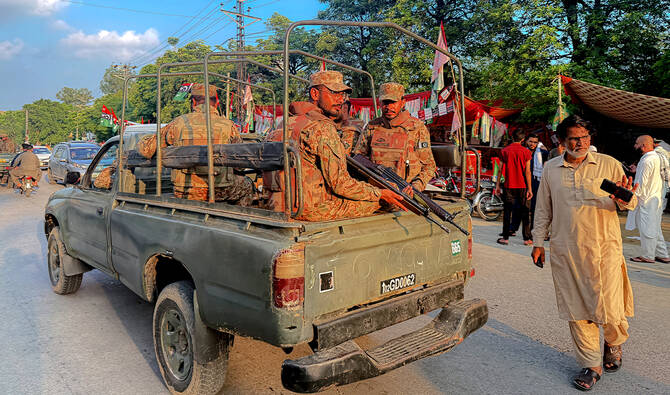
The Human Rights Commission of Pakistan and Amnesty International both issued statements this week voicing alarm over violence in Rawalakot, in the region’s Poonch district, where clashes broke out between demonstrators and law enforcement on Monday. A further confrontation followed in Mirpur on Tuesday. Both incidents left casualties, though the precise toll remains unclear and disputed.
The unrest has built for weeks around the Joint Awami Action Committee, a protest movement now banned by the Azad Kashmir government, which has been demanding the scrapping of 12 seats in the region’s legislature set aside for refugees from Indian-occupied Kashmir. Officials in Islamabad have cast the group in starkly different terms, accusing it of harbouring militant elements acting on what they describe as a foreign agenda underwritten by Indian money. The clashes have unfolded against the backdrop of AJK’s staggered elections, held in three phases by division.
In its statement, the HRCP said it was “deeply alarmed” by reports of deaths and injuries arising from Monday’s confrontation in Rawalakot. “The reported deaths in Rawalakot are a stark reminder of the human cost of the tensions that have gripped AJK in recent weeks,” the commission said, adding that while the authorities were entitled to maintain public order, this “must never come at the expense of the right to life or the freedoms of peaceful assembly and expression”.
The commission called for the “cycle of violence” to end and pressed for what it termed a “prompt, impartial and independent investigation” into the deaths and injuries, together with accountability for anyone found to have used unlawful force. It urged the authorities to show restraint in policing further protests. “As the remaining phases of the elections approach, the focus must shift from confrontation to protecting lives and restoring public confidence,” the statement concluded.
Amnesty International supported that call while also pressing the authorities to lift the communications blackout that has cut off large parts of the territory. Isabelle Lassee, the organisation’s acting regional director for South Asia, sought a “prompt, independent, and transparent investigation” into reports of force being used against protesters. She warned that the ongoing internet and mobile shutdown was hampering efforts to establish what had actually happened on the ground. “So long as an internet and mobile services blackout remains in place, it will severely impede the independent verification of the full extent of the situation on the ground,” she said, calling on the Pakistani authorities to restore full communications access and admit media and independent observers to the affected areas.
There was a partial breakthrough on Wednesday, when internet services returned to parts of Muzaffarabad division after a 54-day suspension that had run since a blanket shutdown was imposed on the night of June 5. It was not immediately clear whether the restoration extended across the whole division or was confined to the state capital, and residents who had spent weeks pressing for the shutdown to end greeted the news with evident relief. That relief was tempered, however, by continuing complaints over the speed of cellular data, which many described as painfully slow — echoing similar frustrations already reported in Mirpur, where services had been restored on 23 July, four days ahead of voting in the election’s first phase.
The blackout has made it markedly harder to establish a reliable account of events in the territory, with residents and officials in affected districts largely unreachable and more junior officials declining to comment on the situation. Although normality had broadly returned to Muzaffarabad and Mirpur divisions in other respects, the authorities had continued to withhold internet access in both despite repeated appeals from residents, businesses, students and political figures.
The stand-off between the regional administration and the Joint Awami Action Committee has been building for more than a month, centred above all on the committee’s demand that the 12 refugee seats in the AJK Legislative Assembly be abolished — a campaign that has drawn protests across the territory. On 5 June, after the committee announced plans for a strike on 9 June, the AJK government declared it a proscribed organisation and placed it under the First Schedule of the region’s anti-terrorism legislation. The following day, authorities launched a crackdown that saw scores of the committee’s leaders detained, with 147 activists subsequently placed under the Fourth Schedule of the same law.
On Tuesday, Pakistan’s information minister, Attaullah Tarar, rejected any characterisation of the committee as a peaceful movement, describing it instead as violent and alleging the involvement of militant elements pursuing what he called a foreign agenda backed by Indian funding. Referring to the first phase of AJK’s elections, held in Mirpur division on Monday, he said: “Peaceful and transparent elections were held in AJK, with all the mainstream political parties participating fully. The people of Kashmir responded to the call of the election.” The banned organisation, he added, could not accept either that political process or the elections that had accompanied it.
Copyright © 2021 Independent Pakistan | All rights reserved