By Staff Reporter
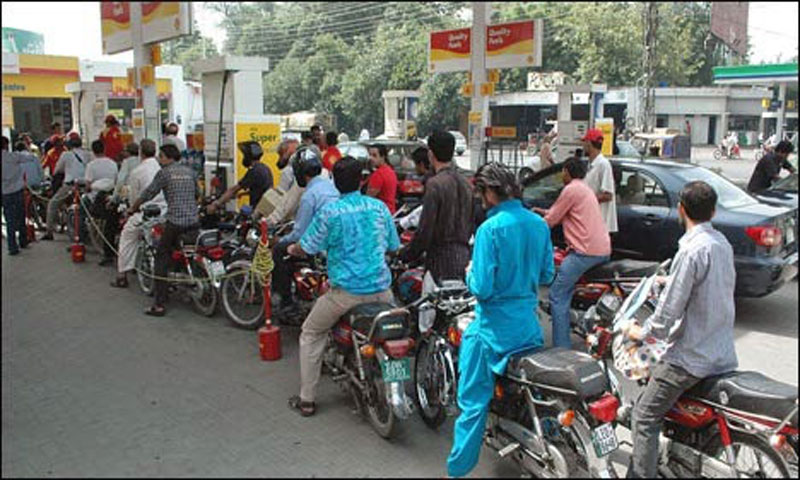
ISLAMABAD: Pakistan’s government said it’s prepared to reinstate targeted fuel subsidies within days if the conflict between the US and Iran continues to disrupt global energy markets, even as it pushes ahead with plans to deregulate petroleum pricing.
Petroleum Minister Ali Pervaiz Malik told reporters Thursday that authorities would revive the subsidy mechanism used earlier this year to shield consumers from price shocks, should hostilities fail to de-escalate in the coming days. The comments came after he briefed the Senate Standing Committee on Petroleum on the country’s month-old daily pricing system.
“If this matter does not end in a few days, we will bring back the targeted subsidy mechanism that we previously used to prevent the price shock from reaching the people,” Malik said, referring to the renewed clash between the US and Iran.
The minister said Prime Minister Shehbaz Sharif had initially allocated 130 billion rupees ($459 million) toward fuel subsidies before enlisting provincial governments to help fund the targeted relief program. Malik added that provinces would again be asked to contribute financially if the mechanism is revived.
Malik said the prime minister and his cabinet were acutely aware of the strain on ordinary Pakistanis, but stressed that lasting relief would only materialize once the conflict ends and global crude prices retreat. He said Field Marshal Asim Munir, chief of defense staff and army chief, along with Sharif, were engaged in diplomatic efforts toward that end.
IMF Constraints Limit Options
With Pakistan still operating under an International Monetary Fund program, Malik said the government has little fiscal room to maneuver and must recover legitimate fuel costs from consumers rather than absorb them. Artificially suppressing prices, he said, would simply shift the burden elsewhere.
The daily pricing mechanism, introduced to replace the previous fortnightly system, was designed to pass through international price movements gradually rather than expose consumers to the larger swings that accumulated under biweekly adjustments, according to Malik.
“We have tied our hands ourselves and handed over a transparent system to the people,” Malik said, noting that the Oil and Gas Regulatory Authority, or Ogra, publishes its pricing calculations on its website. He said consumers would see the greatest benefit once competition and transparency drive down costs at the pump.
Senate Committee Divided
The Senate panel, chaired by Senator Umer Farooq, offered a mixed assessment of the new system. Malik told committee members that Ogra sets prices according to international market movements under a transparent formula, framing the change as a way to remove political influence from price-setting by handing authority to the independent regulator.
Senator Amir Chishti praised the daily pricing approach, while Senator Saifullah Abro called it “slow poison.” Committee members pressed Malik on the rationale for abandoning the fortnightly system.
Ogra Chairman Nabeel Awan told the committee that prices are calculated using a seven-day rolling average tied to Platts international benchmarks, a method he said spreads out the impact of global price swings and limits sudden shocks — particularly important given the current volatility stemming from the US-Iran conflict.
The committee also raised concerns about the tax burden on petroleum products. Representatives of the Petroleum Dealers Association told senators that frequent price changes were complicating operations for fuel retailers. Farooq directed Ogra to consult with the dealers’ association and other stakeholders and return with a practical proposal to ease their concerns.
Government Review Panel Backs Formula
Separately, a government committee tasked by the prime minister with reviewing the pricing mechanism — also chaired by Malik — endorsed the daily pricing formula, according to an official statement, citing improved transparency and reduced volatility compared with the previous system.
Subcommittees presented findings on various elements of the pricing structure during the review, and consulting firm KPMG delivered a report benchmarking Pakistan’s petroleum pricing and tax framework against regional peers.
Malik directed that oil marketing companies be held accountable for digitizing the petroleum supply chain end-to-end, a move meant to strengthen transparency, traceability and accountability in line with directives Sharif issued in December.
The committee also discussed the ongoing moratorium on licensing new oil marketing companies and its effects on competition and investment, along with the need to review the inland freight equalization margin — a pooling mechanism that keeps fuel prices uniform nationwide — particularly given its potential dissolution under full deregulation.
A windfall tax on the sector also came up for discussion. The Finance Division will work with the Federal Board of Revenue and the Petroleum Division to prepare a report on the matter for the committee’s next session.
The panel said it would continue reviewing subcommittee recommendations to develop a broader reform roadmap for the petroleum sector, with the stated goals of improving transparency, competition, efficiency and consumer protection.
Copyright © 2021 Independent Pakistan | All rights reserved