By Staff Reporter
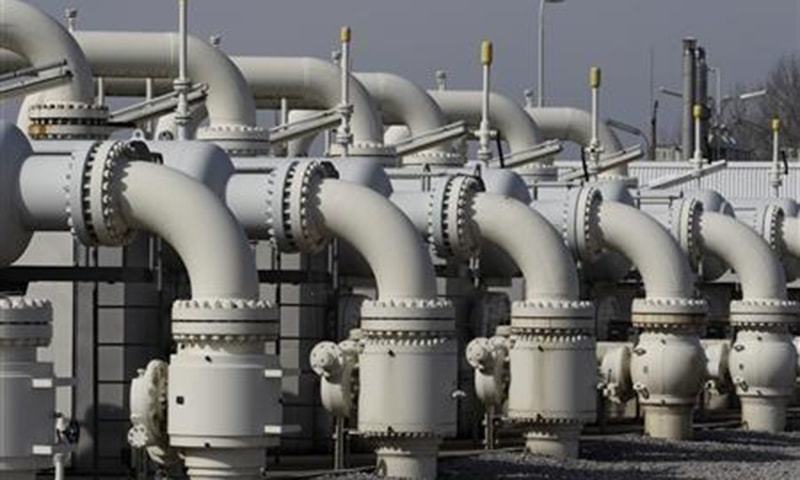
ISLAMABAD: Pakistan is reviving a long-stalled plan to break up its two dominant gas utilities into five separate companies, reopening a restructuring effort that regulators and consultants derailed six years ago on concerns it wasn’t financially sound.
The Petroleum Division is pushing to split Sui Northern Gas Pipelines Ltd. and Sui Southern Gas Company Ltd. into a single national transmission company and four provincial distribution firms, according to people familiar with the matter. The approach mirrors the breakup of Pakistan’s state power utility, Wapda, which was carved into more than 15 generation, transmission and distribution companies starting in the 1990s.
Petroleum Minister Ali Pervaiz Malik discussed the overhaul on Tuesday with World Bank Country Director for Pakistan Bolormaa Amgaabazar, according to an official statement issued after the meeting. The reform framework calls for separating the two Sui companies’ transmission, distribution and energy businesses while opening the gas value chain to greater private investment, the statement said.
Malik directed officials to prepare a final roadmap for submission to Prime Minister Shehbaz Sharif by the end of August, with implementation to follow in phases once the premier signs off, the statement said. Representatives of SNGPL, SSGCL and the Oil and Gas Regulatory Authority, or Ogra, joined the World Bank delegation at the meeting.
The plan has resurfaced before. Independent consultant KPMG and Ogra opposed an earlier version of the unbundling model in 2020 on financial and technical grounds, and called for wider consultation with provincial governments and private shareholders. The Cabinet Committee on Energy shelved the proposal that year after pushback from stakeholders.
Transmission Draws Interest
People familiar with the matter said several large business groups are interested in acquiring the transmission business through privatisation, and some with ties to policymaking circles have signalled interest in a stake in the transmission entity itself. The distribution side is a tougher sell: system losses vary widely by province, running highest in Balochistan and falling progressively through Khyber Pakhtunkhwa, Sindh and Punjab, while consumers nationwide currently pay uniform prices regardless of those losses. Transfer pricing and cross-subsidies between regions add further complications, the people said.
Under the proposal, a National Gas Transmission Company would absorb the transmission networks and operations of both Sui utilities, functioning as a common carrier open to third-party access — a structure modeled on the National Grid Company, formerly the National Transmission and Dispatch Company, that already performs that role in the power sector. The new entity would not buy or sell gas itself; instead, it would charge wheeling fees to suppliers and purchasers moving domestic gas or liquefied natural gas across its network.
The distribution networks would be split into several smaller companies within SNGPL’s and SSGCL’s existing service areas, sized according to population, network density, demand and operational efficiency, the people said. Regulators would also need to settle on a mechanism to equalize weighted-average sale prices, or an alternative pricing approach, across the newly separated distribution firms.
Financing Fight
The Petroleum Division wants to move quickly to appoint a transaction adviser to design the five-way split, with the adviser’s cost covered either by the World Bank or split evenly between SNGPL and SSGCL and later recovered from consumers through tariffs. Both utilities and their shareholders oppose the breakup — which would effectively dissolve them as they currently exist — and have resisted funding the process themselves, the people said.
Some officials within the Petroleum Division argue the pricing mechanism and broader reform structure should first go before the Council of Common Interests, the constitutional body that reconciles federal and provincial policy, before any adviser is hired, since the adviser’s mandate would hinge on whatever mechanism is agreed. Other officials and stakeholders have separately objected to formally splitting the two utilities into five or more entities before a transaction adviser has assessed whether the plan is workable at all, the people said.
The broader package includes a market evolution plan, an investment roadmap, a sector financial model and legal and regulatory groundwork, along with a program to expand Ogra’s capacity to police a more competitive market, according to the statement. Malik said deregulation needs to be matched with stronger regulatory oversight to protect consumers, and called for reworking the subsidy system — including redefining which customers qualify as “protected” — with an eventual goal of a single market-clearing price for gas.
The government projects the restructuring would bolster energy security, ease cross-subsidy burdens, sharpen pricing transparency for industrial buyers, and draw new investment and jobs across the gas sector, while putting SNGPL and SSGCL on firmer financial footing, according to the statement.
Copyright © 2021 Independent Pakistan | All rights reserved