By Staff Reporter
ISLAMABAD: President Donald Trump said the United States and Iran had held “very good discussions” during all-day negotiations on Tuesday, as diplomats inched towards a deal that could finally reopen the Strait of Hormuz after five months of war have throttled a fifth of the world’s oil and gas trade.
Oil prices fell and Asian stocks climbed on Wednesday, building on record highs on Wall Street, as traders bet that an agreement was close. But even as the US president talked up the prospect of an imminent breakthrough, the reality on the ground in Muscat and Tehran remained more tangled — and considerably more contested — than his upbeat framing suggested.
Speaking to Fox News’s Fox & Friends, Trump said the strait “is going to be open very soon”, adding a familiar warning: “If they back out again, they are going to get hit really hard.” It was a formulation he has used repeatedly over five months of war, threatening devastating strikes on Iran even as he simultaneously claims progress in talks that have so far failed to deliver a lasting resolution.
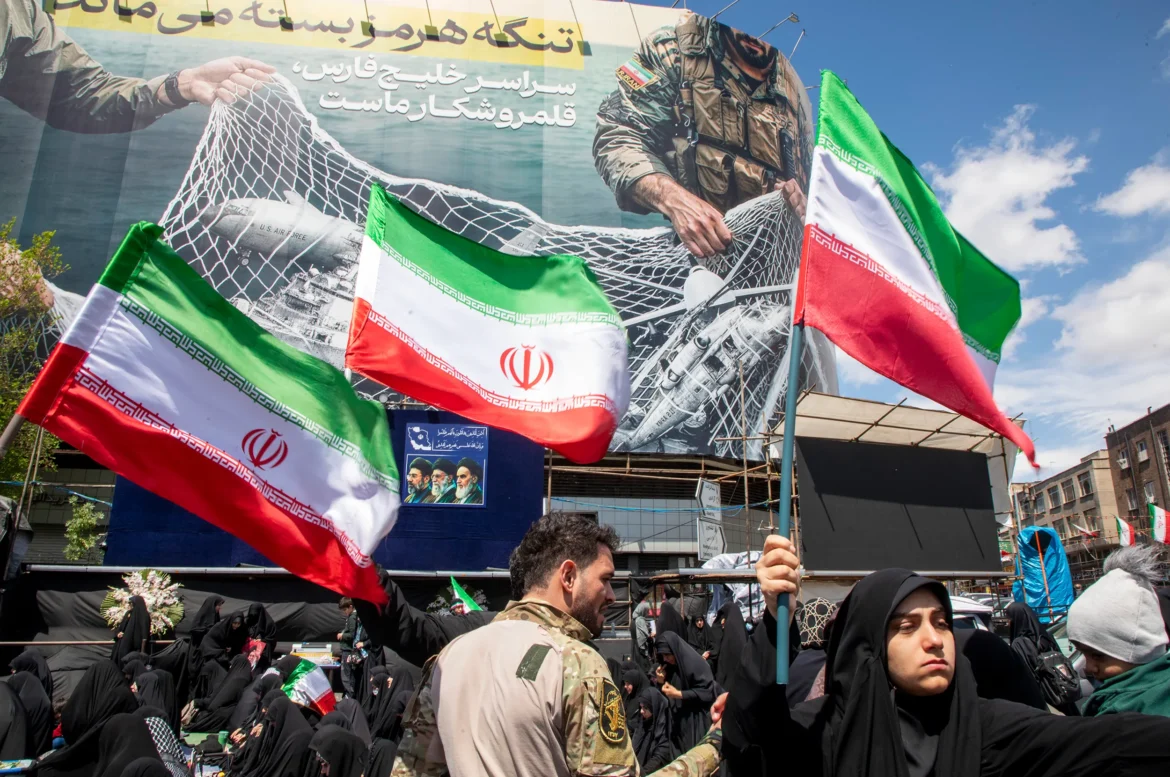
Iran’s foreign ministry offered the clearest sign yet that something concrete had shifted. Spokesperson Esmaeil Baghaei said on Wednesday that Tehran and Muscat had agreed the geographical coordinates of a proposed shipping route through the strait, following two months of technical, legal, security and environmental discussions. A joint statement setting out the main points of agreement was now in its final stages of drafting, he said — “provided that certain third parties do not obstruct the process”, a pointed reference to Washington.
It marks a genuine step forward after weeks of on-off signalling. But Baghaei was careful to separate the technical progress from any suggestion that the strait itself was about to reopen, a distinction Iranian officials have repeated with striking consistency across state media in recent days.
A deal that favours Tehran
The shape of the emerging arrangement, as described by regional officials and a senior Iranian source, would represent one of the most significant concessions of the war so far. Two regional officials briefed on the talks said the deal under discussion would see ships enter the Gulf through a route controlled by Iran and exit through a separate route controlled by Oman, with service fees charged for security and environmental upkeep.
A senior Iranian source went further, telling reporters that the text already on the table envisaged Iranian control of ships heading into the Gulf, with one of the last sticking points being what role, if any, Iran would have over vessels travelling in the opposite direction. “The concession has already been made regarding some form of control over Hormuz,” one regional source said.
The scale of that concession is hard to overstate. Before the war began on 28 February, the strait was open to all shipping with no fees attached. Any formal role for Iran in policing transit — even a temporary one — would mark a substantial shift in the regional balance of power in Tehran’s favour, achieved despite a US and Israeli military campaign that set out explicitly to curb Iran’s influence, not expand it.
Fee levels remain a live point of negotiation. According to the senior Iranian official, Tehran has been seeking charges of between 5 and 7 percent of cargo value from ships transiting the strait, while Oman has proposed a smaller figure of around 3 percent. Washington, for its part, wants no fees at all — though officials on both sides suggest that framing any charges as “voluntary”, even nominally, could offer a face-saving route through the impasse, notwithstanding the implicit threat that shippers would face if they declined to pay.
Washington has not commented on the specifics of the emerging deal. Secretary of State Marco Rubio said on Tuesday that talks on passage through the waterway had not yet been finalised but that he expected an agreement “very shortly”. US officials have repeatedly insisted they would never accept any arrangement granting Iran control over access to the world’s most important energy trade route — a position that now sits awkwardly alongside reports of what is actually being negotiated.
Scepticism in Tehran despite the optimism
Iranian officials have been notably more cautious than their American counterparts about the pace of any deal. A senior Iranian source pushed back directly against Trump’s suggestion that an agreement was imminent, noting that Foreign Minister Abbas Araghchi was currently on holiday and that “important details still had to be agreed”. “Talks are continuing, but it is too early to say that a deal with Oman has been finalised,” the source said.
Another Iranian source was blunter still: “The devil is in the details. A single tweet from Trump could cause the whole thing to collapse.”
State media in Tehran struck a similarly guarded tone. Iranian outlets, citing an informed source, said any agreement with Oman would be delayed “as long as the United States continues to threaten Iran” — a message reinforced by Sepah News, which quoted a source blaming “US interference” and Trump’s threats as the principal obstacle to finalising terms. “Iran will not reach any agreement under the shadow of threats,” the source said.
Iranian officials have also gone to considerable lengths to decouple any Oman route agreement from the question of the strait’s actual reopening. Press TV and other Iranian outlets reported that even a finalised agreement with Muscat “has nothing to do with the immediate opening of this strait”, and that navigation would remain restricted until Washington corrects what Tehran characterises as ongoing violations. “The reopening of the Strait of Hormuz depends on a change in US behaviour,” one source said.
Esmail Kowsari, a member of the Iranian parliament’s national security committee, was more pointed in his criticism of the US president personally, telling state broadcaster IRIB that Trump’s approach to the negotiations was “contradictory and unreliable”. Trump, he said, had claimed 75 separate times that the strait was open when it was not, referenced “Iran’s defeat” 106 times, and declared a deal “imminent” on 88 occasions.
Qatar and Oman work the diplomatic channels
Away from the war of words, mediators have continued quiet efforts to narrow the gap between Washington and Tehran. Qatar’s Emir, Sheikh Tamim bin Hamad Al Thani, spoke by phone with Trump on Tuesday to discuss ways of bridging the differences between the two sides and improving prospects for a durable settlement, according to Qatar’s Emiri office, which did not release further details of the call.
Doha had earlier said mediators were making progress towards ending the conflict, even as Tehran publicly denied that direct talks with Washington were under way — a contradiction that has characterised much of the diplomacy around this war, in which back-channel movement is frequently obscured by public denial.
The human cost continues to mount
Even as negotiators work towards a resolution, the war’s toll keeps climbing. The UN’s International Maritime Organization has recorded at least 17 deaths of seafarers across 64 separate incidents in the Strait of Hormuz since fighting began on 28 February. Iran has separately reported more than 3,400 deaths since the war started, including 50 people killed and 500 wounded in a renewed wave of US strikes since late June — a toll that predates Iran’s disclosure that a US strike on Qeshm in late July killed a husband, wife and their two-year-old son. The United States has reported 18 military personnel dead over the same period.
Fresh violence in the Red Sea
The diplomatic manoeuvring over Hormuz has done nothing to calm a second, parallel front in the wider regional conflict. Yemen’s Houthi movement claimed on Wednesday that it had struck the Saudi oil tanker – Wafaa – with several ballistic missiles in the northern Red Sea, off the coast of Yanbu. Military spokesperson Yahya Saree said the strike was “accurate” and formed part of what the group describes as a “blockade for blockade” campaign against Saudi Arabia, launched on 22 July. It was, according to Saree, the eighth Saudi tanker targeted since the blockade began; he claimed a further 29 vessels had either been turned back or prevented from entering the Red Sea and Arabian Sea altogether. Saudi authorities did not immediately respond to the claim.
The attack followed a separate, more serious incident on Tuesday in which a projectile struck an Indian-flagged vessel near Yemen, causing it to capsize and sink. All 14 crew members — 13 of them Indian nationals — were rescued, according to Indian officials. Yemen’s internationally recognised government, based in the south of the country and a rival to the Houthis for control of Yemen, blamed the attack on the Houthi movement, though the group did not immediately claim responsibility for that specific strike.
A war Trump did not expect to still be fighting
Five months on from launching the campaign, Trump has yet to secure any of the goals he set out at the outset: dismantling Iran’s nuclear programme, curbing its capacity to strike regional rivals, or creating the conditions for Iranians to overthrow their clerical leadership. He initially predicted the operation — dubbed “Operation Epic Fury” — would culminate in Iran’s “unconditional surrender”, with the US president himself signing off on the choice of the country’s next leader.
That ambition has given way to a considerably narrower and more transactional goal: reopening a shipping route that Iran now appears set to help control. Polling shows American voters oppose the war roughly two to one, a political reality that has driven Trump’s search for an exit even as he continues to threaten Tehran with fresh military action.
The military picture helps explain the shift. Months of US strikes — including a sustained two-week campaign in July — have failed to break Iran’s grip on the strait. Reuters reported this week that the US Army has exhausted nearly all of its long-range precision missile stocks, while American commanders warned Trump in July that supplies of certain munitions were running critically low. Each escalation by Washington has, so far, been met by a firmer response from Iran and its regional allies, including the Houthi fighters who now control much of Yemen and, with it, a second vital shipping chokepoint at the southern end of the Red Sea.
Copyright © 2021 Independent Pakistan | All rights reserved