By Staff Reporter
ISLAMABAD: Prime Minister Shehbaz Sharif will travel to Saudi Arabia today for a three-day visit that will bring him face to face with Crown Prince Mohammed bin Salman, as Islamabad seeks to reinforce its standing with Riyadh at a moment of acute instability across the Gulf.
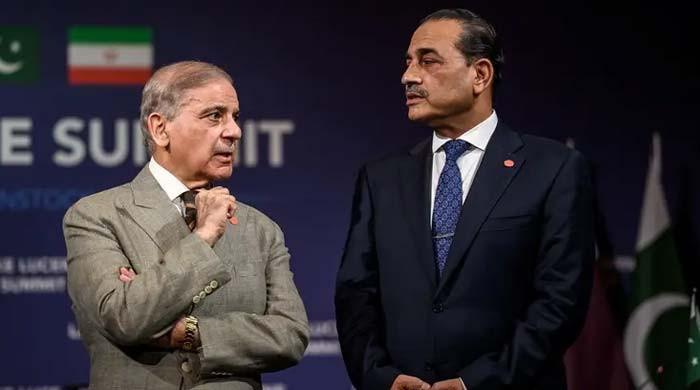
Sharif will be joined on the trip, which runs from Thursday to Saturday, by Field Marshal Asim Munir, Pakistan’s chief of defence forces and chief of the army staff, and by Ishaq Dar, the deputy prime minister and foreign minister, who has been in Saudi Arabia since wrapping up a separate visit to Jordan. The delegation will also include other senior ministers.
News of the visit was confirmed on Thursday by Tahir Andrabi, spokesperson for Pakistan’s Foreign Office, during the department’s regular weekly briefing. He said the prime minister’s meeting with the crown prince would centre on “consolidating the Pakistan-Saudi bilateral relationship” and would include an exchange of views on regional and international developments of shared concern.
Andrabi framed the trip as continuity rather than crisis management, describing it as an expression of Pakistan’s “long-standing partnership” with the kingdom, one he said was “anchored in decades of mutual trust, cooperation and brotherhood”. He acknowledged that the visit falls against a backdrop of heightened Gulf tensions but insisted its significance extended well beyond the immediate emergency. “It will further strengthen bilateral relations, deepen strategic cooperation, enhance coordination on regional and international issues of mutual interest and also reinforce multilateral cooperation,” he said.
It is Sharif’s second visit to the kingdom this year, following a trip in April during which he met Saudi leadership.
The visit comes as the conflict between the United States and Iran, now in its sixth month, continues to reshape the security picture across the wider Middle East. Pakistan, which has positioned itself as a mediator between Washington and Tehran since fighting began in February, helped broker an interim ceasefire agreement in June — the Islamabad Memorandum of Understanding — before hostilities resumed within days.
Islamabad’s diplomatic balancing act has grown more delicate as the war has widened. Iran has held effective control of the Strait of Hormuz since the early stages of the conflict, disrupting a waterway that normally carries roughly a fifth of the world’s seaborne oil and gas. Tehran’s foreign ministry said on Wednesday that it had reached agreement with Oman on the coordinates of a proposed shipping route through the strait, though officials cautioned that a wider reopening remains contingent on the United States lifting its naval blockade of Iran.
Andrabi addressed the Hormuz standoff directly at Thursday’s briefing, saying Pakistan remained engaged with its allies in seeking a resolution and singling out Oman’s role in the process for praise. “Pakistan acknowledges and deeply appreciates Oman’s valuable contribution in its steadfast efforts to foster de-escalation and peaceful coexistence,” he said, describing Muscat’s involvement as “a very constructive role” in stabilising the region.
Saudi Arabia’s own position in the conflict has hardened in recent months. In July, Saudi and American forces carried out coordinated strikes on installations belonging to Iraq’s Popular Mobilisation Units, accusing elements within the Iran-aligned umbrella force of orchestrating attacks on Saudi oil facilities. Pakistan publicly backed the Saudi strikes as a legitimate exercise of self-defence.
That statement followed an earlier warning from Islamabad after Yemen’s Houthi rebels declared a maritime blockade targeting shipping connected to Saudi Arabia. Pakistan described any attack on its own maritime interests as a “red line”, warning that hostile action against Pakistani-flagged vessels or commercial shipping would be treated as an attack on the country itself, while simultaneously reaffirming its commitment to Saudi security and to keeping lawful maritime commerce flowing through the Red Sea and the Bab al-Mandeb strait.
Riyadh has since moved to build a broader coalition around exactly that goal, unveiling plans for a multinational maritime defence force intended to protect shipping and energy routes through the Red Sea. Fourteen countries, Pakistan among them, have already declared their support.
The defence relationship between the two countries has deepened considerably over the past year. Pakistan and Saudi Arabia signed a Strategic Mutual Defence Agreement in 2025, which came into force earlier this year — around the same period that Islamabad launched its mediation push between Iran and the United States.
Copyright © 2021 Independent Pakistan | All rights reserved