By Staff Reporter
ISLAMABAD: Pakistan said its forces had killed at least 13 Afghan Taliban fighters after repelling an attempted incursion in the Gulistan sector of Balochistan in an overnight border clash, while Afghanistan insisted its troops had suffered no casualties and had instead destroyed a Pakistani military post near the town of Spin Boldak, on the Kandahar side of the frontier, in the latest flashpoint between the two neighbours that has already claimed dozens of lives this week.
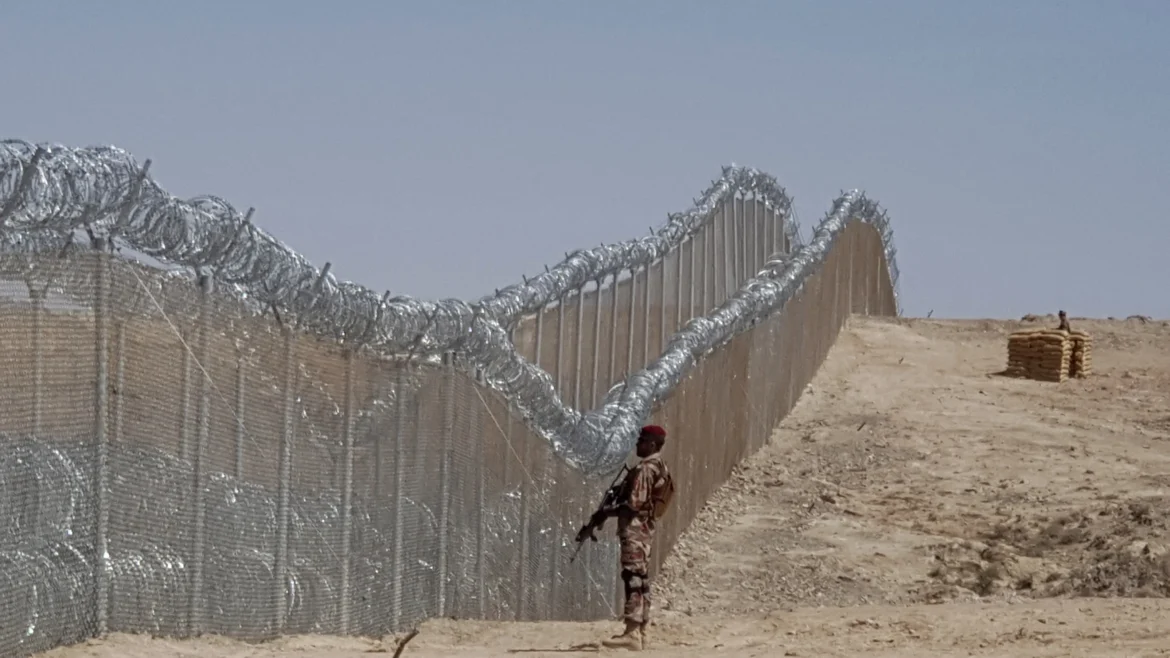
The fighting broke out overnight between Wednesday and Thursday in the vicinity of Spin Boldak and the neighbouring Pakistani town of Chaman, long one of the most volatile stretches of the roughly 1,600-mile Durand Line that separates the two countries. Residents of Chaman told reporters the exchange of fire had continued for hours. By Friday, an uneasy calm had settled over the border, with no fresh fighting reported.
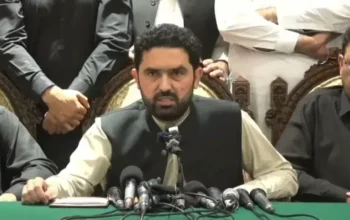
Pakistan’s information ministry moved swiftly to reject Kabul’s account, describing it in a post on X as “fake and fabricated”. “As per actual facts, an attempted Afghan aggression in the Gulistan sector was thwarted on night between Sept 24 and Sept 25, and during the process and subsequent heavy punishment inflicted on opposing Taliban posts, at least 13 Afghan Taliban personnel were killed and several injured,” the ministry said. It accompanied the statement with video footage it said showed Pakistani troops shelling Taliban positions, and said the material had already been “widely covered by media and circulated extensively across social media”.
The ministry dismissed the Afghan account as consistent pattern of dishonesty from Kabul. It described the Taliban as “habitual liars having no moral and reputational standing.”
Afghanistan’s defence ministry told a very different story. The Taliban’s 205th Al-Badr Corps in Kandahar said it had attacked and destroyed Pakistani border posts near Spin Boldak the previous day, after accusing Pakistani troops of first opening fire towards Afghan territory. Kabul maintained that its forces had suffered no losses or damage in the exchange.
Friday’s exchange came at the end of a week in which the fragile calm along the Pakistan-Afghanistan border — already strained for more than a year — collapsed into the most serious military confrontation between the two sides in months.
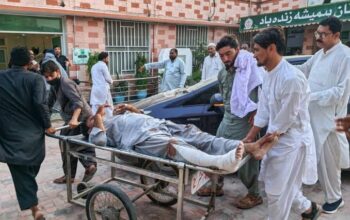
The immediate trigger was a wave of violence inside Pakistan. On 21 September, a militant assault on the old Police Lines compound in Kohat, in Khyber Pakhtunkhwa province, killed 23 people, including 17 police officers. Eight militants were killed in the clearance operation that followed.
Pakistan responded that same day with information minister Attaullah Tarar described the operation a “calibrated” airstrikes against terrorist hideouts and safe havens across the border. The ministry said more than 28 militants had been killed.
Tensions ratcheted higher again on Wednesday, when security officials said eight drones launched from Afghan territory had entered Pakistani airspace near the Torkham border crossing and in the hills around Kohat. All eight, officials said, were intercepted and shot down — four near Torkham, the remainder in the mountainous terrain around Kohat. Security sources also reported that Taliban forces had engaged in unprovoked firing the previous night near Kurram, as Pakistani troops thwarted an attempt by militants to cross the frontier. Islamabad answered on Thursday with further airstrikes, this time hitting ten locations inside Afghanistan that it said had been used to store and launch the drones.
The clash is the sharpest illustration yet of how far relations between the two governments — once allies of a kind, bound by the Taliban’s long insurgency against Nato and Afghan government forces — have unravelled since the Taliban returned to power in Kabul in August 2021.
Pakistan’s central grievance is the continued presence on Afghan soil of the Tehreek-i-Taliban Pakistan, or TTP, a militant group blamed for a sustained campaign of violence inside Pakistan, much of it concentrated in Khyber Pakhtunkhwa and Balochistan. Islamabad has repeatedly demanded that the Taliban administration dismantle TTP sanctuaries and training camps, and has grown increasingly public in its frustration that those appeals have gone unanswered.
Pakistani security officials say the case against Kabul is not circumstantial. They say they have established the identities of 260 Afghan nationals killed while carrying out attacks inside Pakistan, with records including names, addresses and family details — a figure officials stress does not include militants of Afghan origin still active and unidentified. Officials have also pointed to funerals for Afghan fighters killed in Pakistan being held in their home communities with the attendance of Taliban officials, arguing that such involvement undercuts Kabul’s denials of any connection to the militants. “An administration that claims it has no connection with terrorists cannot explain why its officials attend the funerals of terrorists killed while attacking Pakistan,” one official said.
According to figures cited by Pakistani authorities, terrorism originating from Afghan territory killed 1,327 people in Pakistan during 2026 alone and injured a further 2,484. The United Nations has separately estimated TTP’s strength inside Afghanistan at between 6,000 and 6,500 fighters, and has documented more than 600 attacks against Pakistan during 2025 that were launched from Afghan territory.
Pakistani officials also allege that TTP has established training facilities in the Afghan provinces of Kunar, Nangarhar, Khost and Paktika, and claim that personnel linked to the Taliban regime itself have been training alongside the group at some of these sites. Separately, officials say weapons recovered from militants, including M4 assault rifles, Remington sniper rifles and night-vision equipment, point to continued leakage of matériel left behind by departing American and Nato forces.
The military escalation has been accompanied by an intensifying diplomatic campaign from Islamabad. Earlier this week, deputy prime minister and foreign minister Ishaq Dar told a meeting of the Organisation of Islamic Cooperation that Pakistan was “seriously concerned” about the presence of more than two dozen militant groups operating from Afghan soil, and called for verifiable action to prevent Afghan territory being used to launch attacks on any neighbouring state.
Pakistan has also taken its case to the United Nations, telling the Security Council last week that it retained the right to respond to threats emanating from Afghanistan in self-defence and in accordance with international law, “as and when needed”. Earlier this month, Pakistan’s Foreign Office said that any meaningful improvement in relations with Kabul would depend on concrete, verifiable Taliban action against the TTP, adding that continued diplomatic engagement from China — which has sought to mediate between the two sides — could not substitute for action on the ground.
A UN Security Council-mandated monitoring report covering the period from December 2025 to June 2026 concluded that continued Taliban support for the TTP had contributed to a rise in the frequency and lethality of attacks inside Pakistan, even as Kabul had taken some limited steps to restrain the group. The same report flagged growing operational links between the TTP, al-Qaeda, Islamic State-Khorasan and the Baloch Liberation Army — an alliance of convenience that Pakistani officials argue represents an increasingly serious threat to regional stability.
Copyright © 2021 Independent Pakistan | All rights reserved