By Staff Reporter
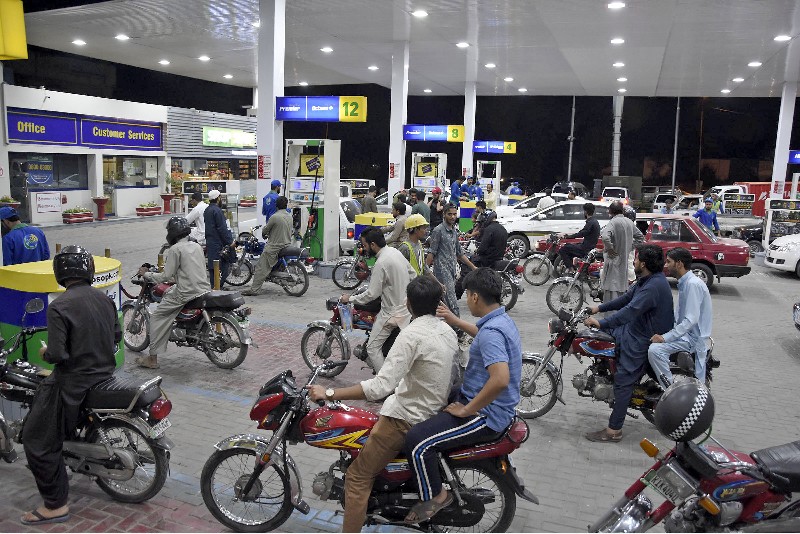
ISLAMABAD: The government raised the retail price of petrol on Friday while cutting diesel for a fifth consecutive pricing period, a split move that will cost motorcycle riders and small-car owners more at the pump even as truckers and bus operators catch a break.
The Petroleum Division’s notification set petrol at 391.30 rupees a liter, up 2.02 rupees, and high-speed diesel at 408.53 rupees, down 3.59 rupees, according to the government’s Friday announcement. The new rates apply from Saturday through Monday under the daily pricing mechanism Islamabad adopted in July. The government continues to collect 114 rupees a liter in taxes on petrol and 100 rupees on diesel.
Diesel has now fallen in five straight pricing periods, extending a retreat that has taken the fuel from 424.92 rupees on Sept. 18 down through 421.45, 418.96, 414.75 and 412.12 rupees before Friday’s cut to 408.53. Petrol’s path over the same stretch has been choppier — it fell to 390.79 rupees on Sept. 18, then to 391.22, rose to 392.05, fell twice more to 389.28, and climbed back to 391.30 rupees with Friday’s increase.
Both fuels remain far above where they stood before fighting between the U.S. and Iran began. Diesel traded at 280.86 rupees a liter and petrol at 266.17 rupees before the conflict started on Feb. 28, meaning Friday’s prices leave diesel roughly 45% higher and petrol about 47% higher than pre-war levels. Diesel went on to peak at a record 520.35 rupees on April 3, the same day petrol hit its own high of 458.41 rupees, after both fuels began climbing in late February and early March.
That trajectory has tracked the war in the Middle East almost in lockstep. Pakistan had priced fuel on a weekly basis after the conflict began, before Petroleum Minister Ali Pervaiz Malik announced in July that the government would move to daily adjustments, saying international prices were moving too fast for a weekly formula to capture. Malik said the cabinet and Prime Minister Shehbaz Sharif had handed the Oil and Gas Regulatory Authority responsibility for setting rates each day based on global trends.
Islamabad has paired the pricing overhaul with a return to austerity measures it last leaned on during earlier balance-of-payments crunches: markets are required to close by 9 p.m., and fuel allocations for official vehicles have been cut in half for three months.
A Relief Scheme Finds Its Footing
The government’s most targeted response to the run-up in prices is a subsidy program Sharif announced on Sept. 13 for the vehicles most Pakistanis actually drive — motorcycles, auto-rickshaws and cars with engines up to 800cc.
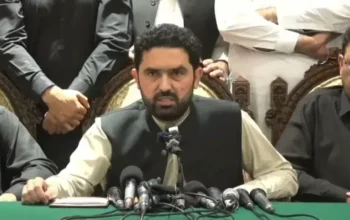
Information Technology Minister Shaza Fatima Khawaja said Friday that about 5.8 million people had registered for the Prime Minister’s Fuel Relief Scheme, with roughly 6.1 million tokens issued and 4.7 million people having gone to petrol stations and actually received subsidized fuel — all within the program’s first eight days. Speaking alongside Minister of State for Finance Bilal Azhar Kayani, Khawaja said the government had dropped an earlier five-liter cap on the weekly motorcycle discount after riders complained it fell short, and that people using rented or borrowed vehicles could now register too, as long as the SIM card used to sign up matches their national identity card.
Under the scheme, motorcycle, auto-rickshaw and Qingqi drivers get a 500-rupee discount on petrol once a week, while owners of 800cc-and-under cars receive 10 liters every 10 days at a 100-rupee-per-liter discount. “Many motorcycle riders spend 800, 900, or 1,000 rupees on petrol weekly, so getting 500 rupees of free petrol weekly is a huge relief,” Kayani said, adding that riders can register on the spot at petrol stations with only an ID card and a vehicle registration card.
Khawaja urged petrol-station owners to help customers sign up and pointed drivers with complaints to a government helpline. She said registrations were continuing to climb.
PSO Says Supply Never Broke
For Pakistan State Oil, the country’s largest fuel distributor, the test posed by the war has been operational as much as financial. The state-linked company said Friday that it had kept fuel flowing without interruption since the Strait of Hormuz crisis began — a claim that carries weight given how completely shipping through the strait seized up after the U.S. and Israel struck Iran on Feb. 28, with tanker traffic there falling to near zero. Pakistan, India and Bangladesh together drew almost two-thirds of their liquefied natural gas imports through the strait last year, according to the International Energy Agency, a measure of how exposed South Asia’s energy supply is to a single chokepoint.
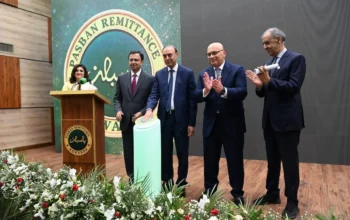
“Pakistan’s fuel supply was not interrupted for a single day, and we did it safely,” Jawwad Ahmed Cheema, PSO’s chief executive, said in a statement tied to the company’s results for the fiscal year ended June 30, which captured the conflict’s first four months.
PSO reported a standalone profit after tax of 15.07 billion rupees for the year, with earnings per share of 32.1 rupees. Gross profit rose to 99.9 billion rupees from 96.7 billion rupees a year earlier; excluding the company’s liquefied-natural-gas business, gross profit climbed 20.5% to 81.9 billion rupees from 67.9 billion rupees. At the group level, PSO’s share of consolidated profit after tax reached 25.49 billion rupees on consolidated revenue of 3.42 trillion rupees.
The company pointed to its storage capacity — at 1.23 million metric tons, the largest in Pakistan — and advance import planning as the reasons it kept every market segment supplied through the worst of the disruption. PSO holds close to 43% of the market for petrol and diesel and almost the entire aviation-fuel market, a business it said generated more than $360 million in foreign exchange over the year.
Diplomacy Offers a Fragile Opening
The volatility driving Pakistan’s fuel bill has its roots in a conflict that is showing tentative, inconclusive signs of movement, even as a second front opens elsewhere in the region.
Crude benchmarks eased on Friday, with Brent trading near $105 to $106 a barrel and West Texas Intermediate near $93, according to market trackers, as hopes for a U.S.-Iran de-escalation weighed against fresh concern that Houthi attacks on Saudi Arabia could disrupt supply from the world’s largest oil exporter. The pullback followed a sharp rally earlier in the week tied to a stalemate in indirect talks between Washington and Tehran.
Those talks resumed on the sidelines of the United Nations General Assembly in New York, marking the first contact between American and Iranian officials since a ceasefire collapsed in June. Iran’s foreign minister, Abbas Araqchi, communicated through Qatari mediators with U.S. envoys Steve Witkoff and Jared Kushner. Iran has proposed a road map involving a regionwide ceasefire of up to 60 days and a phased reopening of the Strait of Hormuz in exchange for an end to the U.S. economic blockade; Washington has given no sign it will lift the blockade before Tehran demonstrates what officials have called sufficient goodwill. President Donald Trump told the assembly he was weighing further military action if no deal is reached. No breakthrough was reported.
Even a resolution between Washington and Tehran would leave a second, escalating conflict unresolved. Houthi forces in Yemen have stepped up missile and drone strikes on Saudi Arabia in recent days, hitting Aramco facilities in Yanbu and targets in Riyadh and Taif; Saudi forces said they intercepted several of the projectiles. Saudi Arabia has called an urgent meeting of military chiefs from Turkey and Pakistan under the three countries’ Mecca Joint Defence Agreement, though both Ankara and Islamabad have so far been circumspect about committing additional forces. Pakistan’s chief of defence forces, Field Marshal Asim Munir, is expected to travel to Riyadh in connection with the talks, though the military’s media wing has not confirmed his departure.
The country imports the large majority of its petroleum needs, so any disruption to the Strait of Hormuz or the Red Sea — whether from OPEC+ decisions, sanctions or physical risk to tankers — reaches domestic fuel prices within days. Petrol and diesel together move roughly 700,000 to 800,000 tonnes a month in Pakistan, dwarfing the 10,000 tonnes of monthly kerosene demand, and remain the fuel sector’s principal source of revenue.
Copyright © 2021 Independent Pakistan | All rights reserved