By Staff Reporter
ISLAMABAD: Pakistan on Saturday delivered a pointed condemnation of the drone strikes that tore through Saudi Arabia’s East-West oil pipeline this week, casting the attacks as a breach of international law and pledging renewed solidarity with a kingdom now facing simultaneous threats to its two principal export routes.
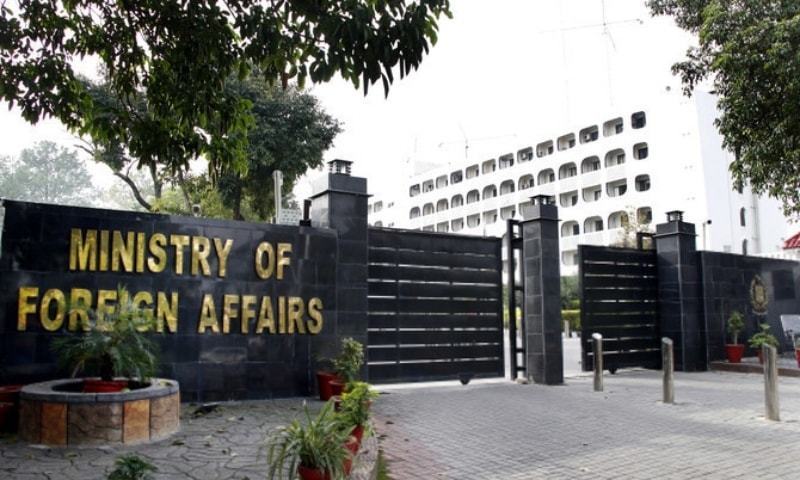
The statement from Pakistan’s Foreign Office, read by spokesperson Sajjad Haider Khan, called the strikes a flagrant violation of international law as well as the sovereignty and territorial integrity of Saudi Arabia, and said the attacks posed a serious threat to regional peace, security and stability. Khan went further, reaffirming Pakistan’s unwavering support for Saudi Arabia’s sovereignty, territorial integrity, security and prosperity, and reiterating Islamabad’s solidarity with the Saudi leadership, government and people.
The condemnation followed a Thursday morning assault that Saudi officials say was launched from Iraqi territory and struck the pipeline in the kingdom’s Riyadh and Madina regions, igniting fires, injuring civilians and forcing Saudi Arabia to shut down a conduit that has become critical to keeping its crude flowing to world markets.
A pipeline under fire, a region on edge
The East-West pipeline, which stretches roughly 1,200 kilometers from Saudi Arabia’s Abqaiq oilfield in the east to the Yanbu export terminal on the Red Sea, has taken on outsized importance since the United States and Iran went to war six months ago. With the Strait of Hormuz effectively closed to much of the tanker traffic that once passed through it, Saudi Arabia has leaned on the overland route to move oil to buyers without risking its ships in the Gulf.
That reliance was laid bare Friday, when the Saudi Ministry of Foreign Affairs confirmed the pipeline had been targeted in the Riyadh and Medina areas by several drones originating from Iraq, resulting in injuries and material damage. Satellite images released in the attack’s aftermath showed an infrastructure site south of Madina damaged by fire, with footage from the ground capturing plumes of black smoke rising over the pipeline route. It is understood that equipment used to operate the pipeline was also hit.
Riyadh’s energy ministry said emergency teams were deployed to secure the pipeline and assess its safety after the attacks, and that any further developments would be announced in due course. No group had claimed responsibility as of Saturday, and neither Saudi Arabia nor the Iraqi government have publicly identified who they suspect was behind it — though the attack’s apparent origin point has drawn immediate scrutiny.
Iraq moves quickly, holds off Saudi retaliation
The fallout inside Iraq was swift. The Iraqi prime minister’s office announced early Saturday that it had dismissed a military commander after an investigation determined the drones had originated from Maysan province, which borders Iran — a region where Iran-aligned militias have long operated with a degree of impunity that has repeatedly strained Baghdad’s relations with its Gulf neighbors.
Saudi Arabia, notably, chose restraint. The kingdom’s foreign ministry said it had chosen not to respond at this stage, at the request of the Iraqi prime minister, in order to support Baghdad’s efforts to prevent further attacks launched from Iraqi soil — while making clear that patience has limits. The ministry said it reserves the right to take all necessary measures to protect its people and infrastructure going forward.
Iraq, for its part, welcomed the decision. A statement from the spokesperson for the commander-in-chief of Iraq’s armed forces said Baghdad condemned the attack and affirmed its rejection of any aggression that threatens the Kingdom’s security and stability or harms the deep-rooted fraternal relations between the two countries. Separately, Iraqi authorities moved to close a key border crossing with Iran used for food imports, a step two security sources described as precautionary while a broader manhunt for those responsible got underway.
A second front opens at sea
The pipeline strike did not arrive in isolation. Within the same 48 hours, Iranian-backed Houthi fighters in Yemen seized the strategic island of Mayun in the Bab al-Mandeb Strait, tightening their hold over the narrow waterway at the southern mouth of the Red Sea — a chokepoint nearly as consequential to global shipping as Hormuz itself.
Coming so close together, analysts said, the two developments point to a kingdom now squeezed from multiple directions at once. “Riyadh is in a difficult position,” said Fernando Ferreira, an analyst at Rapidan Energy Group. “As the US maintains the blockade and succeeds in escorting more tankers out of the region, Iran will pivot toward increased attacks on Gulf energy facilities.”
The numbers underscore the strain. The International Energy Agency reported that Saudi crude supply had fallen to its lowest level in more than three decades, a decline the agency attributed in part to the separate campaign of Houthi-linked attacks on shipping transiting the Strait of Bab al-Mandab. Separately, oil-market trackers noted that Saudi oil shipments fell to about 3 million barrels a day in August, the lowest level on record since early 2017.
Markets reacted almost immediately. With the East-West pipeline down and, as one report put it, no ready alternative to redirect the same volume of eastern crude to Yanbu, benchmark crude prices broke above $100 a barrel for the first time in months, closing the week more than 8 percent higher.
The timing compounds an already grim week for Saudi civilians. Pakistan’s condemnation noted that the pipeline strike came just days after Houthi forces launched drones and missiles at Abha, Khamis Mushait, Jazan and Najran, striking energy facilities and, according to Saudi officials, injuring more than 70 people in that earlier round of attacks.
Pakistan’s defence commitments come into focus
Islamabad’s response carries weight beyond diplomatic language, given the security architecture Pakistan has built with Saudi Arabia over the past year. Pakistan and Saudi Arabia first established a bilateral collective-defence commitment through the Strategic Mutual Defence Agreement, signed in September 2025 at Al-Yamamah Palace in Riyadh, a pact that pledges any attack on either country will be treated as an act of aggression against both and was widely read at the time as elevating the two nations’ relationship from friendship to formal defence partnership.
That bilateral framework was expanded in August, when the Mecca Joint Defence Agreement built upon the earlier bilateral accord to include Turkey, formally binding the three Muslim-majority powers under a mutual-defence clause. Pakistan’s Foreign Ministry said at the time that the pact meant an attack on any member would be regarded as an attack on all, language modelled on Article 5 of NATO.
Even so, Pakistani officials have been careful to calibrate expectations about how quickly that commitment might be invoked. Asked this week whether the Houthi strikes on Saudi Arabia might trigger a Pakistani military response under the pact, Foreign Office spokesperson Khan told reporters there were no discussions about a military reaction under the Makkah Defence Agreement at present, adding that Pakistan would act “when the time comes.” He stressed that the agreement was already in force and that Islamabad would play its role in accordance with its requirements, while noting no discussions were currently underway with any party on expanding the arrangement.
For now, the picture remains unsettled on nearly every front. No party has claimed the pipeline attack. Iraq’s investigation into the Maysan-based launch site continues, alongside what two security sources described as a wide-scale search for those responsible. Saudi Arabia has signalled patience but not indefinite forbearance. And with Hormuz still choked by the broader US-Iran war and the Bab el-Mandeb strait now partly under Houthi control following the seizure of Mayun, the kingdom’s options for moving its oil to market have narrowed considerably in the span of a single week.
Copyright © 2021 Independent Pakistan | All rights reserved