By Staff Reporter
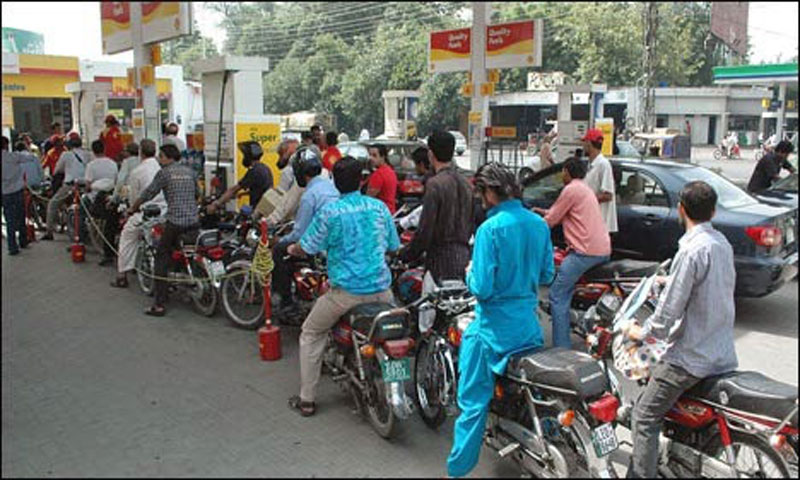
ISLAMABAD: Prime Minister Shehbaz Sharif rolled out a targeted fuel subsidy for motorcyclists, rickshaw drivers and small-car owners on Sunday, moving to cushion low-income commuters as the widening conflict between the U.S. and Iran pushes global oil prices higher.
Users of motorcycles, rickshaws and Qingqi three-wheelers will get a discount of 100 rupees a liter on as much as 20 liters of petrol a month, according to a statement from the prime minister’s office. Owners of cars with engines up to 800 cubic centimeters — a category that includes some of Pakistan’s most popular small vehicles — qualify for the same per-liter discount on up to 30 liters monthly.
The subsidy will take effect in Islamabad from midnight Monday, and expand to the rest of the country, including Azad Kashmir and Gilgit-Baltistan, from midnight Wednesday. Registration opened Sunday, with enrollment details to be publicized through a public awareness campaign, the statement said.
“The government is fully aware of the burden being placed on the public due to the increase in oil prices,” Sharif said in the statement. “In this hour of difficulty, we will not leave the public alone.”
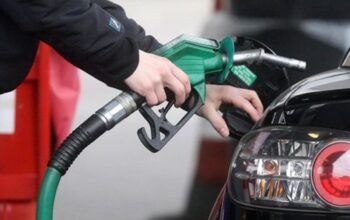
The announcement comes two days after Pakistan raised petrol prices by 3.05 rupees a liter and diesel by 5.37 rupees, the fourth consecutive increase and one that pushed petrol to 375.82 rupees a liter and high-speed diesel to 403.32 rupees. The government continues to collect 114 rupees a liter in taxes on petrol and 100 rupees on diesel, even as it moves to soften the impact on consumers.
Pakistan, which imports the bulk of its oil, has been whipsawed by supply disruptions stemming from the conflict between the U.S. and Iran. Shipping through the Strait of Hormuz has been snarled since the war erupted, while the threat to trade through the Bab al-Mandab Strait — a crucial artery for Saudi crude exports — has intensified as Houthi forces advance in Yemen.
Four Yemeni government sources told Reuters that Houthi fighters reached the strategic island of Perim in the strait on Friday, tightening the group’s grip on a waterway that funnels traffic into the Red Sea. Yemen’s military has warned that Houthi control of the surrounding coastline would threaten freedom of navigation and the flow of energy supplies through one of the world’s busiest shipping lanes.
The disruption has already forced Saudi Arabia to shut its East-West pipeline after an aerial attack on the conduit, a move Saudi traders warned could strip as much as 4% from global oil supply if the line isn’t restarted within days. The International Energy Agency has said the standoff will delay a return to normal Middle East oil flows until 2027, further tightening supply.
Brent crude settled at $104.61 a barrel on Friday, down $3.02, or 2.81%, but the benchmark was still on pace for a weekly gain exceeding 8%. U.S. diesel prices climbed to a record as the attacks on shipping routes stoked concern that disruptions could persist.
Pakistan shifted to daily fuel-price adjustments in July, abandoning the weekly revision schedule it had used since March, as it sought to track international price swings more closely following the outbreak of the U.S.-Iran war on Feb. 28. Diesel has since surged from 281 rupees a liter to a peak of 520.35 rupees on April 3, before easing to Friday’s level. Petrol followed a similar trajectory, climbing from 266 rupees in early March to a high of 458.41 rupees on April 3.
Sunday’s measure marks the second nationwide fuel subsidy Islamabad has introduced this year. In April, the federal government and the governments of Punjab and Sindh rolled out a broader package of relief as the earlier bout of hostilities pushed prices to their peak. Punjab Chief Minister Maryam Nawaz Sharif waived fares on the province’s Metro Bus and Orange Line transit systems and introduced a 100-rupee-a-liter diesel subsidy for farmers, while Sindh Chief Minister Murad Ali Shah rolled out a 2,000-rupee monthly cash subsidy for registered motorcyclists, distributed through a mobile app tied to national identity numbers.
That earlier federal program grew out of a directive from Sharif instructing provincial governments to help motorcycle and rickshaw owners register their vehicles in their own names, part of an effort to build a digital database that could be used to channel future relief. Sharif said at the time the data-gathering exercise would let authorities extend government support more efficiently as conditions evolved — a framework now being redeployed as the conflict enters a new phase.
The prime minister on Sunday thanked provincial governments for supplying data on motorcycles, rickshaws and small vehicles to support registration under the new scheme. Additional details, including how to enroll, are being made available at pmfuelrelief.pk, according to a post from state broadcaster PTV News.
Copyright © 2021 Independent Pakistan | All rights reserved