By Staff Reporter
ISLAMABAD: Pakistan ordered a 50% cut in fuel allocations for government vehicles and imposed a three-month freeze on official foreign travel, reviving an emergency austerity regime it abandoned less than three months ago as renewed fighting in the Middle East disrupts the shipping lanes that carry most of the country’s imported energy.
The measures, detailed in a Cabinet Division notification on Thursday and effective immediately, extend well beyond the fuel pump. The government banned the purchase of official vehicles of all types, prohibited procurement of durable goods other than information-technology equipment and services, and ordered a 5% reduction in non-employee-related expenditure across the 2026-27 fiscal year, to be deducted monthly.
The directives were issued on the recommendation of the Committee for Monitoring and Implementation of Fuel Conservation and Additional Austerity Measures, the notification said, the same body that will now adjudicate exemption requests case by case before forwarding them to Prime Minister Shehbaz Sharif for approval.
For an economy that imports the bulk of its petroleum and has spent much of the past four years rebuilding reserves under successive International Monetary Fund programs, the calculus is familiar: every dollar of additional crude cost is a dollar of pressure on the external account. Petrol rose Rs6.88 to Rs391.22 a liter on Thursday and high-speed diesel gained Rs5.62 to Rs421.45, the eighth consecutive increase. Brent crude has traded over $100 a barrel this week.
Where the Cuts Land
The fuel reduction spares operational vehicles of the armed forces, civil armed forces, law enforcement agencies, essential services and the Federal Board of Revenue. Administrative and non-operational fleets within those same organizations remain subject to the cut. Development projects are carved out of the fuel reduction, the vehicle-purchase ban, the durable-goods ban and the expenditure cut alike, preserving the government’s public investment pipeline.
The 5% spending reduction reaches Pakistan’s diplomatic network. It applies to foreign missions and to officers and officials of any occupational group posted abroad, though the notification carved out obligations relating to rent, education fees and medical arrangements.
The travel ban covers even obligatory trips. Exceptions are limited to scholarships offered by international development partners and to training and courses arranged through the Economic Affairs Division or under institutional agreements of the government. Where Pakistan must be represented at important or mandatory events during the three-month window, the relevant ambassador or high commissioner will attend in place of a visiting delegation from Islamabad.
Where a trip cannot be avoided, ministers, advisers, ministers of state, special assistants to the prime minister, parliamentarians and other functionaries are directed to fly economy class.
Official meetings are to be conducted by teleconference wherever practical, with intra-city gatherings exempt. Official dinners are barred except for visiting foreign delegations. Government-funded seminars, training programs and conferences are prohibited outright; those deemed unavoidable must be held in government auditoriums and committee rooms rather than hired venues.
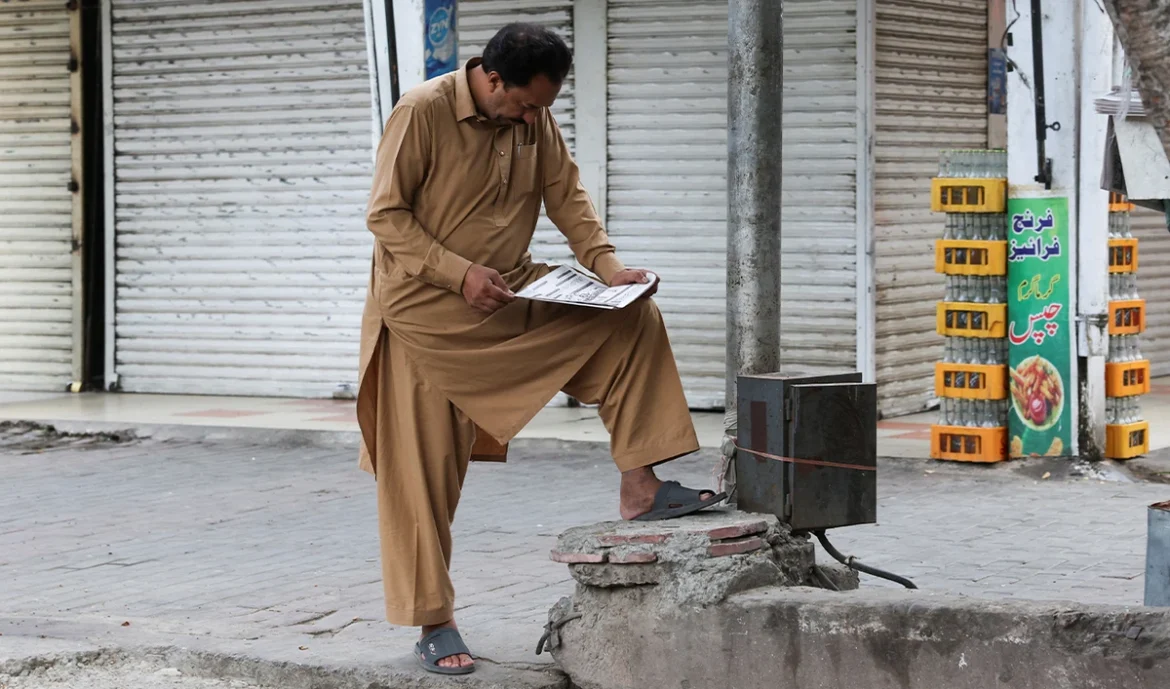
The notification also restated the business closing times that have remained in force since the earlier drive. Shops, markets, shopping malls, bazaars and departmental, grocery, general and kiryana stores must shut by 9 p.m.; marriage halls, marquees and other commercial venues hosting festive events by 10 p.m.; and restaurants, cafés, eateries, food outlets and standalone fruit and vegetable shops by 11 p.m. Takeaway and home-delivery operations are exempt.
A broad list of establishments falls outside the timing restrictions altogether: pharmacies, medical and medical-supply stores, laboratories, clinics and hospitals; standalone bakeries, tandoors and dairy shops; fuel and CNG stations and electric-vehicle charging points; gyms, sports facilities and padel courts; and IT companies and call centers.
In a provision aimed at curbing consumption at Pakistan’s famously elaborate weddings, the government ordered that a single dish be served at all marriage-related functions.
Provincial and regional governments may consider adopting comparable measures, the notification said.
The austerity package lands days after the cabinet approved Rs75 billion ($271 million) in targeted fuel subsidies intended to shield lower-income motorists from the price surge. Motorcycle and three-wheeler owners qualify for a Rs100-a-liter discount on up to 20 liters a month, while owners of cars with engines of 800cc or less can claim the same discount on up to 30 liters.
A Rerun of March
Pakistan first imposed emergency fuel-conservation measures on March 9, after the outbreak of hostilities between the US and Iran sent crude sharply higher and scrambled tanker traffic through the Strait of Hormuz. That package included the same 50% cut to official fuel allowances, alongside salary reductions for lawmakers and a partial work-from-home regime across the public sector.
Most of those measures were lifted in June following a US-Iran agreement that pulled prices back down. Market closing times were the one element retained.
The reprieve proved short-lived. Beyond the renewed disruption at Hormuz, shipping through the Bab el-Mandeb strait — which has become a significant conduit for Saudi crude exports in recent months — faces mounting risk from Houthi attacks, squeezing the second of the two chokepoints through which Gulf barrels reach buyers in Asia.
Information Minister Attaullah Tarar signaled earlier this week that Islamabad was weighing a return to the March playbook as hostilities intensified. Thursday’s notification confirmed it, with a longer list of prohibitions than the original.
Copyright © 2021 Independent Pakistan | All rights reserved