By Staff Reporter
ISLAMABAD: Pakistan is moving to establish a regulated framework for virtual assets, Finance Minister Muhammad Aurangzeb said, as the government looks to blockchain and tokenization to lower remittance costs, expand credit to small businesses and widen access to financial services.
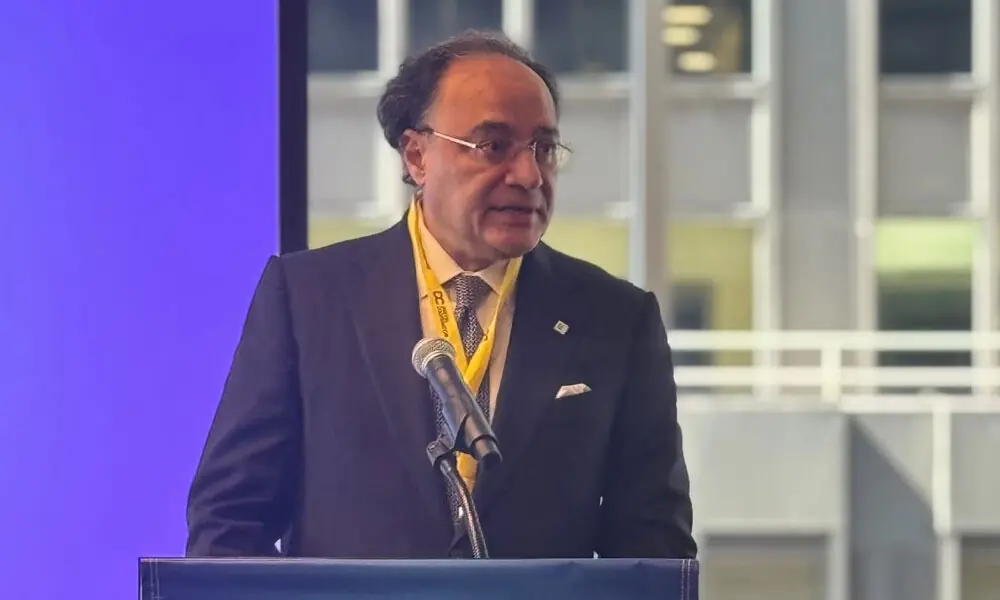
Aurangzeb outlined the plan in opening remarks at United Nations Digital Cooperation Day 2026, an event on blockchain and tokenized finance held alongside the UN General Assembly’s High-Level Week in New York. Tokenization needs to be tied to concrete economic outcomes, he said, pointing to remittances, small and medium enterprise financing, and sovereign debt management as priority areas.
The minister said private-sector innovation in digital assets should be matched by state oversight, arguing that safeguards, inclusive digital infrastructure and international coordination are needed alongside private capital. He also said developing economies should have a direct role in setting global standards for the sector, rather than adopting rules set elsewhere.
The remarks add detail to Pakistan’s broader push to build out digital-asset regulation. The government set up the Pakistan Crypto Council in March 2025 to draft policy for blockchain and digital assets, with Aurangzeb as chairman and Binance founder Changpeng Zhao serving as strategic adviser. That effort has involved the State Bank of Pakistan, the Securities and Exchange Commission of Pakistan and other agencies working on a national framework for the sector.
Aurangzeb’s New York schedule also included sessions on climate finance, where he pressed for faster disbursement from international funds. At the World Economic Forum’s Financing Planet and Prosperity meeting, he pointed to Pakistan’s exposure to flood damage as a recurring strain on infrastructure and communities, and outlined government work on early-warning systems, disaster-response planning and costed investment plans for climate resilience.
He said that response needs to draw on domestic resources and fiscal buffers, not external assistance alone. On funding sources, Aurangzeb cited financing channels through the World Bank, the Asian Development Bank and international capital markets for relief, adaptation and reconstruction work, while pushing back against any sense that the job was done. He called on the Green Climate Fund and the Loss and Damage Fund specifically to cut down on procedural delays and speed up disbursement.
Aurangzeb also joined the launch of the COP31 Action Agenda, backing the initiative as consistent with Pakistan’s national climate targets under its third Nationally Determined Contribution. He listed clean energy and electrification, renewable-power capacity, energy-efficient construction, climate-resilient cities, climate education and food security among the areas where Pakistan’s priorities line up with the agenda.
He welcomed a proposed Climate Implementation Bridge, describing it as a way to convert NDC commitments into projects that can attract financing. The bigger obstacle now, he said, is not designing climate plans but carrying them out — and he pointed to the agenda’s action points and performance indicators as evidence it was built around measurable results rather than broad goals.
Copyright © 2021 Independent Pakistan | All rights reserved