By Staff Reporter
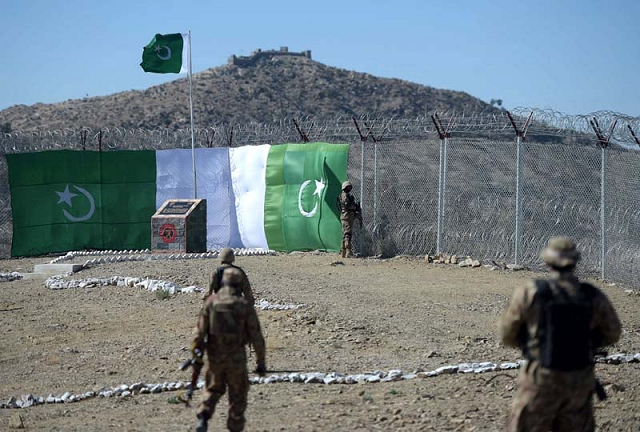
ISLAMABAD: Pakistani troops forced Afghan Taliban to abandon several checkposts along the border on Tuesday, security sources said, after opening retaliatory fire in response to unprovoked shooting by Afghan forces following a foiled militant infiltration attempt in Kurram.
The sources said militants had tried to cross into the Khyber Pakhtunkhwa district from the Afghan provinces of Nangarhar and Paktia. They were identified as belonging to Fitna-al-Khawarij, the term Pakistani officials use for the outlawed Tehreek-i-Taliban Pakistan (TTP), reflecting Islamabad’s position that the group has forfeited any claim to religious legitimacy. Once the crossing attempt was repelled, Afghan Taliban units began firing on Pakistani border posts, the sources said, describing the shooting as unprovoked.
Pakistani forces returned fire on multiple Afghan Taliban checkposts and defensive positions in response, the sources said, and several Afghan Taliban personnel fled the posts as a result. Security forces were continuing to monitor the border and remained on alert for further activity, according to the sources.
A conflict that shows no sign of easing
Tuesday’s exchange is the latest flashpoint in a rupture between Islamabad and Kabul that has widened steadily since the Taliban returned to power in Afghanistan in August 2021. Pakistani officials have long accused the Taliban administration of allowing the TTP — a group that shares ideological roots, and in places fighters, with the Afghan Taliban — to run training camps and safe havens on Afghan soil, from which attacks are then launched across the border. Kabul has consistently denied the charge.
The dispute escalated sharply last October, when Pakistan struck TTP targets inside Afghanistan, triggering a cycle of retaliatory fire that has continued in waves ever since, interrupted by short-lived ceasefires that have repeatedly broken down.
The latest infiltration bid follows one of the deadliest attacks on Pakistani security personnel in years. On 18 September, militants rammed an explosives-laden vehicle into the Old Police Lines complex in Kohat, a town roughly 60 kilometres southwest of Peshawar, before a second explosion tore through the compound’s Special Branch building during the gun battle that followed. Most of the dead were police officers who had gathered for Friday prayers at the site’s mosque. The clearance operation ran for some 22 hours; by the time it concluded, the death toll had climbed to at least 31 people, including 16 police officers, with more than 100 others injured. Eight of the attackers were killed by Elite Force commandos and Counter Terrorism Department teams during the operation — the deadliest assault on the complex since a 2010 bombing killed 20 people there.
Pakistan’s information ministry said the Kohat attack, along with a string of recent incidents across Khyber Pakhtunkhwa, prompted a “calibrated” airstrikes on militant hideouts across the border, which it said killed more than two dozen fighters.
The Kohat assault came a day after an improvised explosive device struck a Pakistani security convoy in nearby Hangu, killing six soldiers who had been conducting operations against the TTP. On Sunday, two officers and four other personnel were killed and eight militants were reported killed in a separate exchange of fire between a security convoy and armed fighters, according to the military’s media wing.
Islamabad’s frustration with Kabul
Pakistani officials have repeatedly pressed the Taliban government to dismantle what they describe as militant sanctuaries inside Afghanistan, warning that continued inaction risks further bloodshed on both sides of the border. Those appeals, officials say, have largely gone unanswered.
Independent monitoring appears to support that assessment. A United Nations Security Council-mandated report covering the period from mid-December 2025 to early June this year found that continued Afghan Taliban support for the TTP had contributed to a rise in both the frequency and lethality of attacks inside Pakistan, even as Kabul took what the report called some initial steps to restrain the group. The same assessment pointed to growing operational and logistical links between the TTP, al-Qaeda, Islamic State-Khorasan Province and the Baloch Liberation Army — a convergence that Pakistani security officials say complicates any prospect of a negotiated end to the violence.
Analysts tracking the conflict say the Afghan Taliban’s reluctance to move decisively against the TTP stems partly from old ideological ties between the two movements and partly from concern that a crackdown could push TTP fighters to defect to its rival, Islamic State-Khorasan. Conflict monitors have recorded 2025 as among the most violent years for TTP-linked violence in more than a decade, with this year’s attack levels running at a broadly similar pace.
Copyright © 2021 Independent Pakistan | All rights reserved