By Staff Reporter
ISLAMABAD: The government lowered petrol and diesel prices for a second time in three days, tracking a retreat in global crude that gathered pace after Saudi Arabia moved to restore a key pipeline and Iran signaled it could reopen the Strait of Hormuz within a week.
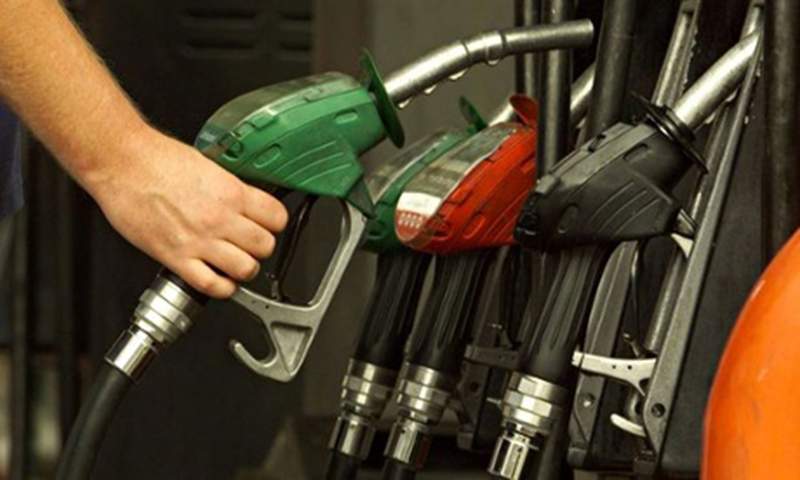
The Petroleum Division cut the price of petrol by 1.70 rupees a litre to 392.05 rupees and high-speed diesel by 3.12 rupees to 418.96 rupees, effective Wednesday, according to a notification from the Oil and Gas Regulatory Authority. The revision reverses part of Monday’s increase, when petrol rose 4.61 rupees while diesel fell 1.96 rupees for Tuesday’s pricing.
OGRA calculates prices using a seven-working-day rolling average of the daily Platts Arab Gulf Means Price, with adjustments also reflecting changes in freight premiums and other incidental costs that feed into the government’s daily pricing formula, introduced in July. The Petroleum Division said Tuesday’s adjustment was driven by developments in the international oil market, including movements in Platts rates, premiums and incidental costs.
The reduction tracks a broader pullback in benchmark crude prices. Brent futures for the November contract fell as much as $2.01, or 2%, to $98.33 a barrel in London trading on Tuesday, touching their lowest level since September 8 as Saudi Arabia moved to restart the East-West pipeline that carries crude around the Strait of Hormuz, after drone attacks knocked it offline earlier this month.
Aramco is seeking to bring flow on the line back to 4 million barrels a day, though a full resumption could take weeks, according to people familiar with the matter. A tanker was set to load crude at Yanbu later Tuesday for delivery to China.
Adding to the bearish tone, a senior Iranian official told Kyodo News that Tehran would reopen the Strait of Hormuz within seven days if the U.S. takes initial steps to ease military pressure, including lifting its blockade of Iranian ports. Iran has signaled it could reopen the strategically important waterway if the U.S. reduces military pressure and lifts its port blockade, developments that have curbed some concerns about prolonged disruptions to Gulf oil shipments.
The de-escalation follows a volatile stretch for Gulf energy infrastructure. Saudi Arabia had shut the East-West pipeline in the wake of the attack, forcing Aramco to reroute cargoes. Satellite and tanker-tracking data compiled by analysts showed the kingdom loading roughly 14 million barrels of crude onto seven very large crude carriers within the Gulf, with volumes moving through Hormuz averaging close to 2.9 million barrels a day over the prior six days — up sharply from about 700,000 barrels a day in August.
U.S. Central Command has said crude and liquefied natural gas flows through Hormuz reached a six-month high, with the strait’s main transit lanes clear of mines, even as the East-West pipeline outage persisted. Middle East oil flows have averaged 17.1 million barrels a day over the past ten days, according to the military, though volumes remain below pre-conflict levels.
Relief Measures Widened for Low-Income Users*
The price cut comes as Islamabad works to cushion consumers from a fuel-cost surge that has defined much of 2026. Diesel prices, which stood at 281 rupees a litre before the U.S.-Iran war erupted in late February, peaked at 520.35 rupees on April 3. Petrol followed a similar arc, climbing from 266 rupees in early March to a record 458.41 rupees by early April.
Prime Minister Shehbaz Sharif has rolled out a series of targeted subsidies as prices climbed. On September 13, he unveiled a relief scheme offering a 100-rupee-per-litre discount on petrol for motorcycles, three-wheeler rickshaws and cars with engines up to 800cc. The program is designed to cover roughly 11.8 million beneficiaries: about 10 million two-wheeler owners and 800,000 rickshaw operators would each qualify for relief on 20 litres of fuel a month, worth up to 2,000 rupees, while roughly one million owners of small cars would receive relief on 30 litres, worth up to 3,000 rupees.
Sharif’s office expanded eligibility further on September 18, directing that motorcycles, rickshaws and Qingqi rickshaws registered after January 1, 2006 — including vehicles up to 20 years old — be brought into the fuel relief scheme immediately.
Protest March Paused Amid Levy Dispute
The price relief comes as Sharif works to defuse a separate political flashpoint. Jamaat-e-Islami, the Islamist party led by Hafiz Naeemur Rehman, launched a “long march” from Karachi on Sunday aimed at Islamabad, demanding the government scrap the petroleum levy entirely. The march reached Multan on Tuesday, prompting Sharif — attending the United Nations General Assembly in New York — to telephone Naeem and ask that the protest be paused until his return to Pakistan.
Naeem told reporters in Multan that the party would consult its central Shura before responding formally, and made clear JI’s position had not softened: the party has protested for roughly six weeks and has said it won’t withdraw the movement until the levy is abolished. Party workers would remain mobilized in the field in the meantime, he said, while offering Sharif a chance to negotiate once he returns.
Sharif told Naeem the government’s fuel relief package already addresses the hardship driving the protests and pledged further measures. JI has argued the government has cited its IMF program commitments as the reason it won’t cut the levy itself.
Austerity Measures Reinstated
Alongside the subsidies, the government has reimposed conservation measures it first rolled out earlier in the conflict. A Cabinet Division notification issued September 17 ordered shops, markets, shopping malls and grocery stores to close by 9 p.m. throughout the week. Wedding halls and venues hosting festive events must shut by 10 p.m., while restaurants and standalone produce shops can remain open until 11 p.m.; takeaway and delivery services are exempt. Fuel allocations for official government vehicles have also been cut by half for three months.
The restrictions mark a return to measures Islamabad first used after fighting broke out between the U.S. and Iran in late February, which sent shockwaves through global energy markets and forced Pakistan — which imports the bulk of its petroleum needs — to repeatedly adjust pricing and conservation policy.
The current cut is the latest test of a pricing mechanism Petroleum Minister Ali Pervaiz Malik introduced on July 17, when the government began reviewing fuel prices daily rather than weekly to keep pace with swings in international markets tied to the conflict. Malik has said the cabinet and prime minister assigned OGRA responsibility for setting prices daily based on international trends, a shift from the weekly revisions the government had used since early March.
The government continues to levy 114 rupees per litre in taxes and duties on petrol and 100 rupees per litre on diesel — the same petroleum levy at the center of Jamaat-e-Islami’s protest campaign, and a structure that remains a significant driver of pump prices regardless of swings in the underlying crude benchmarks. Customs duties stay fixed at 23.68 rupees per litre for petrol and 15.68 rupees per litre for diesel, while the Inland Freight Equalisation Margin has been set at 7.71 rupees on petrol and 4.06 rupees per litre on diesel.
Petrol and diesel remain the government’s largest fuel-revenue sources, with combined monthly sales of roughly 700,000 to 800,000 tonnes, dwarfing the roughly 10,000 tonnes of kerosene sold each month. Petrol is consumed mainly in private transport, motorcycles and rickshaws, putting price swings squarely in the path of middle- and lower-income households, while diesel’s use in heavy transport, power generation and industrial machinery gives its price broader reach across the economy.
Copyright © 2021 Independent Pakistan | All rights reserved