By Staff Reporter
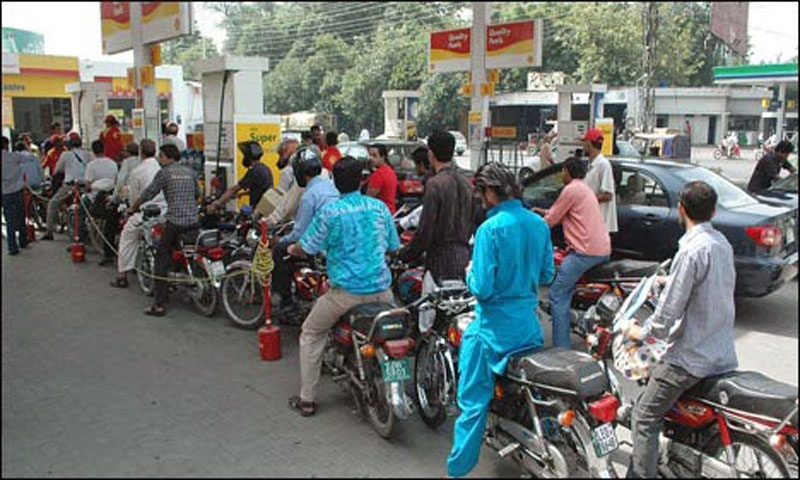
ISLAMABAD: The Finance Ministry disputed a report that portrayed a fuel levy as the linchpin of the country’s $7 billion International Monetary Fund program, pushing back as street protests over gasoline prices force the government onto the defensive just as Prime Minister Shehbaz Sharif seeks to keep the loan on track.
The ministry took aim at a report published Monday in a local daily, which said the Finance Division had made the petroleum levy the “central point” of the IMF-backed stabilization program and tied it directly to inflation, unemployment, poverty and weak growth. In a statement, the ministry called those characterizations misleading and said they misrepresent both the design of the program and the institutional process behind it.
The rebuttal lands as Jamaat-e-Islami, an Islamist political party, presses a march toward Islamabad demanding the levy’s repeal and as Finance Minister Muhammad Aurangzeb warns that sustained unrest could cost the economy roughly 120 billion rupees, or about $434 million, for every day of disruption. The party paused its march Tuesday in Multan after Sharif, currently in New York, asked its leadership to hold off until his return, according to a party spokesperson. Jamaat-e-Islami said it would consult its internal Shura council before deciding whether to resume.
The dispute traces to remarks by Planning Minister Ahsan Iqbal, who told reporters on Monday he had asked Sharif to bring the Planning Commission into Pakistan’s negotiating team with the Fund, arguing the program is “not just about numbers but about people and economic development.” The newspaper reported that the finance ministry’s emphasis on fiscal metrics, anchored by the levy, had improved headline numbers while stoking inflation, joblessness, poverty and slow growth — and that no IMF document sets a specific rate for the tax.
The ministry’s response did not dispute that last point directly but said it understates the levy’s place in the broader program. Officials said published IMF documents call for aligning domestic fuel prices with international benchmarks through periodic adjustments, and that a Resilience and Sustainability Facility tied to the program includes a supplementary carbon levy administered through the same petroleum-levy framework. Petroleum pricing policy, the ministry said, is embedded in the agreed program architecture rather than being a fiscal strategy set unilaterally by the Finance Division.
On the levy’s centrality to financing, the ministry said Pakistan’s revenue strategy for the fiscal year through June rests substantially on the Federal Board of Revenue, including a wider tax base and expanded provincial taxation, rather than on fuel taxes alone. It said attributing inflation, unemployment and weak growth to a single levy overlooks other drivers, including regional geopolitical strain, global commodity prices, currency movements, monetary policy and external financing constraints.
The ministry also disputed the premise that the IMF program answers to the Finance Division alone. It said the Fund’s Extended Fund and Resilience and Sustainability facilities span commitments across the Planning Commission, the energy ministry, provincial governments, the FBR and the State Bank of Pakistan, with each institution leading technical work in its own area, including on agricultural income taxation, which the ministry noted falls constitutionally to the provinces.
Pakistan is roughly five years into a stabilization drive that Iqbal, in the same press conference, described as having caused significant hardship for ordinary citizens. He said he expects growth above 4% in the next fiscal year, which would mark an end to the current slow-growth stretch, though he added the pace of any exit from stabilization will hinge on both investor sentiment and the underlying structure of the economy.
The ministry argued that framing is the wrong one. Citing the IMF’s most recent review documents, it said fiscal consolidation has helped curb macroeconomic imbalances and demand pressure, supported disinflation, and aided reserve accumulation, while public debt growth slowed to its lowest pace in two decades over the past fiscal year. It said the program has not come at the expense of social protection, pointing to targeted cash-transfer spending under the Benazir Income Support Programme, inflation-linked adjustments to unconditional transfers, and a newly introduced targeted fuel subsidy that the ministry said Sharif directed to shield vulnerable households without resorting to broader, costlier subsidies.
Rather than a choice between stabilization and growth, the ministry said the relevant question is how Pakistan moves from one to the other without reopening the fiscal and external gaps that have repeatedly sent it back to the Fund. It said that responsibility for coordinating the program sits with the Finance Division, but that policy, legislative and implementation decisions tied to specific benchmarks rest with the individual federal ministries and provincial governments involved.
Copyright © 2021 Independent Pakistan | All rights reserved