By Staff Reporter
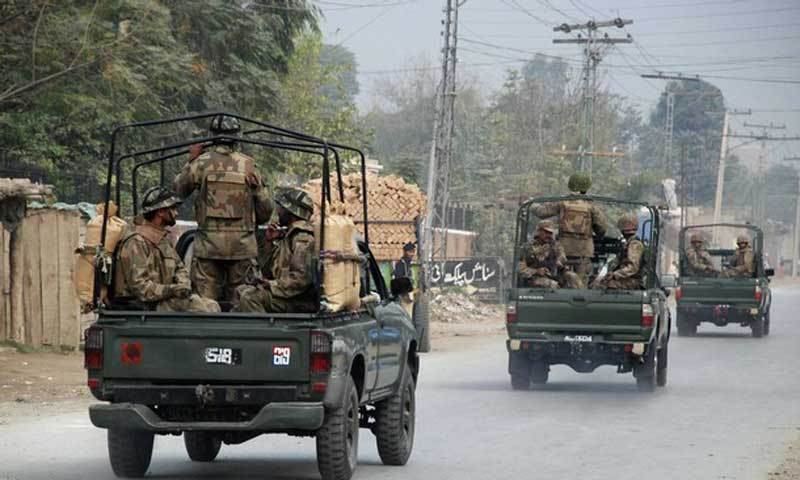
ISLAMABAD/PESHAWAR: The federal government has authorised the deployment of army troops and assets across Khyber Pakhtunkhwa, hours after imposing emergency and governor’s rule in the province run by Imran Khan’s party.
The authorisation was issued by the interior ministry on Sunday through SRO (1)/2026, citing Article 245 of the constitution, which allows the armed forces to be called in to assist civilian authorities. The order says the troops are to be deployed in aid of civil power for the “safety of life, security of persons and property of citizens as well as security of government installations”.
The authorisation lasts as long as the proclamation of emergency and governor’s rule remains in force. The order does not say how many soldiers will be sent. That will be decided by the provincial governor, Faisal Karim Kundi, in consultation with the Military Operations Directorate at General Headquarters in Rawalpindi.
Copies were sent to the president’s secretary, the prime minister’s adviser, the governor’s secretary, the Military Operations Directorate, the provincial home secretary, the provincial police chief, the registrar of the Peshawar High Court and other officials.
Emergency imposed earlier
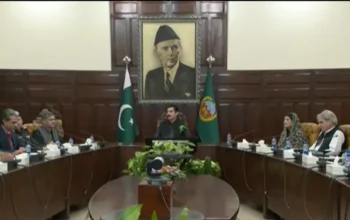
President Asif Ali Zardari had earlier approved the emergency on the advice of Prime Minister Shehbaz Sharif, after an emergency cabinet meeting on Sunday morning. The measure was invoked under Articles 232 and 234 of the constitution, which deal with security. Mr Sharif’s office said the cabinet had reviewed the law-and-order situation in the province and what it called the provincial government’s “deliberate disengagement from the fight against terrorism”.
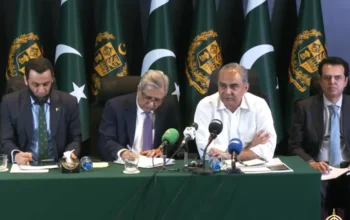
Law minister Azam Nazeer Tarar said the governor would exercise the powers of the provincial government with the help of an 11-member advisory council. He said the arrangement would initially run for six months. He said a secretariat had also been set up under the governor and the chief secretary to oversee 12 districts, which he described as being in a “state of war”. The federal government has accused the Pakistan Tehreek-e-Insaf (PTI) of failing to establish its writ in those districts, which include eight former tribal districts.
Interior minister Mohsin Naqvi said Islamabad had tried to avoid an emergency. He said the government had repeatedly told PTI leaders it had “no issue” with their march to the capital. “Our issue was entirely terrorism-related, and we want to take you on-board on it,” he said.
The emergency came as the provincial chief minister, Sohail Afridi, a close aide of Khan, was leading thousands of the jailed former prime minister’s supporters towards Islamabad. The march was first planned for 27 September, then postponed to 4 October to allow talks with the government, which has said it will not let the marchers enter the capital. Mr Afridi had called on party lawmakers and supporters to gather in Swabi by 14 October before moving on towards Islamabad.
Chief minister’s arrest claimed
The PTI said Afridi and the party’s provincial president, Junaid Akbar, had been arrested. Akbar made the claim in a post on X, and the federal government had not officially commented on the reported arrests. Arab News said it could not independently verify them.
The party said the arrests had “exposed the political nature of the federal government’s actions”, and that the measures were not aimed at security challenges but at weakening the PTI and overriding the will of the province’s voters. PTI spokesman Zulfikar Bukhari told Reuters the decision would lead only to “further bloodshed, instability and collateral damage”.
Peshawar sealed off
In Peshawar, shipping containers were used to close roads across the city. They were placed near the railway station to block routes towards Khyber Bazaar and Shoba Bazaar, near Edwardes College to shut off Jail Road, and at Firdous Chowk on GT Road, where only pedestrians were allowed through. University Road was blocked at Tehkal, and Sher Shah Suri Road was reported closed.
Large numbers of police, many drafted in from other districts and many in plain clothes, patrolled the Red Zone, which contains Governor House, the chief minister’s residence and secretariat, the civil secretariat, the central police office and the Corps Commander’s House. Reporters described a deserted cantonment where the only vehicles visible were police vans, armoured personnel carriers and other security vehicles. Only official vehicles were being allowed from Governor House towards the chief minister’s residence. Army vehicles were also seen patrolling the cantonment areas.
All telecoms services, including landline and DSL, were reported suspended in the provincial capital. Mobile services had been cut for nearly 48 hours only days earlier because of the PTI’s presence in the city. Cash machines were out of service for the entire day, leaving people unable to withdraw money. Bus Rapid Transit stations were shuttered and Royal Artillery Bazaar was closed. Life was reported to be largely normal on the outskirts, including Kohat Road and Charsadda Road, though with a heavy police presence.
On Saturday, the provincial police chief, Zulfiqar Hameed, put district police on alert for possible violent protests and sabotage. A notification from his office told officers to use force in stages, with protesters clearly warned against violence first.
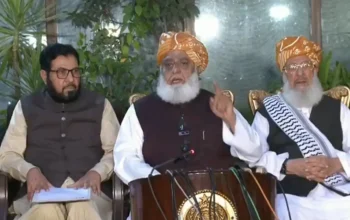
In Islamabad, the main opposition alliance, the Tehreek-e-Tahaffuz-e-Ayin-e-Pakistan, found KP House sealed and was refused the National Press Club despite offering to pay. Its spokesman, Akhunzada Hussain Ahmed Yousafzai, said it would hold its press conference at Bhara Kahu on the Murree Expressway instead.
Long-running dispute
The emergency follows a long breakdown in relations between Islamabad, where the PML-N leads the government, and the PTI administration in Peshawar. The two sides have clashed over counterterrorism policy. The federal government has criticised the province’s record on militancy and its stance on dialogue with the Afghan Taliban. The PTI, which opposes military operations, says it is excluded from security decisions in the province, which the centre denies.
Talks between the two sides collapsed in early October. The PTI had sought greater access to Khan for his doctors and family, while the government had tied negotiations to agreement on security measures in the province. Mr Sharif met Mr Zardari on Saturday to discuss the country’s overall security situation.
Khan has been in jail since August 2023 and faces scores of charges, including corruption, treason and incitement to violence, after anti-establishment riots in May of that year. He and his lawyers say the cases are politically motivated.
Copyright © 2021 Independent Pakistan | All rights reserved