By Staff Reporter
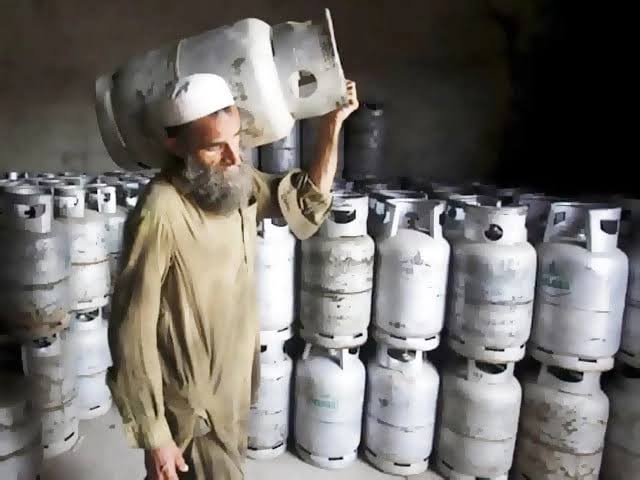
KARACHI: Liquefied petroleum gas is selling for more than twice its official price across Pakistan, and for nearly triple in parts of the northwest, after the government suspended trade with Iran through two border crossings.
The Oil and Gas Regulatory Authority has yet to begin a planned crackdown on sellers accused of profiteering, because officials fear enforcement could provoke strikes and deepen the shortage, local media reported on Friday. They said prices in affected markets could exceed 700 rupees a kilogram if supplies are disrupted further.
OGRA fixed the price for the month at 279.34 rupees a kilogram, or 3,296 rupees for an 11.8-kilogram household cylinder. Market rates in several areas have climbed to between 550 and 600 rupees. Peshawar is paying about 600, while northern districts of Khyber Pakhtunkhwa have reached 750. Cylinder prices there have topped 10,000 rupees.
Consumers have paid more than 1.4 billion rupees above the notified rate in five days, according to Irfan Khokhar, chairman of the LPG Distributors Association, who put the going price at 600 to 625 rupees a kilogram. Shopkeepers said they are being supplied at about 550 rupees and cannot sell at the official price.
Pakistan imports about 70% of its LPG and produces the rest. Iran accounts for half of imports, with the remainder from Iraq and Oman. The Commerce Ministry withdrew an order on Friday that had allowed trade through the Taftan and Gabd-Rimdan crossings, citing security concerns and smuggling. Gabd-Rimdan reportedly handles more than 4,000 tons of LPG a day. About 2,000 trucks are stranded on both sides of the frontier, according to the Quetta Chamber of Commerce and Industry. Balochistan officials have said the crossings are likely to reopen soon, and Iran’s foreign ministry has described the closure as temporary.
Shipments from Oman and Iraq have also been disrupted by the closure of the Strait of Hormuz, OGRA sources said. They warned that the shortage will worsen if the Iranian border stays shut to LPG.
OGRA officials have spent two days debating which body should take action, according to sources at the regulator. The authority can act only against LPG marketing companies and plant operators, and none had faced action as of Wednesday. OGRA officials said that enforcement teams were pursuing those overcharging for available stock. An OGRA spokesperson said work was under way to address the problem, acknowledged that the border closure had caused some difficulties and said the situation would be under control soon.
Importers say the pricing framework is part of the problem. Sheikh Mukarram, president of the LPG Importers Association, blamed the border closure for the shortage and said OGRA’s notification calculates freight using 2010 rates, when a tanker now costs 50,000 to 60,000 rupees to move. He said the association had raised the issue repeatedly with OGRA’s chairman and other senior officials without a meaningful response, and warned that a shutdown of operations would aggravate supply. In July, the association had told the petroleum minister that the official selling price sat below import costs, and that more terminals could suspend operations unless the formula was revised.
Petroleum Minister Ali Pervaiz Malik said in an interview on a local television channel that the world was facing “extraordinary circumstances” in energy markets and that government measures would soon show up in prices. He said Pakistan consumes 6,500 to 7,000 tons of LPG a day, of which 2,000 to 2,500 tons are produced domestically.
Malik said a fair price would be between 400 and 425 rupees a kilogram, well above the notified rate, and that the government would import LPG itself, predicting prices would begin to improve within two to three days. “Those overcharging for LPG will face action,” he said. He also promised to bring pricing transparency similar to that for petrol.
He claimed the gap between market and local LPG prices amounted to 30 billion rupees and accused a small group of exploiting consumers after obtaining stay orders, sitting “like vultures,” in his words. The government had warned them until September to supply LPG at a fair price, he said, and the prime minister had directed the attorney general to pursue the remaining cases to have the stay orders vacated.
Prime Minister Shehbaz Sharif last week rejected a plan to link producer prices of domestic LPG to import parity, which would have raised prices by at least 15%. Results of the auctions held on Aug. 10 by three state-run producers will not proceed. Sources also said both LPG terminals at Port Qasim were operating at full storage capacity, which has raised questions about the extent of the shortage and the effectiveness of market oversight.
Lower-income households in Khyber Pakhtunkhwa are the hardest hit, because they also face a shortage of natural gas. Residents in rural areas and on the outskirts of Peshawar have begun cooking with firewood, which has itself become more expensive. A maund now sells for 1,600 to 1,800 rupees, up from 1,400 to 1,600.
Malik said Pakistan once received 1,000 million cubic feet a day of gas from Qatar. Qatar has supplied gas at $12 to $13, he said, rather than $30, despite the situation in the Strait of Hormuz. He did not give a unit. The government has drawn up a plan for gas supplies from November to February, aimed at keeping gas flowing during all three meal-preparation periods, he said, and added that funds have been set aside for the fuel subsidy and that considerable room remains in the budget.
Copyright © 2021 Independent Pakistan | All rights reserved