By Staff Reporter
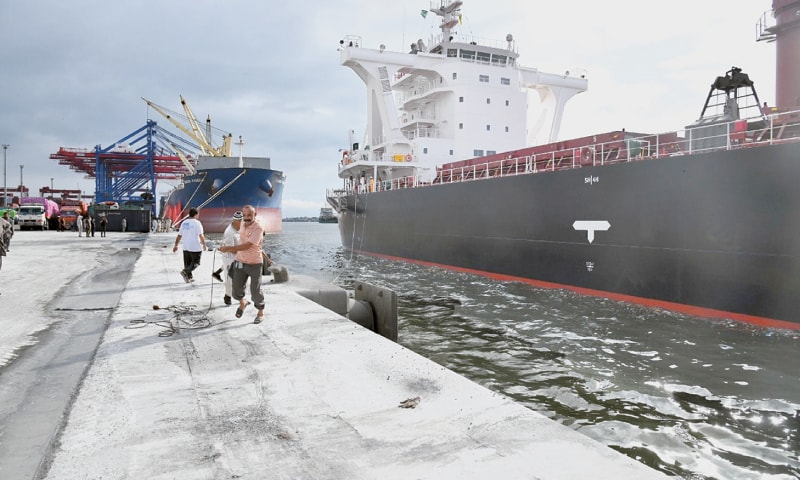
KARACHI: Pakistan received 51,000 tons of imported wheat at Karachi on Wednesday, with higher grain prices adding to an energy shock from the US-Iran war and straining efforts to contain inflation.
The MV Gokova M, a geared bulk carrier, was allocated Berths 16 and 17 and arrived at 12:25 p.m. local time, the Karachi Port Trust said in a post on X. The cargo is being unloaded at Karachi Gateway Terminal Multipurpose Ltd. A second vessel, the MV Great Rainbow, is due Nov. 3 with about 59,132 tons, which would bring the combined volume to more than 110,000 tons.
The port authority didn’t name the importer, the wheat’s origin or its destination. Nor did it say whether the cargoes are part of the government’s planned import arrangements, or when the grain will reach consumers.
Food Security Minister Rana Tanveer Hussain said Monday the government would hold strategic reserves of as much as 6 million tons and could arrange imports of up to 550,000 tons, depending on provincial needs. There would be “no shortage of wheat this year,” he said. He described the recent rise in prices as artificial and blamed manipulation by some market players, adding that he expected prices to normalize within days. The government will act against artificial shortages, speculation and unjustified increases, he said. Hussain also said the government had drawn up a National Wheat Policy, its first in nearly four decades, after consulting all provincial governments.
Millers in Karachi raised flour prices by an average of 14 rupees a kilogram over three days in early October, with open-market wheat climbing to 138 rupees a kilogram from a range of 125 to 130. That is equivalent to about 5,520 rupees per 40-kilogram maund. Data from the Pakistan Bureau of Statistics showed a 20-kilogram bag of flour costing as much as 3,540 rupees in Karachi, the highest among the cities tracked. Sindh province began releasing government wheat at 12,500 rupees per 100 kilograms from Oct. 15 to steady flour prices.
Prime Minister Shehbaz Sharif set an indicative price of 4,500 rupees per maund for 2027 on Friday, 1,000 rupees above last year’s level, citing higher production costs and inflation, according to his office. The price is 500 rupees below what farmers had demanded.
Deputy Prime Minister Ishaq Dar chaired a meeting of the Steering Committee on Wheat on Wednesday that reviewed national grain availability and import plans, the Foreign Office said. Dar told officials that keeping stocks adequate and avoiding supply disruptions remained a top priority, and he called for close federal-provincial coordination to keep prices affordable. He directed authorities to monitor the market and ensure atta prices move lower.
At an earlier meeting, Dar had directed federal and provincial governments to take all necessary steps, including raising market supply, to bring wheat prices under control. The committee was set up in July to assess import needs and devise an operating mechanism with the provinces.
The State Bank of Pakistan raised its benchmark rate by 50 basis points to 12% on Monday, its first increase since April, with nine of 10 Monetary Policy Committee members voting in favor. The central bank said elevated energy and wheat prices contributed significantly to September’s 10.3% inflation, while core inflation held near 8.4%. Headline inflation eased from 11.1% in August but remains above the 5%-7% target range. The bank warned that persistent increases in food and energy costs could lift inflation expectations and eventually feed into underlying prices. It expects growth of 3.5% to 4.5% this fiscal year.
Pakistan depends heavily on imported fuel, which leaves it exposed to disruptions in Gulf energy supplies. Wheat supply problems at home have added to price pressure, threatening household purchasing power as the economy recovers.
Hussain gave similar assurances in July, when he said wheat output was estimated at 1.36 million tons above the previous year and that stocks were sufficient. Sharif’s office said Pakistan has had to import wheat over the past two years.
Copyright © 2021 Independent Pakistan | All rights reserved