By Staff Reporter
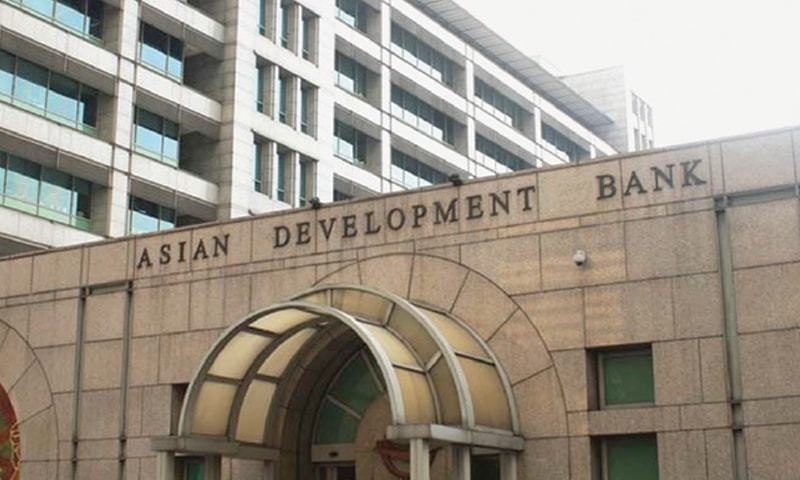
ISLAMABAD: The Asian Development Bank announced a $70 billion initiative on Sunday to accelerate cross-border electricity trade and digital connectivity across Asia and the Pacific, deploying artificial intelligence to integrate power systems and potentially help resolve chronic shortages in countries such as Pakistan that sit on surplus generation capacity.
The Manila-based lender said it will mobilise the funds by 2035 through two flagship programs unveiled on the opening day of its annual meeting: a $50 billion Pan-Asia Power Grid Initiative and a $20 billion Asia-Pacific Digital Highway project. The effort aims to strengthen physical links between national grids, expand renewable-energy flows across borders and close the region’s broadband gap with AI-enabled infrastructure.
“Energy and digital access will define the region’s future,” ADB President Masato Kanda said in a statement released by the bank. “These two initiatives build the systems Asia and the Pacific need to grow, compete, and connect. By linking power grids and digital networks across borders, we can lower costs, expand opportunity, and bring reliable power and digital access to hundreds of millions of people.”
For Pakistan, the Pan-Asia Power Grid Initiative could address a long-standing paradox: the country’s installed generation capacity exceeds 36,000 megawatts on the grid and surpasses 58,000 megawatts when off-grid, hybrid and net-metered solar systems are included, yet consumers endure frequent load-shedding. Daytime demand has fallen to an average of 9,000-10,000 MW because of widespread private solar adoption, while peak demand routinely exceeds 29,000 MW. Fuel shortages and transmission constraints remain the primary bottlenecks.
A Pakistani government official told local media that the regional cooperation framework, synchronised through AI-driven smart infrastructure, could prove a “win-win solution for all,” though he cautioned that it was too early for firm conclusions. The official, who declined to be identified because the plan had only just been announced, said Pakistan would need to examine the proposal on technical, financial and diplomatic grounds once it moves through official channels.
The ADB described the Pan-Asia Power Grid Initiative as a shift from bilateral energy links to a comprehensive regional approach. It will focus on transmission infrastructure, including cross-border lines, substations, energy storage and grid digitalisation, as well as generation projects tied directly to trade, such as renewable export facilities, regional hubs and hybrid generation-storage plants. The bank will work with governments, utilities, the private sector and development partners to raise the $50 billion by 2035.
Key targets include integrating about 20 gigawatts of renewable energy across borders, connecting 22,000 circuit-kilometres of transmission lines, improving electricity access for 200 million people, creating 840,000 jobs and reducing regional power-sector emissions by 15%. Roughly half the financing is expected to come from the ADB’s own resources, with the balance mobilised through co-financing, including private-sector participation. An additional $10 million in technical assistance will support regulatory harmonisation, common technical standards and feasibility studies.
The program builds on existing platforms, among them the South Asia Subregional Economic Cooperation program, the Bay of Bengal Initiative for Multi-Sectoral Technical and Economic Cooperation grid interconnection planning, the ASEAN Power Grid and the Central Asia Regional Economic Cooperation Energy Strategy 2030. Complementing the power grid is the $20 billion Asia-Pacific Digital Highway, which will finance terrestrial and subsea fibre networks, satellite links and regional data centres. The ADB will also provide policy support on cybersecurity and invest in skills programs to prepare economies for AI-driven growth. The project aims to deliver first-time broadband access to 200 million people and faster, more reliable connectivity for another 450 million by 2035. It is expected to cut connectivity costs in remote and landlocked areas by about 40% and generate 4 million jobs.
The bank plans to finance $15 billion of the digital initiative from its own resources and raise the remaining $5 billion through co-financing. To anchor the digital push, a new Centre for AI Innovation and Development will be established in Seoul with a $20 million contribution from the South Korean government. The centre will promote responsible AI adoption and help train about 3 million people in digital and AI-related skills by 2035.
Copyright © 2021 Independent Pakistan | All rights reserved