By Staff Reporter
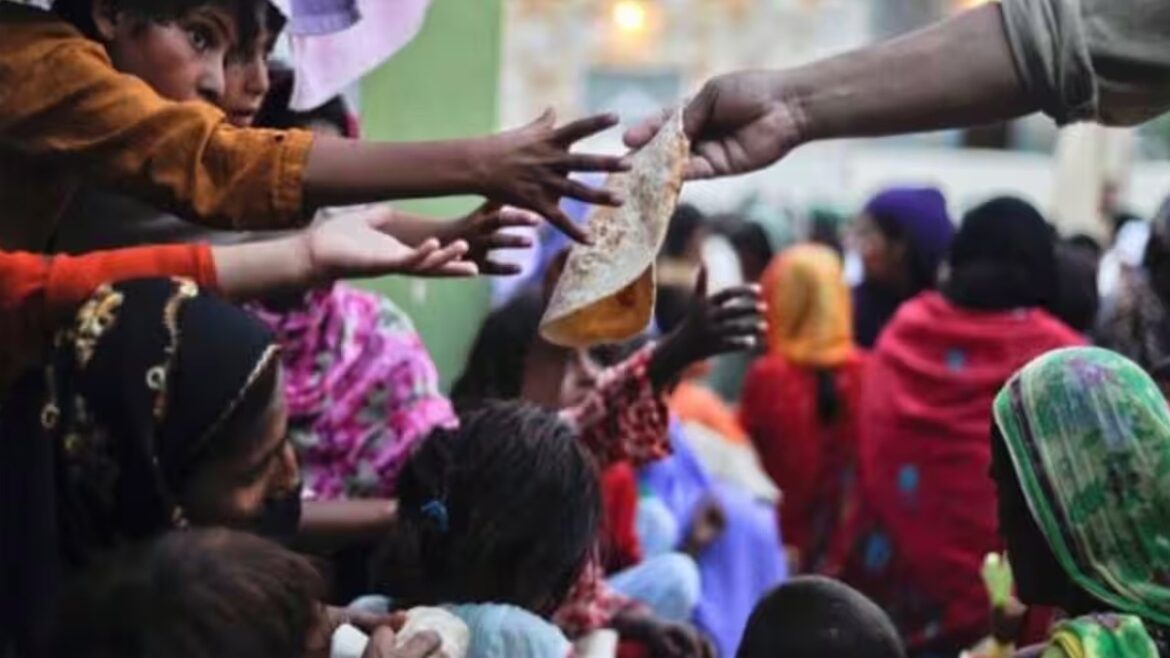
ISLAMABAD: Pakistan’s poverty rate climbed to almost 29% in the fiscal year ending in 2025, as a string of crises from the COVID-19 pandemic to high inflation and massive floods took a toll on households, a government report showed on Friday, even as the economy began to show some recovery.
The national poverty headcount reached 28.9% of the population below the poverty line in 2024-25, compared with 21.9% in 2018-19, according to the Ministry of Planning, Development & Special Initiatives’ preliminary report, which drew on fresh data from the Pakistan Bureau of Statistics’ Household Integrated Economic Survey (HIES). “Rigorous poverty measurement is therefore essential to distinguish temporary welfare strains from medium-term gains and to ensure that stabilization efforts are complemented by targeted social protection,” the report stated.
A Poverty Estimation Committee, made up of academics, government representatives, researchers and development partners, reviewed and approved the figures. This marks a shift away from the steady drop in poverty seen from 2005-06 to 2015-16, when the rate more than halved across the country. The report used the Cost of Basic Needs (CBN) method in place since 2013-14, setting the inflation-adjusted poverty line at Rs8,484 per adult equivalent per month to cover basic food and non-food costs.
The report showed rural poverty at 36.2%, up from 28.2%, and urban poverty at 17.4%, up from 11.0%. At the provincial level, Punjab saw poverty at 27.8% versus 21.3% before, Sindh at 34.5% from 24.6%, Khyber Pakhtunkhwa at 29.1% from 22.0%, and Balochistan at 38.4% from 28.6%. The national Gini coefficient, which tracks income inequality on a scale of 0 to 100, went up to 32.7 from 28.4. Urban areas saw it at 34.4 from 31.0, rural at 29.2 from 23.4. By province, Punjab hit 32.0 from 28.4, Sindh 35.9 from 29.7, Khyber Pakhtunkhwa 29.4 from 24.8, and Balochistan 26.5 from 21.0.
For the 2005-16 span, “the Gini Coefficient indicates that income inequality in Pakistan remained broadly stable, with only modest fluctuations and sharp shifts,” the report said, but it described a clear upward move in recent years due to regional and structural factors. The poverty jump stems from a series of heavy blows since fiscal 2019, the report explained, with COVID-19 causing a sharp economic dip, then a worldwide spike in commodity prices that sent inflation to levels not seen in decades, plus supply chain breaks from global tensions and major climate hits.
The 2022 floods led to $30.1 billion in losses, wiping out crops, livestock and infrastructure, and the 2023 floods added $2.9 billion more, “significantly affected the livelihoods, agricultural production, critical infrastructure, thus increasing the poverty risks,” according to the report. Economic data pointed to the difficulties: real GDP shrank in 2020-21 and 2022-23, inflation hit 29.2% in 2022-23 and then fell to 23.4% the year after. For 2024-25, estimates put GDP growth at 3.1% and inflation at 4.5%.
Real household income and spending both dropped since 2018-19, even though nominal income grew to Rs82,179 in 2024-25 from Rs41,545 in 2018-19 and Rs35,662 in 2015-16, because price rises outran the gains. “Nominal income growth has lagged cumulative price increases, resulting in sustained real income declines, particularly for fixed-income earners,” the report said, with effects on informal workers and farmers from various policy shifts.
Big jumps in food and energy costs, which take up a large part of budgets for poorer families, added to the burden, along with higher energy tariffs from fiscal changes that boosted prices for basic services and travel. The job market stayed soft, with unemployment at 7.5% in 2020-21 from 6.3% in 2017-18, and it held high through 2023-24. Large-scale manufacturing suffered, which held back new jobs. “Weak job creation, combined with subdued wage growth, constrained income gains for low-income workers,” the report said.
Other issues made matters worse, such as security problems in Khyber Pakhtunkhwa and Balochistan that cut off work and services, poor access to good education and training that kept people in low-pay jobs, and tough geography in rural spots that blocked market links and raised living expenses. Remittances grew but did little to ease poverty widely, acting mostly as a safety net for families with overseas ties rather than lifting incomes across the board.
Families used up savings, sold off assets and took on debt through the crises, which left them exposed even as things started to improve. Programs like the Benazir Income Support Programme (BISP) offered help, with Rs696 billion paid out in fiscal 2025 to aid those hit by income drops and cost pressures, but success relies on good aiming, enough payments and budget room. “Macroeconomic stability usually occurs before poverty reduction, but there is often a lag between the two,” the report said, which accounts for the poverty rise even with better growth, lower inflation, more remittances and stronger external accounts lately.
The government plans to turn this around with broad changes to boost public services, governance and private business. “The Government of Pakistan remains committed to reversing these trends and advancing inclusive, sustainable growth,” the report said, adding that “no segment of society will be left behind” in the current recovery stage.
The ministry set up a Technical Working Group in July 2025 and the Poverty Estimation Committee in November 2025 to handle the work, sticking to the CBN method with tweaks for regional prices and household scales that count kids at 0.8 and adults at 1.0. The 2024-25 survey had small changes from 2018-19, unlike bigger ones from 2013-14. Poverty tracking, the report said, plays a key role in checking how economic policies, fiscal steps, reforms and shocks affect family well-being.
Copyright © 2021 Independent Pakistan | All rights reserved