By Staff Reporter
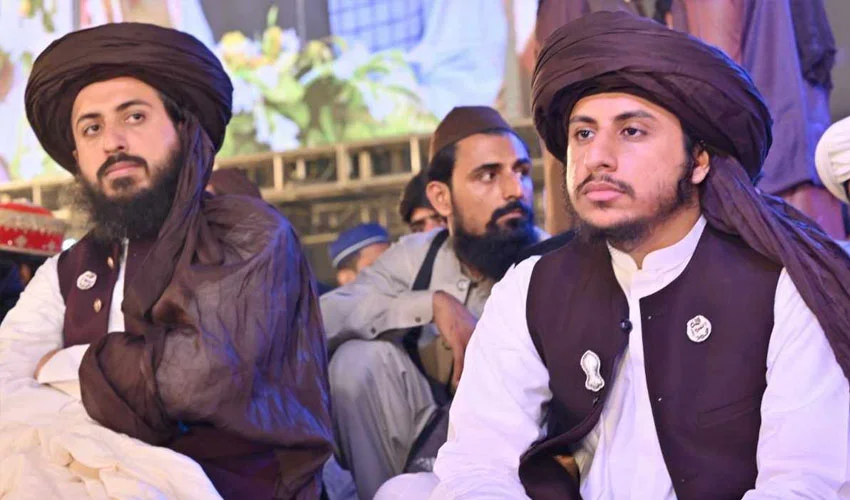
LAHORE: Pakistani authorities have opened a money-laundering investigation into Saad Rizvi, the leader of the hardline Islamist group Tehreek-i-Labbaik Pakistan (TLP), after law enforcement agencies raided his residence in Lahore and allegedly recovered huge sums of foreign currency, along with gold and silver ornaments, police said on Tuesday.
The raid, conducted jointly by Punjab provincial police, the Federal Investigation Agency (FIA) and the National Cyber Crime Investigation Agency (NCCIA), followed a broader crackdown on the TLP’s march that began Sunday night.
Officials said Rizvi escaped during the operation in Muridke, a town outside Lahore. All items seized in the raid, including the gold ornaments, were confiscated, Punjab police said in a statement. A senior police official expressed surprise at the haul. “The law enforcers were shocked to find such a large amount of foreign currency, gold, and silver at the residence, as the TLP chief did not run any business before the formation of the radical outfit,” the official said.
The discoveries prompted authorities to broaden their inquiry, seeking details on bank accounts held by Rizvi, his son and other family members to evaluate the full extent of assets acquired under the TLP’s banner. The total currency recovered amounted to Rs110 million , including 50,000 Indian rupees, according to police.
In a separate statement, the FIA announced it had initiated legal and financial actions against a religious group involved in anti-state protests and violent activities. The agency said it was examining the accounts and assets of several key officials and workers based on evidence. “The FIA has frozen several bank accounts that were allegedly being used to fund violent protests,” the statement said. Additionally, key individuals involved in funding the TLP were being placed on a stop list, restricting their travel.
A police official who shared initial findings with the media described how the TLP had expanded its footprint around its headquarters on Multan Road in Lahore. The group purchased dozens of properties in the area, turning it into a “no-go area” for law enforcement and the general public, the official said.
Rizvi had assembled a team of loyal extremists, housing them in homes bought at throwaway prices. “Several streets connected to the TLP’s main office have become a hub of the organisation’s trusted workers/supporters,” the official said. A separate team operated from an office equipped with the latest gadgets to manage social and regular media campaigns. Another dedicated unit of highly trained activists was on standby to counter police operations swiftly.
Punjab police released a detailed inventory of the valuables recovered from Rizvi’s residence. The items included 1.92 kilograms of gold, 898 grams of silver, 69 branded wristwatches, 28 gold bangles weighing 445 grams, 12 bracelets totaling 490 grams, 24 necklaces, chains and lockets, and 46 gold rings weighing 355 grams. The raid also yielded one silver crown and 32 silver rings.
In the wake of the crackdown, Punjab police filed at least 22 first information reports (FIRs) against Rizvi and his supporters across the province, charging them with serious offences. In the primary FIR, Muridke police named over 300 suspects on counts ranging from terrorism to murder. Besides Rizvi, his brother Anas Rizvi and several central leaders were accused of inciting hate and instigating workers to raise anti-state slogans.
The FIR detailed how Inspector Shahzad Nawaz was allegedly kidnapped and thrashed by a TLP mob, leaving him injured. It accused Saad Rizvi of shooting the inspector in his abdomen, critically wounding him; the officer later succumbed to his injuries at a hospital. The FIR further alleged that the TLP mob attacked policemen with clubs, iron rods and sharp-edged weapons containing nails, injuring several. Supporters were armed with lethal weapons and opened indiscriminate fire at officers, wounding many.
Police in Pakpattan, Sahiwal and Chichawatni lodged three additional cases against Rizvi, his supporters and workers under anti-terrorism laws and other offences. Another FIR claimed that Rizvi’s speech, broadcast live via social media from Burawla Chowk, incited followers to block roads, shut down markets, block traffic and disrupt public order. Separately, Gujrat police booked at least 120 TLP activists on terrorism charges in an FIR filed with the Rehmania police station on the report of Sub-Inspector Aftab Rasool.
The Human Rights Commission of Pakistan (HRCP) expressed deep concern over the events unfolding since Oct. 8, which culminated in violent clashes between security forces and the TLP, resulting in multiple deaths and casualties among protesters and policemen. “We are equally concerned by the lack of transparency and credible, independent information surrounding the operation, providing which was the government’s responsibility. While state authorities have neglected to address the TLP’s consistent role in promoting hate speech and inciting mob violence against individuals and groups, particularly religious minorities, this does not justify the alleged use of excessive force,” the HRCP said in a statement. The commission noted that both the Pakistani Constitution and international law require security forces, even when dispersing violent assemblies, to use the minimum necessary force.
The TLP, known for its hardline stance on blasphemy laws, has repeatedly clashed with authorities in recent years, often mobilising large protests that paralyse major cities.
Copyright © 2021 Independent Pakistan | All rights reserved