By Staff Reporter
RAWALAKOT: A banned protest coalition that has led weeks of unrest in the mountainous Azad Kashmir region agreed on Wednesday to postpone a long-threatened march on the regional capital, a reprieve that came after back-channel negotiations raised hopes for a lasting settlement to a standoff that has left at least nine people dead in the past two days alone.
The Joint Awami Action Committee, JAAC, said it would hold off for one week on its planned march to Muzaffarabad, even as it kept in place the sit-ins that have paralysed parts of the territory for nearly six weeks. The announcement, delivered to supporters gathered at Eidgah Ground in Rawalakot, followed hours of talks between committee leaders and a team of intermediaries who have been shuttling between the two sides since the weekend.
The delay offered a measure of calm to a region bracing for further violence. No new incidents were reported on Wednesday in Poonch and Sudhnoti, the two districts hardest hit by the unrest, and life continued largely undisturbed elsewhere in Azad Kashmir — a contrast to the bloodshed of the previous two days, when clashes between security forces and committee members left as many as 11 people dead by competing counts.
The unrest has pitted security forces against JAAC, a coalition of protest groups that the regional government banned last month under anti-terrorism law. The committee has demanded the elimination of 12 legislative assembly seats reserved for refugees who fled Indian-occupied Kashmir after the 1947 partition of the subcontinent and resettled elsewhere in Pakistan. Critics of that arrangement — including many within JAAC itself — argue it dilutes the political influence of Kashmiris who remained in the territory, handing outsized power to a refugee population that has steadily shrunk over decades.
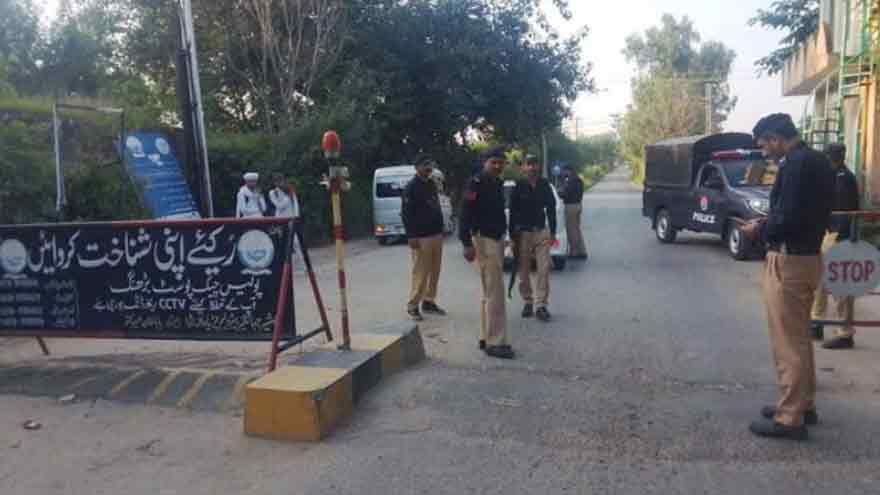
The violence traces to a sit-in JAAC organized outside a military hospital in Rawalakot. Police said armed committee members opened fire on officers there in a coordinated attack, and reported four law enforcement personnel and three committee members killed, with about 20 people wounded. JAAC offered a starkly different account, saying security forces fired tear gas and artillery shells at the hospital and that seven of its members died, some of them in the dark after electricity to the area was cut. The competing tolls, laid out in statements from both sides over Tuesday and Wednesday, have not been independently verified or reconciled.
Hard talks
Several thousand people, including women and children, had massed at Eidgah Ground earlier in the day in anticipation of the march, according to official and political sources in Rawalakot, with a smaller crowd gathering separately at the Mutyalmera bus terminal. Both groups waited through the afternoon as committee leaders met with the mediation team: Syed Qamar Raza, chairman of the Overseas Pakistanis Foundation, along with Chaudhry Zafar Anwar and Chaudhry Arif, two intermediaries from Chakswari in Mirpur district.
That meeting, which ran from roughly 1 p.m. to 4 p.m., marked the third round of contacts between the sides, following earlier discussions that began Sunday and resumed Tuesday night.
“Both sides have reached broad agreement on most agenda items,” a source with knowledge of the negotiations said. “A few outstanding issues remain, and once these are resolved, the understanding will be formalised, and the ongoing sit-in is expected to end.” A second source close to the talks said the progress reflected backing for the mediation effort from the highest levels of government, which had helped break the impasse.
The earlier rounds of contacts had drawn in two additional figures from Poonch, Sardar Amin and Shazib Shabbir, who met separately and late Tuesday night with Prime Minister Raja Faisal Mumtaz Rathore, urging him to intervene directly in the crisis, according to people familiar with the meeting.
Rathore wrote afterwards on the social media platform X that the region “is a cradle of peace” and asked, “How long will we continue to watch this peace being stained with our own blood?” He said the government stood ready to take “another step forward” to restore calm, and that he hoped the offer would be met with “seriousness and maturity.”
Umar Nazir Kashmiri, a JAAC leader, told the crowd at Eidgah Ground that the march would be postponed by a week while the sit-ins continued. “We hope the matters agreed upon in principle will be amicably settled during this period,” he said. He thanked Field Marshal Asim Munir, the army chief, and Raza, the mediation chairman, for what he described as their understanding of Kashmiri grievances, and said the committee had written directly to Munir two days earlier after concluding its concerns were not reaching him through ordinary government channels. “We placed all the facts before him and left the matter to his judgment,” Kashmiri said.
A call for a truth commission
The pause came hours after Bilawal Bhutto-Zardari, chairman of the Pakistan Peoples Party, proposed forming an independent truth and reconciliation commission to help resolve the crisis, warning that continued violence was doing lasting harm to both the broader Kashmir cause and Pakistan’s international standing.
Speaking to party workers and legislative candidates in Muzaffarabad, Bhutto-Zardari — a former Pakistani foreign minister whose party governs Azad Kashmir and holds substantial influence within the federal coalition in Islamabad — called the situation “very concerning” and said further delay in addressing it would only deepen the damage. His remarks came less than two weeks before the territory is scheduled to elect a new 53-member legislative assembly, and a day after the unrest’s deadliest single episode: a Tuesday clash in Poonch division that killed at least two security officials and seven protesters.
“The situation in Azad Kashmir over the past month has been deeply worrying,” Bhutto-Zardari said. “Every Kashmiri is worried, and every Pakistani is worried. The longer this continues, the greater the damage to the Kashmir cause and to Pakistan’s reputation.”
“I propose the establishment of an independent commission of all concerned parties,” he told the gathering. The panel, he said, should have a mandate broad enough “to examine the present situation, establish the relevant facts, consider the grievances and positions of all sides, review the outstanding political, legal, and administrative issues, and recommend a fair and durable way forward.”
Government pushes back
Not everyone in the territorial government was in a conciliatory mood. Chaudhry Guftar Hussain, the Azad Kashmir home secretary, told reporters Wednesday that JAAC had waged coordinated campaigns built on “baseless claims and propaganda” to turn people against the state.
Hussain said the banned organisation had resorted to using women and children as “human shields” after its leadership grew indifferent to its own supporters and failed to make good on its promises. He said the committee’s conduct was not only unethical but a violation of “Kashmiri values,” and criticised it for pulling students from their studies. “Distracting students from their education means playing with their futures,” he said.
Hussain accused JAAC of promoting anti-state narratives, working to turn public opinion against the Pakistan Army, attempting to damage the historical relationship between Pakistan and Azad Kashmir, restricting movement by blocking roads, and disrupting the lives of ordinary residents. “All these actions prove that JAAC’s actual purpose is not to protect the rights of the people but to damage AJK’s peace, economy and law and order,” he said.
Copyright © 2021 Independent Pakistan | All rights reserved