By Staff Reporter
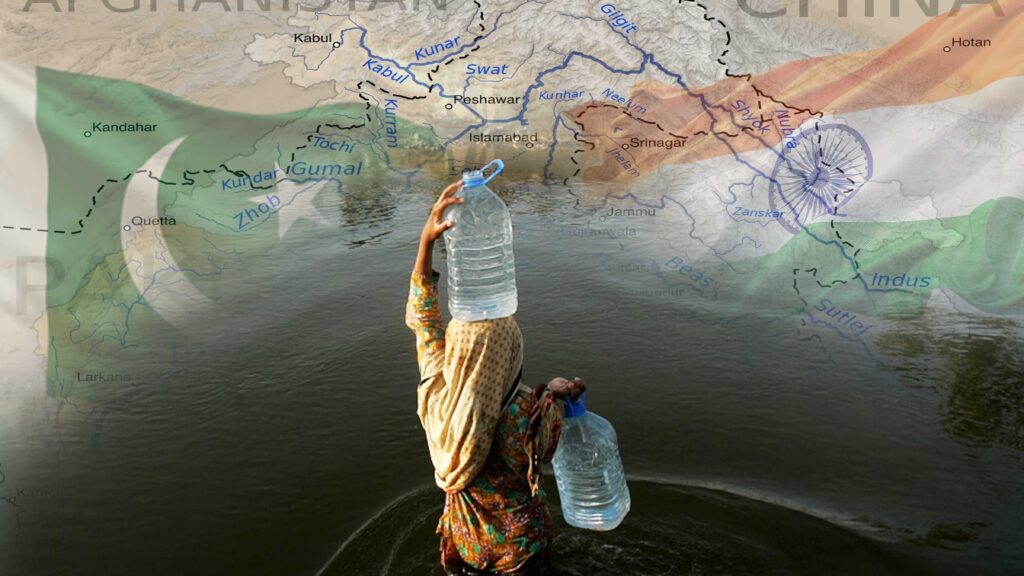
ISLAMABAD: The Indus Waters Treaty has long stood as proof that two nuclear-armed rivals, locked for generations in dispute over Kashmir, could still manage to share a river. On Tuesday, in a packed hall at the Jinnah Convention Centre, a parade of Pakistan’s most senior officials argued that the 1960 agreement is now in genuine jeopardy, and asked the world to take notice before the damage spreads beyond South Asia.
The daylong conference, titled “The Indus Waters Treaty: A Key Instrument for Peace and Regional Stability,” drew Pakistan’s deputy prime minister, its information and climate ministers, the country’s Indus Waters commissioner, the opposition’s most prominent foreign policy voice, and legal and water specialists from several countries, including China and the United States. The government had billed it in advance as the first event of its kind. Their message, repeated from speaker to speaker, was that India’s decision last year to place the treaty “in abeyance” was not a routine diplomatic dispute but a test of whether any water-sharing agreement, anywhere, can survive a powerful upstream neighbour’s illegal act.
“It takes two to tango,” Deputy Prime Minister and Foreign Minister Ishaq Dar told the gathering, urging India to “live like good neighbours” and resolve the dispute through dialogue rather than confrontation. Treaty violations, he warned, carry consequences that reach well past the two countries involved. “Such actions set a dangerous precedent in international relations,” he said, adding that they damage the standing of the state responsible.
The dispute traces back to April 22, 2025, when militants killed 26 people, most of them tourists, in the Pahalgam area of Indian-occupied Kashmir. India has linked the attack to a Pakistan-based militant group, and within days announced it was suspending the Indus Waters Treaty — an accusation of complicity that Islamabad has firmly and repeatedly denied. The following month, the two countries fought a brief but intense conflict: four days of airstrikes, missiles and drone attacks that ended in a ceasefire on May 10, 2025, after US President Donald Trump announced that Washington had helped broker it, a characterization India disputes, insisting the truce was negotiated bilaterally. Pakistan says it shot down multiple Indian jets, including at least one French-made Rafale, a claim some Western intelligence assessments have lent it complete support.
Information Minister Attaullah Tarar, who opened the seminar, argued that the dispute was never really about a legal document. “We are talking about our lifeline, not a treaty,” he told delegates, tracing Pakistan’s national identity to the ancient Indus Valley civilization and describing the river system as the foundation of an agricultural economy supporting roughly 240 million people. “Rivers should connect nations, not divide them,” he said, warning that “any attempt to divert or stop Pakistan’s water will be met decisively.”
The Commissioner’s Ledger
The most technical case — and in some ways the most pointed — came from Syed Mehr Ali Shah, Pakistan’s commissioner for Indus waters, who described the treaty not as a hydrology arrangement but as “a conflict prevention system” whose machinery, he said, is being allowed to seize up. Shah said he has written to his Indian counterpart four times since last year about sudden swings in the flow of the Chenab River, most recently the night before the seminar, without receiving a single reply. He told the audience that flows at the Marala Barrage had lurched from roughly 78,000 cusecs to just 1,500 in May 2025, then from about 58,000 down to 870 the following December, with another sharp drop recorded this past May. “Data sharing is the line between natural risk and manufactured vulnerability,” he said. The Permanent Indus Commission, the body the treaty created to keep technical channels open between the two countries, has not met since May 2022.
Shah pointed in particular to an Indian tunnel project under construction in Himachal Pradesh that would carry water from Chenab tributaries westward into the Beas basin, a river allocated to India under the treaty — a transfer he called incompatible with the agreement’s basic architecture. He noted that Pakistan has twice asked the Permanent Court of Arbitration at The Hague to weigh in on India’s hydropower projects on the western rivers; the tribunal ruled last year that India cannot unilaterally suspend the treaty, and issued a further award in May limiting how much water India’s projects may store. India has rejected the tribunal’s rulings outright, calling the court “illegally constituted” and its decisions “null and void.” New Delhi has, at least once, also acted directly: shortly after suspending the treaty, it briefly halted flow from the Chenab at the Baglihar Dam, describing the move at the time as a “short-term punitive action.”
Someone Else Controls the Tap
Climate Change Minister Musadik Malik gave the conference its most personal moment, opening his remarks with the story of Iqbal Sulangi, a farmer in Sindh whose family had worked the same land for generations before being wiped out by flooding in 2010, again in 2012, and again in 2022. Sulangi gave up farming after that, Malik said, and now does day labor in Karachi. He argued the underlying problem was not climate change or scarcity but control: “Someone else who is not you controls the tap,” he said, pointing to the same swings in flow at Marala that Shah had described and arguing they had no natural explanation. Malik drew comparisons to farmers in Bangladesh, the shrinking Aral Sea, and communities dependent on the Nile, the Tigris and the Mekong. “This is neither a crisis of climate nor a crisis of water,” he told the audience. “This is a crisis of justice.”
Bilawal Bhutto Zardari, the Pakistan Peoples Party chairman and a former foreign minister called for a new international convention banning the “weaponisation of waterways” — a principle he said should apply as readily to the Strait of Hormuz, the Suez Canal and the Nile as to the Indus. Comparing the river to the strait that connects the Persian Gulf to the open ocean, he told the audience that while a strait carries the oil of nations, “the Indus carries the life of nations,” and argued that no durable peace between India and Pakistan was possible while the treaty remained frozen. He urged Pakistan not to act as though the suspension were permanent, while insisting the country was not seeking a fight. “We seek restraint,” he said, “but not national suicide.”
Two other speakers reinforced the legal and scientific framing. Ahmer Bilal Soofi, a former federal law minister, argued that international law recognizes no formal mechanism for holding a treaty “in abeyance,” calling India’s position an effective admission that it had breached the agreement. Roxolana Zigon, a Russian researcher who heads a Moscow-based strategic studies center, told the conference that more than 90 percent of Pakistan’s agriculture depends on the Indus system and warned that India’s upstream dam-building risked destabilizing the broader region. The World Bank, which brokered the original treaty and still administers parts of its dispute-resolution machinery, has said its role is limited to that of a facilitator and that it has no plans to intervene directly in the current standoff.
New Delhi’s Rigidity
India has shown no public sign of softening. Earlier this month, its water resources minister, C.R. Patil, said New Delhi was working to ensure that, in his words, “not a single drop” of Indus water would reach Pakistan in years to come. New Delhi maintains the Permanent Court of Arbitration has no authority over the matter at all. Pakistan’s own defense minister, Khawaja Asif, said in a recent interview that his country would treat a genuine threat to its water security as grounds for war, though he added that the current situation does not yet warrant military action.
What Tuesday’s conference made clear is that neither government is treating this as a narrow technical dispute. For Pakistan, the message delivered across nearly a dozen speeches was that a treaty which survived three wars between the two countries is now being tested by something quieter, and in its telling more dangerous: a slow withholding of data, meetings and water itself.
Copyright © 2021 Independent Pakistan | All rights reserved