By Staff Reporter
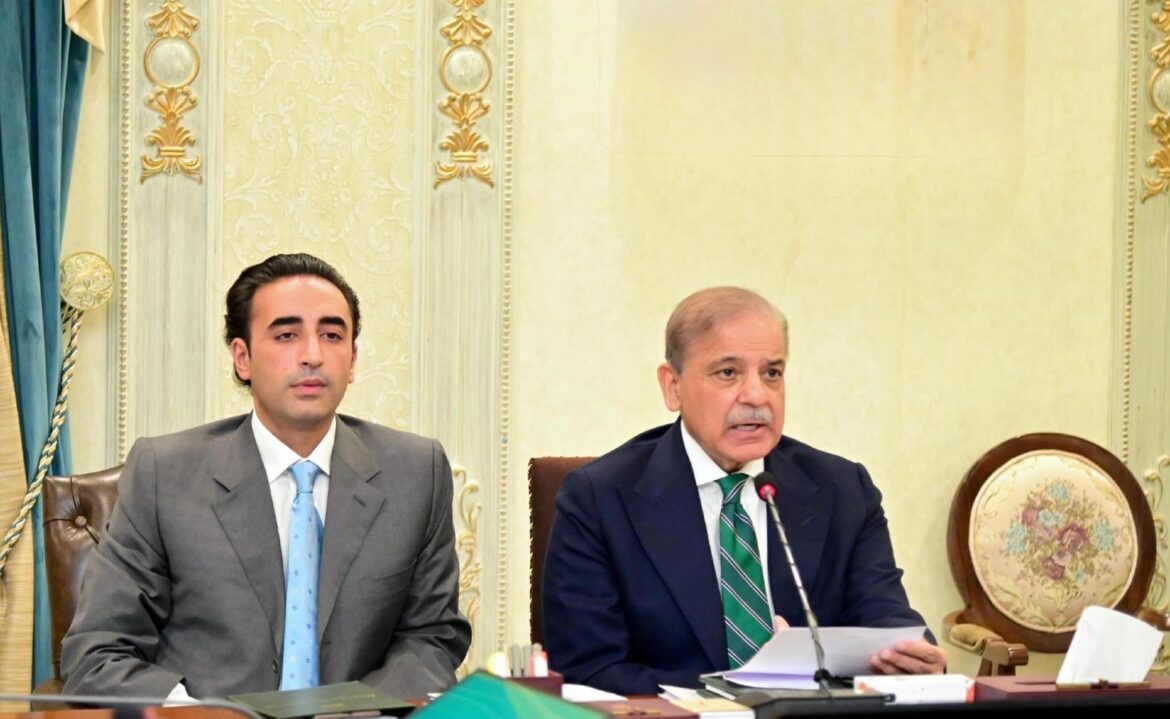
ISLAMABAD: Pakistan Peoples Party chairman Bilawal Bhutto-Zardari has refused to deliver his speech in the National Assembly’s ongoing budget debate, declaring that he will remain silent on the floor of the house until the government honours commitments made to his party — in what amounts to the sharpest public signal yet that the coalition propping up Shehbaz Sharif’s government is under serious strain.
The standoff emerged on Tuesday following a tense meeting between Bhutto-Zardari and Deputy Prime Minister Ishaq Dar at Parliament House in Islamabad, where the PPP chairman arrived flanked by a formidable delegation of senior figures — former prime minister Raja Pervez Ashraf, former foreign minister Sherry Rehman, veteran parliamentarian Naveed Qamar, and party leader Ijaz Jakhrani. The composition of the delegation was itself a statement: this was not a courtesy call.
“Bilawal sahib has decided that he will not deliver his speech unless all promises made by the government with the PPP regarding the budget are fulfilled,” a source close to the chairman told local Dawn newspaper after the meeting concluded. The source said Bhutto-Zardari left the encounter visibly agitated, convinced that the budget tabled before the National Assembly bore little resemblance to the document that had been shared with the PPP during prior consultations. “In fact, the government has shown us something different from what was presented in the National Assembly,” the source said.
Speaking briefly to reporters afterwards, Bhutto-Zardari struck a more measured public tone, offering the kind of diplomatic ambiguity that characterises Pakistani coalition politics at its most fraught. “By the grace of Allah Almighty, our reservations will be addressed,” he said. “We have again discussed the matter with Dar sahib.” He did not elaborate on what those reservations were, nor how close — or far — the two sides had come to resolving them. Another meeting between Bhutto-Zardari and Dar was expected imminently, the source said.
The confrontation is the latest in a string of encounters between the PPP leadership and the deputy prime minister that have played out over recent weeks, each apparently failing to produce a durable understanding. Sources familiar with the talks said Tuesday’s meeting suggested that either the government had not incorporated the PPP’s proposed amendments into the final budget document, or that significant concerns had been shelved rather than resolved — a distinction that carries considerable political weight when one coalition partner is being asked to defend a budget it did not agree to in parliament.
At the core of the dispute is a broader argument about how Pakistan should bear the cost of fiscal consolidation demanded by the International Monetary Fund, which has reportedly pressed the federal government to introduce additional revenue measures worth around Rs430 billion in the upcoming budget, with a comparable sum expected to be raised by the provinces. The IMF’s insistence on fiscal tightening has placed the government in an uncomfortable position politically, squeezing the fiscal space available for social spending even as inflation continues to erode household incomes.
The PPP, which draws much of its support from Sindh’s rural poor and feudal, has been especially vocal in its resistance to new tax burdens falling on those least able to bear them. During Tuesday’s meeting, PPP leaders pressed Dar on how provinces might be expected to raise their own revenues without resorting to measures that would further punish ordinary citizens. The party’s position, articulated plainly by those present, was that the government should concentrate on widening the tax net rather than deepening its reach into the pockets of existing taxpayers — a population already squeezed by years of inflation and currency depreciation.
“The PPP team stressed during the meeting that the government should focus on broadening the tax base rather than exerting pressure on the same class,” a second source told Dawn.
The discussions also touched on the Public Sector Development Programme and wider questions of development spending, fiscal sustainability, and social welfare — the kind of macro-economic terrain on which parties must ultimately agree if a coalition budget is to be passed with any semblance of political legitimacy.
Bhutto-Zardari also found time, when questioned by reporters, to address a separate political front: the recent elections in Gilgit-Baltistan. He expressed confidence that the PPP would succeed in forming a government in the territory, a claim that reflects the party’s continued ambition to project relevance beyond its Sindh heartland.
Copyright © 2021 Independent Pakistan | All rights reserved