By Staff Reporter
ISLAMABAD: Prime Minister Shehbaz Sharif has tapped former foreign minister Bilawal Bhutto-Zardari to lead a diplomatic delegation to global capitals, aiming to counter India’s portrayal of their recent military clash.
The move comes as tensions between the two nuclear-armed neighbours persist despite a US-brokered ceasefire that halted four days of cross-border strikes earlier this month, and follows India’s own announcement of a similar diplomatic outreach.
The dueling efforts stem from a deadly April 22 attack in occupied Kashmir, where 26 tourists were killed. India accused Pakistan of orchestrating the assault, a charge Islamabad rejected, demanding an international probe. The violence escalated with Indian strikes inside Pakistani cities, met by Islamabad’s reprisals, until US President Donald Trump secured a ceasefire on May 10.
The White House said both nations had agreed to talks at a neutral venue to address their disputes, though progress has since stalled. But both nations now vie to shape their narratives.
India moved first on Saturday, revealing plans to send seven all-party delegations to key global partners, including UN Security Council members, later this month. New Delhi’s goal, according to a press release from India’s Press Information Bureau, is to present its stance on terrorism and “project India’s national consensus.”
Pakistan’s decision to deploy its own delegation followed later that day, framing the effort as a direct response to India’s misinformation campaign.
“The prime minister has decided to send a diplomatic delegation to expose Indian propaganda and nefarious conspiracies at the international level,” the Prime Minister’s Office said in a statement.
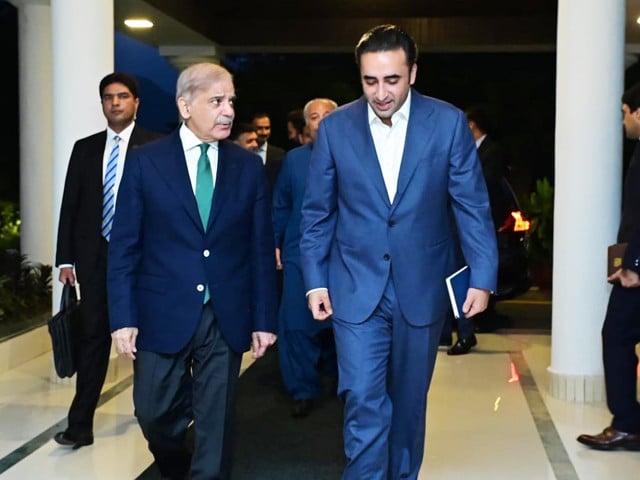
Sharif, the statement added, personally reached out to Bhutto-Zardari, chairman of the Pakistan Peoples Party (PPP) and a pivotal ally of Sharif’s Pakistan Muslim League-Nawaz (PML-N), to spearhead the mission.
“The delegation will expose India’s propaganda and efforts to destabilize regional peace in London, Washington, Paris, and Brussels,” the statement added. “The delegation will highlight Pakistan’s efforts for regional peace while exposing India’s propaganda and attempts to destabilise peace in the region.”
Bhutto-Zardari, a prominent figure in the coalition government, accepted the role. In a post on the social media platform X, he wrote,
Bhutto-Zardari, a prominent figure in Pakistan’s coalition government, embraced the role. In a post on the social media platform X, he wrote,
“I was contacted earlier today by the Prime Minister, who requested that I lead a delegation to present Pakistan’s case for peace on the international stage,” Bhutto-Zardari wrote on the social media platform X. “I am honored to accept this responsibility and remain committed to serving Pakistan in these challenging times.”
The Pakistani delegation includes a mix of political heavyweights and seasoned diplomats. Climate minister Musadik Malik, former foreign minister Khurram Dastgir Khan, former climate minister Sherry Rehman, former foreign minister Hina Rabbani Khar, politician Faisal Subzwari, and former diplomats Tehmina Janjua and Jalil Abbas Jilani are part of Bhutto-Zardari team. Their mission, according to a PPP statement, is to “inform the international community about Indian aggression and its false propaganda” while lobbying officials and diplomats to bolster Pakistan’s narrative.
India’s parallel effort is equally robust. The Indian government statement noted that its delegations will feature “members of parliament from different parties, prominent political personalities and distinguished diplomats.” Leading the seven teams are Indian National Congress’s Shashi Tharoor; Bharatiya Janata Party’s Shankar Prasad and Baijayant Panda; Dravid Munnetra Kazhagam’s Kanimozhi Karunanidhi; Janata Dal-United’s Sanjay Kumar Jha; Nationalist Congress Party’s Supriya Sule; and Shiv Sena’s Shrikant Eknath Shinde.
The dueling diplomatic campaigns highlight the chasm between the two South Asian rivals, even as the fragile ceasefire holds. Pakistan seeks to portray itself as a proponent of peace while accusing India of stoking instability. India, conversely, aims to rally global support against what it frames as Pakistan-backed terrorism. Both nations are targeting influential capitals, suggesting a high-stakes bid to sway international opinion at a time when Western powers play an outsized role in shaping security and economic policies in the region.
Copyright © 2021 Independent Pakistan | All rights reserved