By Staff Reporter
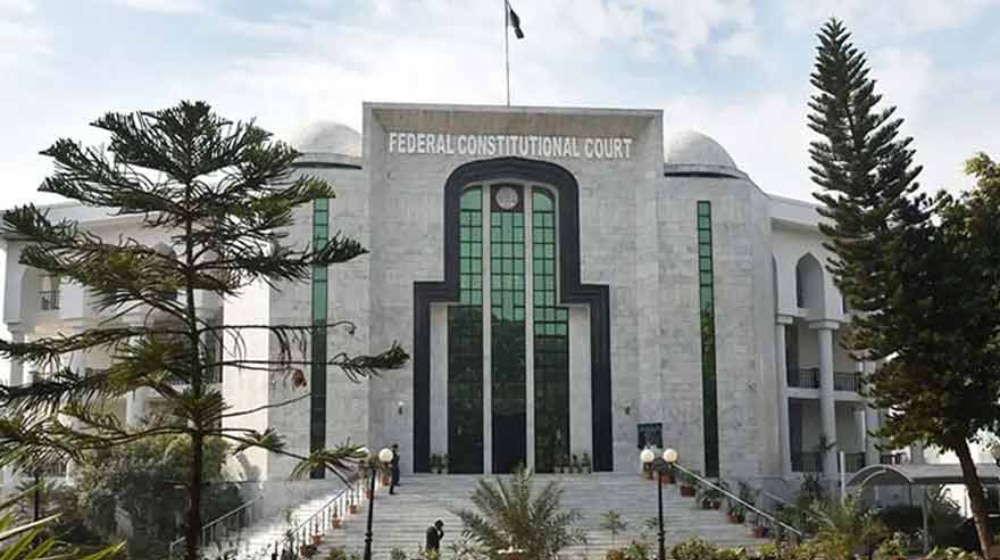
ISLAMABAD: Pakistan’s top constitutional court has partly lifted its ban on the Peshawar High Court hearing petitions filed since emergency rule was imposed in Khyber Pakhtunkhwa, while keeping challenges to the takeover itself out of the high court’s reach.
The Federal Constitutional Court (FCC) on Monday amended its 5 November order, which had frozen proceedings in the province’s high court after the army was deployed in aid of the civil power. The two-judge bench, headed by Chief Justice Aminuddin Khan and including Justice Aamir Farooq, said the high court could again hear cases filed under Article 199 of the constitution, but not pleas against the 11 October proclamation of emergency and governor’s rule.
Accounts of the hearing differed on whether petitions against detentions under the Maintenance of Public Order Ordinance (MPO) are covered by the exclusion. Some reports said the court had allowed those cases to proceed as long as they did not challenge the emergency. Others said petitions against detentions under Section 3 of the MPO remain barred.
The 5 November order followed interim rulings in which the Peshawar High Court granted bail to detained PTI workers and activists against surety bonds of Rs100,000 each. The Khyber Pakhtunkhwa Home and Tribal Affairs Department’s additional chief secretary has since filed more than 60 appeals against those rulings with the FCC. The Peshawar court then removed the affected petitions from its cause list.
The FCC relied on clauses 3 and 4 of Article 245. Clause 3 bars a high court from exercising Article 199 jurisdiction in any area where the armed forces are, for the time being, acting in aid of civil power. The court also asked the provincial advocate general, Sanaullah Khan, for a report on which areas no longer needed the military, and said it could reconsider its order once it had seen it.
That report was submitted, and it offered the court little reason to expect a withdrawal. The provincial government said the security apparatus was operating under a unified civil-military stabilisation framework to protect lives, property and state installations. It described threats, terrorist networks and internal disturbances as “fluid, volatile and interconnected” in every district.
The report said the continued deployment of the armed forces “remains strictly indispensable across the entire Province of K-P without exception”, and that the government did not intend to withdraw or de-notify troops from any district “at this juncture”. It argued that suspending Article 199 proceedings filed on or after 12 October was necessary to shield executive security actions, including preventive detentions under the MPO, from “premature judicial interference”. It urged the court to keep the suspension in place across the province.
PTI chairman Barrister Gohar Ali Khan and the Peshawar Bar Council were both allowed to join the proceedings after applying to become parties. Gohar told the bench that the 5 November order had halted work in the high court and brought legal practice to a standstill. He said several PTI workers and activists remained in detention, some of them held at Police Lines in the province. The party’s lawyer Latif Khosa also told the court that proceedings had stopped.
Justice Farooq observed that a literal reading of Article 245 suggested that no Article 199 case could be heard, but that such a reading would bring the entire judicial system to a halt. He later said the question of the emergency was of significant constitutional importance and that bar councils should be heard on it.
Gohar told the court that no review board had been set up in the province to examine preventive detentions. The advocate general replied that one would be formed after three months, and that detainees held beyond that period could approach it. Chief Justice Khan said other parties’ applications, filed at the court’s Peshawar registry, had not yet been scheduled for hearing. The bench adjourned the case without setting a new date.
Speaking to reporters afterwards, Gohar said the court had amended its order but had not given the relief the party sought. He repeated that imposing governor’s rule or an emergency, or removing the provincial government, was unconstitutional and undemocratic. He said a petition challenging the emergency had already been filed with the FCC, and that the high court should have decided the matter.
The federal government imposed the emergency and governor’s rule on 11 October, citing the provincial government’s “deliberate disengagement” from the fight against terrorism. President Asif Ali Zardari approved the move on the federal government’s recommendation. It was criticised by opposition figures including Jamiat Ulema-i-Islam-Fazl chief Maulana Fazlur Rehman, National Assembly opposition leader Mehmood Khan Achakzai and Senate opposition leader Raja Nasir Abbas.
Tensions between the centre and PTI, which had governed the province, had been high since the party announced a march on Islamabad to demand the release of its jailed founder, the former prime minister Imran Khan. Talks between the two sides a week before the takeover produced no agreement.
Scores of PTI workers and leaders, including lawmakers, were detained after 11 October. Sohail Afridi, the chief minister, who has been left without any functioning role under governor’s rule, is also in custody.
Copyright © 2021 Independent Pakistan | All rights reserved