By Staff Reporter
ISLAMABAD: Prime Minister Shehbaz Sharif approved district-level facilitation centers for small and medium-sized exporters, with pilots in Lahore, Peshawar, Karachi and Quetta, as the government tries to broaden an export base that has struggled to keep pace with imports.
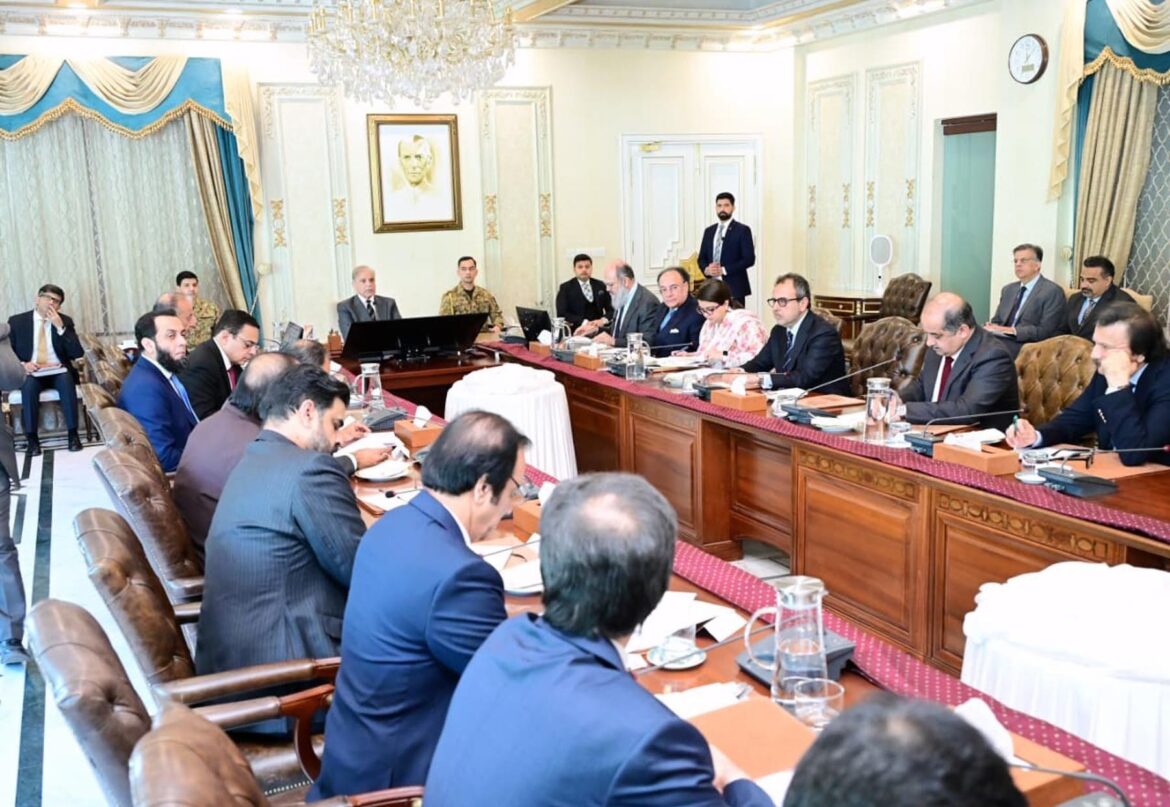
Sharif gave the go-ahead on Monday during a meeting with a delegation of exporters in Islamabad, according to a statement from his office. He called small and medium enterprises the “backbone of the country’s economy” and said the centers would be extended gradually to all districts if the pilots succeed, so that more people receive guidance on starting a business.
The premier also asked officials to present a plan as soon as possible for a cold-storage system to support exports of perishable goods. He approved restructuring the Trade Development Authority of Pakistan and the Small and Medium Enterprises Development Authority “along modern lines” to promote exports and bring local industries up to export standards. A committee will review the delegation’s proposals and report back to him on implementation, the statement said. Delegation members praised the government’s measures for small businesses, it added.
Sharif said 300 billion rupees under the Export Finance Scheme has been set aside for small and medium enterprises and new exporters, and that the money is reserved exclusively for them. Pakistan Export-Import Bank has issued a circular to that effect. The Finance Ministry said earlier this month that the full amount had been ring-fenced for small exporters after previously being shared with other categories of borrowers.
Getting the money out the door has been the harder part. Officials told a National Assembly committee this month that only about 5 billion rupees of the allocation had been disbursed, up from a 92 billion rupee allocation last year, Arab News reported. Lawmakers raised concerns that commercial banks still demand heavy collateral from small businesses despite government directives to lend against cash flow.
The stakes are considerable. Pakistan has about 18,000 exporters, of which 17,000 are small and medium enterprises, yet they account for only 21% of export value, officials said. Sharif has set a target of $60 billion in annual exports by fiscal 2028-29. Islamabad narrowly avoided a sovereign default in 2023 and has since sought to reduce its reliance on foreign loans.
Recent data show progress alongside a widening gap. Goods exports reached a record $11.4 billion in the four months through October, up 8.8% from a year earlier, the government said Sunday, crediting tax cuts and faster refunds. But imports are growing faster. The October trade deficit widened nearly 20% from a year earlier to $3.88 billion, according to the Pakistan Bureau of Statistics. Exports rose 2.8% to $2.93 billion, while imports climbed almost 12% to $6.81 billion. The deficit for July through October was $14.63 billion, up almost 16%.
For the fiscal year that ended in June, officials said Pakistan’s total exports were $40.4 billion against an import bill of $80.9 billion. Remittances of $41.6 billion helped cushion the external account.
The government has been layering on support. Officials said it has abolished the super tax on export-oriented companies and cut withholding tax on export proceeds to 1.25% from 2%. Exporters can borrow under the finance scheme at 6%, half the central bank’s 12% policy rate, after the scheme’s overall allocation was expanded to 1.5 trillion rupees ($5.3 billion). In September, Sharif welcomed a 3 billion rupee risk pool for export credit insurance for small businesses. Earlier this month, he told the Finance Ministry to address financing constraints facing small businesses and the housing sector.
Copyright © 2021 Independent Pakistan | All rights reserved