By Staff Reporter
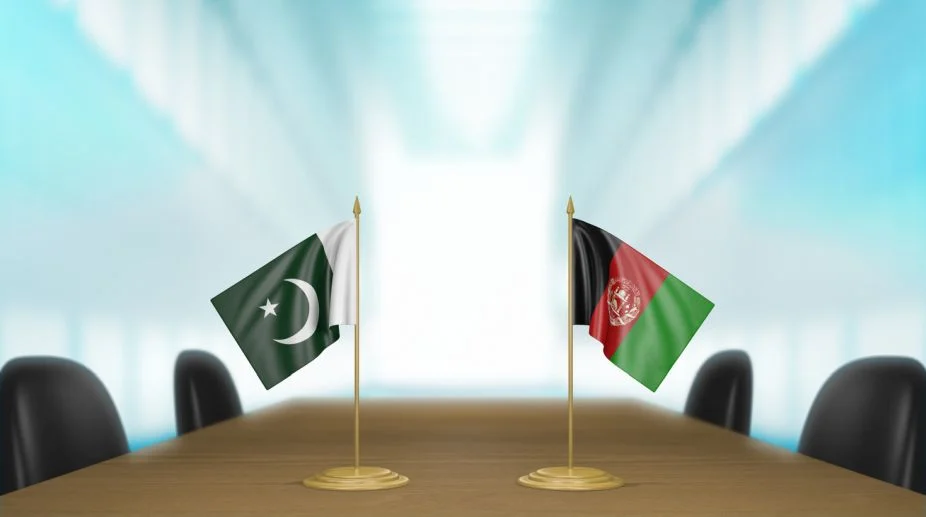
ISLAMABAD: Pakistani and Afghan officials convened for a third day of negotiations in Istanbul on Monday, struggling to forge a durable peace accord amid mutual recriminations over cross-border terrorism, even as President Donald Trump reiterated his willingness to step in as a mediator.
The discussions, hosted by Turkey, represent the second round of talks aimed at establishing a long-term truce between the two South Asian neighbours. They follow a fragile ceasefire agreed upon in Doha on Oct. 19, which halted days of intense border skirmishes that claimed dozens of lives, the most severe violence along the frontier since the Taliban assumed control in Kabul in 2021.
Yet both sides have presented starkly contrasting views of the proceedings. Pakistani security officials charged that the Afghan Taliban were obstructing progress in the dialogue. “The Pakistani delegation has made it clear that no compromise is possible on our core demands on cross border terrorism,” one of the official told Reuters. A Taliban delegate to the talks rejected the notion that the Islamist group was impeding the process, calling it “false” and emphasising that negotiations remained underway. “Overall the meeting is going well and we discussed multiple issues in a friendly environment,” the Afghan official said.
However, officials of both the countries highlighted the deep-seated mistrust that has long plagued relations between Islamabad and Kabul. In remarks broadcast on Monday by the state-run Radio Television Afghanistan, the Taliban spokesman Zabihullah Mujahid affirmed his side’s commitment to the process. “The Islamic Emirate of Afghanistan supports dialogue and believes that problems and issues can be resolved through dialogue,” he said.
The discussions failed to produce any breakthroughs on the central issue of cross-border terrorism, particularly the operations of the Tehreek-i-Taliban Pakistan, and other militant groups based in Afghanistan. On Sunday, Pakistani delegates presented what they described as their “final position,” demanding that the Taliban regime take “concrete and verifiable steps to eliminate cross-border terrorism from and inside Afghanistan.”
“Pakistan has made it clear that the ongoing patronage of terrorists by the Afghan Taliban is unacceptable,” a senior security official said. The Taliban’s responses to Pakistan’s assertions about terrorism originating from Afghan territory were dismissed by Pakistani officials as “illogical and opposite to ground realities.”
In a pointed remark, the official suggested that the Afghan delegation “appeared to be following someone else’s agenda,” an apparent reference to India, which has recently strengthened its ties with Kabul.
The Pakistani official warned that the Taliban’s stance “was not in the interest of Afghanistan, Pakistan, or the region,” adding that any further progress would depend on the “positive attitude of the Afghan Taliban.”
The urgency of the negotiations was underscored over the weekend by Pakistan’s defence minister, who expressed optimism about Afghanistan’s intentions but warned of dire consequences should the Istanbul talks collapse. He said he believed Afghanistan wanted peace but that failure to reach an agreement would mean “open war.”
The backdrop to these deliberations is a cycle of violence that erupted earlier this month when Pakistan conducted an airstrike on Kabul, targeting the leader of the Pakistani Taliban, a militant faction distinct from the Afghan Taliban now governing Afghanistan. In retaliation, Afghan forces struck Pakistani military outposts along the 2,600-kilometer (1,600-mile) shared border.
Pakistan has repeatedly accused the Afghan Taliban of permitting the Pakistani Taliban to operate freely from Afghan soil, using it as a base for assaults on Pakistani security forces. Kabul has consistently denied these allegations. Even as diplomats conferred in Istanbul, hostilities flared anew. Over the weekend, clashes near the Afghan border resulted in the deaths of five Pakistani soldiers and 25 militants, according to a statement from the Pakistani military on Sunday.
Amid the stalemate, President Trump, speaking late Sunday on the sidelines of a regional summit in Kuala Lumpur, Malaysia, renewed his proposal to broker a resolution. “I’ll get that solved very quickly, I know them both,” he said. “I have no doubt we are going to get that done quickly.”
The offer echoes Trump’s previous involvement in Afghan affairs during his presidency, though it remains unclear whether either side would welcome American intervention in the current dispute. The talks in Istanbul, mediated by Turkey, build on the Doha ceasefire but face formidable obstacles, including divergent demands on security and border management.
Copyright © 2021 Independent Pakistan | All rights reserved