By Staff Reporter
QUETTA: A remote-controlled bomb exploded near the convoy of a local official in the restive southwestern province of Balochistan on Monday, wounding eight people, including seven members of a paramilitary force, and underscoring the persistent threat of militant violence in a region long plagued by insurgency and attacks on security forces.
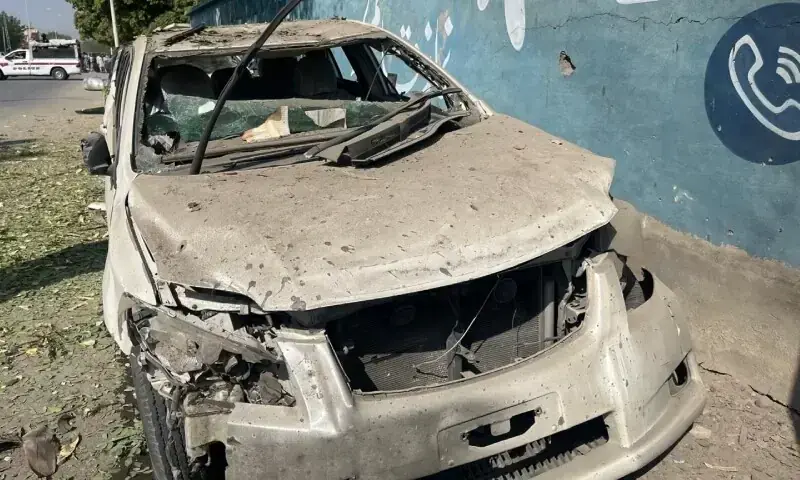
The blast targeted the vehicle of Kech Deputy Commissioner Major (retd) Bashir Barech as he traveled from his home to his office along Press Club road in Turbat, according to police officials. The deputy commissioner escaped unharmed, shielded by his bulletproof car, which sustained only partial damage.
Kech Senior Superintendent of Police Captain (retd) Zohaib Mohsin said the device had been planted in a motorcycle and was detonated remotely as the convoy passed by. “The bomb, which was planted in a motorcycle, was triggered using a remote control when the DC’s convoy was passing by the area,” he said, adding that five Levies personnel and a passerby were initially reported injured. He later updated the toll to eight, including seven from the Levies Force, a local paramilitary unit. “The blast was so intense that four of the vehicles parked nearby and closely located buildings were also damaged.”
Police and Frontier Corps personnel arrived at the scene and began an investigation. The attack comes amid a surge in militant strikes across Balochistan and the neighboring province of Khyber Pakhtunkhwa, many aimed at law enforcement and security personnel. The uptick has intensified since the banned Tehreek-i-Taliban Pakistan ended a ceasefire agreement with the government in 2022, fueling a wave of bombings, ambushes and targeted killings.
Balochistan, Pakistan’s largest but least populous province, has endured decades of separatist unrest alongside Islamist militancy, with groups like the Baloch Liberation Army and affiliates of the Taliban claiming responsibility for many assaults. Recent incidents have disrupted daily life and infrastructure. Just over two weeks ago, on Oct. 9, a bomb detonated on a railway track near Dera Murad Jamali, killing a railway employee and suspending train services that link Balochistan to the rest of the country.
Officials described it as the fourth such attack in a month. That followed a deadly explosion in Quetta, the provincial capital, on Sept. 30, when a bomb ripped through a busy street near the Frontier Corps headquarters, killing at least 10 people and injuring 32. A week earlier, in the Spizend area of Mastung district, a blast targeted the Quetta-bound Jaffar Express, injuring 12 people, including women and children.
Further back, on Sept. 18, an explosion near a taxi stand in the border town of Chaman, along the Pakistan-Afghanistan frontier, killed at least five people and injured one. And on Sept. 2, a bomb at a rally for the Balochistan National Party-Mengal at Quetta’s Shahwani Stadium left at least five dead and 29 wounded. Security analysts say the pattern of attacks reflects a broader strategy by militants to sow chaos and challenge state authority in remote areas, where economic grievances and ethnic tensions often intersect with extremist ideologies.
Copyright © 2021 Independent Pakistan | All rights reserved