By Staff Reporter
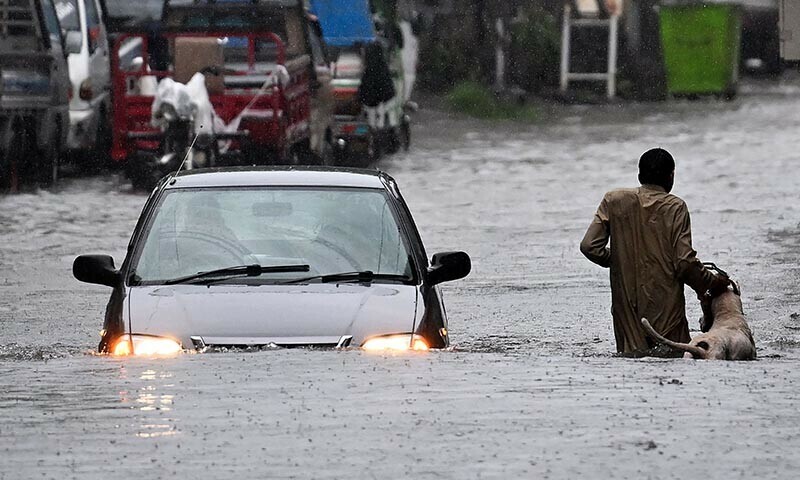
ISLAMABAD: Heavy monsoon rains have wreaked havoc across Pakistan’s Punjab province, with Chakwal district bearing the brunt of a cloudburst that dumped 400 millimeters of rain overnight, triggering flash floods that have claimed at least 28 lives and injured scores more.
The deluge, part of a relentless storm system battering the region, has overwhelmed infrastructure, submerged homes, and prompted a massive rescue operation as authorities scramble to evacuate trapped residents and brace for more rainfall.
The Pakistan Meteorological Department (PMD) had warned of torrential rains and wind-thundershowers sweeping across the country through July 17, a forecast that has proven grimly accurate.
Pakistan’s monsoon season, spanning June to September, often brings deadly floods, landslides, and displacement, especially in vulnerable, poorly drained, or densely populated areas. This week’s downpours, however, have been exceptional in their intensity and destruction.
In Chakwal, the situation turned catastrophic overnight. “Chawkwal recorded 400mm of rain in 10 hours, which left many areas flooded,” said Irfan Ali Kathia, spokesperson for the Provincial Disaster Management Authority (PDMA).
The floodwaters swept through low-lying neighborhoods, inundating houses and stranding residents. Though water levels have begun to recede since the rain stopped, evacuation efforts remain in full swing to rescue those still trapped.
District Commissioner Quratul Ain Malik said the administration is on high alert, with rescue teams from the Water and Sanitation Agencies (WASA), Rescue 1122, and other civil units deployed across the district.
“Relief arrangements have been made in hospitals and public buildings,” Malik said, as authorities work to provide shelter and medical care to those displaced by the floods. The PDMA has also reached out to the military for potential additional support, with helicopters and other resources on standby.
“The PDMA assured the district administration of support in rescue and relief efforts and is personally overseeing the rescue operation until all citizens are safely evacuated,” Kathia said. “The district administration is continuing to monitor the situation, particularly in low-lying areas.”
The District Emergency Operation Centre and PDMA Control Room are operating around the clock to coordinate the response.
The crisis extends far beyond Chakwal. In Rawalpindi, the PMD issued a flood alert on Thursday for the Gawalmandi bridge as water levels in Nullah Leh surged to 23 feet, with the Kattarian bridge also at risk if levels exceed 15.7 feet. “All stakeholders have been advised to stay alert,” the weather advisory warned.
WASA has declared a rain emergency in Rawalpindi, deploying teams and heavy machinery to drain flooded low-lying areas. “Nullah Leh and drains across the city are being continuously monitored,” said Saleem Ashraf, WASA Rawalpindi’s managing director. Water levels at Katarian have hit 22 feet, prompting evacuation orders for nearby residents.
Across Punjab, the toll is staggering. Between Tuesday and Wednesday, at least 28 people were killed and 90 injured in rain- and storm-related incidents. In Mandi Bahauddin, where 210mm of rain fell, a 10-year-old boy, Shah Hussain, drowned while bathing in rainwater, and two brothers, Qasim, 8, and Huzaifa, 6, were electrocuted. Nine others were injured when the roofs of three dilapidated houses collapsed. Streets in College Chowk, Pindi Purani, and Jail Chowk remain submerged under two to four feet of water.
The devastation has spread to other districts as well. In Jhelum, flooding in rivers and canals prompted the army to deploy helicopters to rescue those trapped by rising waters. In Sheikhupura, rainfall reached 217mm, battering the region and overwhelming local drainage systems.
Secretary Emergency Services Dr. Rizwan described the scale of the disaster in Chakwal, where some areas recorded up to 423mm of rain. “More than 400mm of downpour was recorded in Chakwal, and therefore, managing the situation was challenging,” he told a private television channel.
Small dams have overflowed, and water has even entered the historic Katas Raj temple near Choa Saidanshah. “Climate change is a big challenge all over the world,” Dr. Rizwan said.
Since the monsoon began on June 16, about 310 houses have collapsed across Punjab, and 15 traffic accidents linked to the rains have claimed lives. “Around 90 deaths have occurred in various accidents across Punjab since June 16,” he added.
In the past 24 hours alone, an additional 43 people have died in rain-related incidents, including 16 in Lahore, five in Sheikhupura, four each in Okara and Pakpattan, and nine in Faisalabad.
In Rawalpindi and Islamabad, urban flooding has paralyzed daily life. Saidpur recorded 53mm of rain, Golra 77mm, Bokra 95mm, Shamsabad 67mm, Kachehri 105mm, Pirwadhai and Gawalmandi 90mm, and Katarian 80mm.
The Rawalpindi deputy commissioner declared a one-day holiday, urging residents to stay home. “The public is asked to stay at home and not to leave their homes unnecessarily,” the DC’s office said on X. Rescue 1122 remains on high alert, advising people to evacuate dilapidated buildings and move to safer locations.
Balochistan, too, is reeling from the monsoon’s fury. “Sixteen people have died and six have been injured in various rain-related incidents recently,” said Jahanzeb Khan Ghorezai, director general of Balochistan’s PDMA
Copyright © 2021 Independent Pakistan | All rights reserved