By Staff Reporter
ISLAMABAD: Pakistan is negotiating with the International Monetary Fund (IMF) over exemptions on duties and taxes for sugar imports, despite a structural benchmark with the fund that prohibits such tax breaks, a senior official said on Wednesday.
Finance Secretary Imdadullah Bosal told the National Assembly’s Standing Committee on Finance that consultations with the IMF are underway regarding tax exemptions on sugar imports. “We are in consultation with the IMF regarding tax exemption on sugar,” he said.
The discussions occur against the backdrop of an IMF agreement that bars the government from granting tax exemptions or amnesty schemes, a condition Bosal acknowledged as a key structural benchmark.
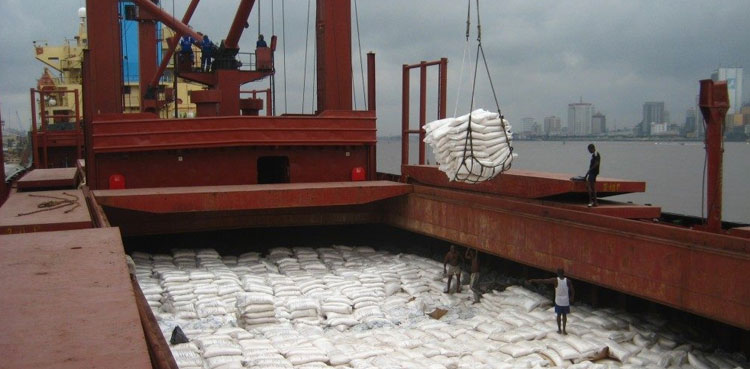
The Federal Board of Revenue (FBR) has already moved forward with significant tax relief on sugar imports. The agency exempted customs duty on 500,000 metric tons of sugar and slashed the sales tax rate from 18% to 0.25%, while reducing withholding tax to 0.25% on imports by the Trading Corporation of Pakistan (TCP) or the private sector. Additionally, the FBR waived a 3% minimum value-added tax (VAT) on the same quantity.
These measures followed a cabinet decision based on a summary from the Ministry of National Food Security and Research (MNFSR).
FBR Chairman Rashid Mahmood Langrial emphasized that the tax authority did not propose these exemptions. “The FBR has not moved any summary to the federal cabinet for exemption of duties and taxes on the import of sugar,” Langrial told the committee. “The federal cabinet has taken the decision on a summary moved by the Ministry of National Food Security and Research.”
He noted that the FBR issued the exemption notifications only after receiving the cabinet’s directive. Langrial also pointed out the heavy tax burden on sugar imports, stating, “There are 54 percent taxes imposed on sugar including 20 percent import duty.”
He argued that such high tariffs are excessive, recalling that sugar prices had once fallen to Rs 130 per kg.
The parliamentary committee, chaired by Syed Naveed Qamar, questioned the government’s rationale for importing sugar amid sufficient domestic supplies. “There is no shortage of sugar in the country,” Qamar said. “It is not clear what would be the rationale behind the import of sugar in the presence of ample stocks.”
He criticized the government’s focus on sugar prices when wheat, a more critical commodity, has been deregulated. “The government should only be worried about the price of wheat which is de-regulated, but sugar is regulated in the country,” Qamar added, suggesting the private sector should handle sugar-related matters instead.
Committee member Javed Hanif pressed for clarity on the IMF’s position, accusing the government of inconsistency. “He criticised the government for attributing every budgetary measure to IMF requirements,” the meeting records note, pointing out taxes imposed on items like poultry chicks and mutual funds while sugar received exemptions.
Bosal responded that “discussions with the IMF were still ongoing on the issue.”
The committee also flagged potential fiscal fallout, asking whether additional revenue measures would be needed if the sugar tax exemptions are finalized, given the revenue loss from reduced duties and taxes.
Separately, the Ministry of National Food Security and Research announced that sugar’s retail price will be capped at Rs 173-175 per kg, reflecting an ex-mill price of Rs 165 per kg. A formal notification awaits cabinet approval, the ministry said.
Minister Rana Tanveer Hussain stressed that provincial governments must enforce this cap to ensure consumer relief and price stability nationwide.
Copyright © 2021 Independent Pakistan | All rights reserved